

Reported by: Ijeoma G | Edited by: Oravbiere Osayomore Promise.
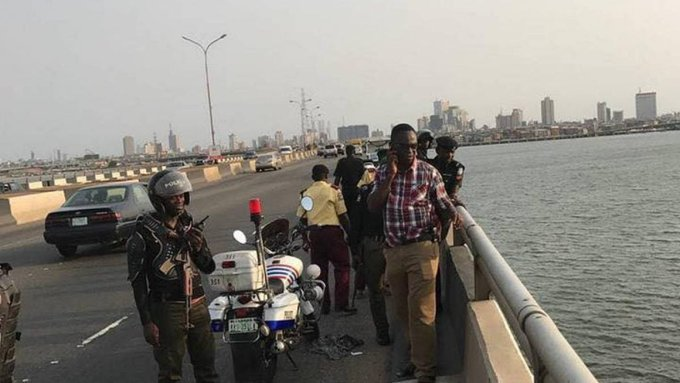
A man narrowly escaped death after reportedly attempting to jump into the Lagos Lagoon from a bridge in Lagos, in an incident that has drawn public attention to mental health concerns and emergency response gaps in Nigeria’s commercial capital.
The unidentified individual was rescued by local fishermen after entering the water under circumstances that remain unclear. Eyewitness accounts indicate that the man had earlier parked his vehicle on the bridge before making his way toward the lagoon, prompting alarm among passersby who quickly realized the situation unfolding.
According to those present at the scene, the man was seen entering the water, triggering panic and calls for help. In the absence of immediate formal emergency intervention, nearby fishermen responded swiftly, navigating toward the location and pulling him out of the lagoon. Their prompt action is believed to have prevented what could have resulted in a fatal outcome.
The exact location of the incident has not been officially confirmed, though such occurrences have historically been reported around major bridges connecting parts of Lagos Island and the mainland, where traffic congestion and limited surveillance can delay emergency response times.
A video capturing the rescue surfaced on social media shortly after the incident, amplifying public reaction. The footage showed the man being assisted out of the water by rescuers, surrounded by onlookers gathered along the bridge. The clip quickly circulated online, drawing a mixture of relief, concern, and calls for greater societal awareness.
The video was shared by Isaac Fayose, a social commentator, who used the moment to urge Nigerians to be more attentive to the emotional and psychological well-being of people around them. His message, which accompanied the footage, emphasized the importance of checking in on friends and family, reflecting a broader conversation about mental health challenges that often go unnoticed.
As of the time of reporting, the identity of the man has not been established, and no official statement has been issued by the Lagos State Police Command. Authorities have yet to confirm the circumstances surrounding the incident, including whether it was a deliberate suicide attempt or the result of other factors.
The absence of immediate official clarification has left many questions unanswered, including how long the man remained in the water before being rescued and whether he has since received medical or psychological evaluation. It is also unclear whether any follow-up investigation has been initiated to determine the events leading up to the incident.
Incidents involving attempted jumps into the Lagos Lagoon, while not frequent, are not unprecedented. Over the years, there have been sporadic reports of individuals attempting to leap from bridges into the water, often linked to emotional distress, financial pressures, or other personal crises. Such cases have occasionally resulted in fatalities when rescue efforts were delayed or unsuccessful.
The latest incident has renewed discussions about the need for improved preventive measures on Lagos bridges, including increased surveillance, emergency patrols, and the installation of barriers or safety nets in high-risk areas. Observers note that rapid urbanisation and population pressures have contributed to rising stress levels among residents, making such interventions increasingly necessary.
Mental health advocates have also pointed to the broader issue of limited access to psychological support services in Nigeria. Despite growing awareness, stigma and inadequate infrastructure continue to hinder efforts to address mental health challenges effectively. Many individuals experiencing distress may not seek help due to fear of social judgment or lack of available resources.
In this context, the role played by the fishermen in rescuing the man has been widely praised as an example of community responsiveness. Their actions highlight the importance of local intervention in emergency situations, particularly in areas where formal rescue services may not be immediately accessible.
However, the reliance on informal responders also raises concerns about the need for structured emergency systems capable of handling such incidents more efficiently. Experts argue that equipping local communities with basic rescue training and improving coordination with official agencies could enhance response outcomes in similar situations.
The Lagos Lagoon itself presents significant risks, with strong currents, varying depths, and limited visibility making it a hazardous environment for anyone who enters the water unexpectedly. Survival in such conditions often depends on immediate rescue, underscoring the critical role of timely intervention.
For residents and commuters who witnessed the incident, the event served as a sobering reminder of the hidden struggles individuals may face. It has also sparked conversations about empathy, vigilance, and the importance of fostering supportive environments where people can seek help without fear.
As authorities remain silent on the specifics of the case, attention is likely to shift toward whether the incident will prompt policy discussions or concrete measures aimed at preventing similar occurrences in the future. Public safety experts emphasize that beyond infrastructure, addressing the root causes of such incidents requires sustained investment in mental health services and community support systems.
For now, the rescued man’s survival stands as a testament to the quick thinking and courage of those who intervened. Yet, the unanswered questions surrounding the incident continue to resonate, reflecting broader societal challenges that extend beyond a single moment on a Lagos bridge.
📩 Stone Reporters News | 🌍 stonereportersnews.com
✉️ info@stonereportersnews.com | 📘 Facebook: Stone Reporters News | 🐦 X (Twitter): @StoneReportNew | 📸 Instagram: @stonereportersnews
Add comment
Comments