

Reported by: Ijeoma G | Edited by: Oravbiere Osayomore Promise.
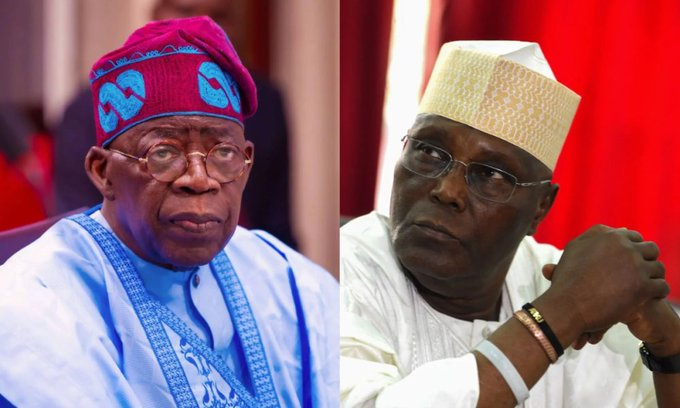
Former Vice-President Atiku Abubakar has launched one of his strongest criticisms yet of the current administration, describing the government of Bola Ahmed Tinubu as the worst he has witnessed in his lifetime, while outlining security reform as his top priority if elected president.
Speaking during an interview on Arise TV on April 15, 2026, Atiku expressed deep dissatisfaction with the direction of the country under Tinubu’s leadership. His remarks come amid mounting political tension and early positioning ahead of the 2027 general election, where he has already indicated he intends to make a final bid for the presidency.
Pressed on his assessment of the current administration, Atiku did not hold back. “Everything is wrong with President Tinubu,” he said, adding that he felt “terribly disappointed” by the government’s performance across multiple sectors. He emphasized that his concerns extended beyond a single policy area, pointing to what he described as broad-based failures affecting the economy and governance.
“Economically, otherwise, I feel disappointed,” he added, underscoring a critique that aligns with growing public debate over inflation, cost of living pressures, and broader economic reforms introduced by the current administration.
While Atiku declined to disclose specific campaign strategies for unseating an incumbent president, he dismissed suggestions that a coalition candidate would face insurmountable challenges in the next election cycle. His refusal to elaborate on strategy signals a cautious approach as political alignments continue to evolve.
Atiku’s comments also reflect a shifting political identity. Having previously contested under the Peoples Democratic Party, he is now associated with the African Democratic Congress as a presidential aspirant, a move that has sparked discussions about coalition-building and opposition realignment ahead of 2027.
Central to his message is a renewed focus on security, which he identified as the immediate priority of any government he might lead. Outlining his proposed first steps in office, Atiku stressed that restoring law and order would take precedence over all other policy objectives.
“I believe security, law and order are basic,” he said. “Whatever you want to achieve, if you don’t have security, you don’t have law and order, I don’t think you can implement whatever policy.”
His emphasis on security reflects ongoing national concerns, as Nigeria continues to grapple with multiple challenges ranging from insurgency in the northeast to communal violence in the Middle Belt and criminal activity in other regions. Analysts say the persistence of these issues has made security a defining theme in political discourse ahead of the next election.
Atiku’s critique of the Tinubu administration is likely to intensify political debate in the coming months, particularly as opposition figures seek to capitalize on public dissatisfaction. However, supporters of the current government argue that many of the economic reforms introduced by Tinubu, including subsidy removal and currency adjustments, are necessary steps toward long-term stability, even if they have caused short-term hardship.
The Tinubu administration, which assumed office in 2023, has defended its policies as part of a broader effort to restructure Nigeria’s economy and reduce dependency on unsustainable fiscal practices. Officials have pointed to ongoing infrastructure projects, social investment programs, and efforts to improve revenue generation as evidence of progress.
Nevertheless, Atiku’s remarks highlight the extent of political polarization surrounding the government’s performance. By describing the administration in such stark terms, he has positioned himself as a leading critic and potential alternative, while also raising the stakes for political engagement ahead of 2027.
Political observers note that Atiku’s rhetoric may resonate with segments of the population experiencing economic strain, but they also caution that strong criticism alone may not be sufficient to secure electoral success. Voters, they say, are likely to demand clear policy proposals and credible implementation plans in addition to critiques of the status quo.
Atiku’s long political career adds further complexity to his position. Having served as Vice-President from 1999 to 2007 under Olusegun Obasanjo, he brings extensive experience in governance. However, his repeated attempts to win the presidency without success have also been a focal point of both support and criticism.
His latest comments suggest a strategy aimed at sharpening contrasts between himself and the incumbent, particularly on issues of governance and security. Whether this approach will translate into broader political support remains to be seen, especially as other potential candidates and parties begin to outline their own visions for the country.
The coming months are expected to see increased political activity as parties and aspirants refine their positions and engage with voters. Within this evolving landscape, Atiku’s criticism of the Tinubu administration is likely to remain a central theme in opposition messaging.
As Nigeria approaches another election cycle, the debate over governance, economic policy, and national security is expected to intensify. Atiku Abubakar’s latest remarks add momentum to that conversation, setting the stage for what could be one of the most closely watched political contests in the country’s recent history.
📩 Stone Reporters News | 🌍 stonereportersnews.com
✉️ info@stonereportersnews.com | 📘 Facebook: Stone Reporters News | 🐦 X (Twitter): @StoneReportNew | 📸 Instagram: @stonereportersnews
Add comment
Comments