

Reported by: Ijeoma G | Edited by: Oravbiere Osayomore Promise.
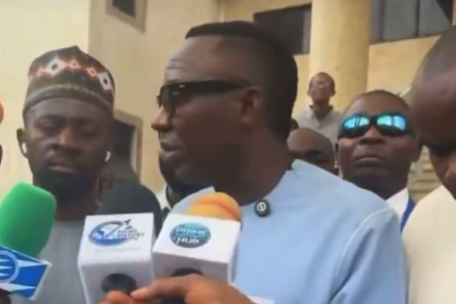
Human rights activist and former presidential candidate, Omoyele Sowore, has reignited political debate in Nigeria after issuing a strongly worded statement in which he declared that President Bola Ahmed Tinubu will not return to office after his current term, while also accusing the administration of worsening hardship in the country.
Sowore made the remarks in a public post that quickly circulated across social media platforms, where he criticised the federal government’s economic policies and leadership direction. In the statement, he insisted that Tinubu’s presidency would end after a single term, adding that the administration has deepened the struggles of ordinary Nigerians amid ongoing inflation, unemployment, and cost-of-living pressures.
The comments form part of Sowore’s long-standing political opposition to successive Nigerian governments. As founder of Sahara Reporters and leader of the African Action Congress, he has consistently positioned himself as a vocal critic of state authority, frequently accusing political leaders of corruption, poor governance, and failure to deliver public services. His latest statement fits into a broader pattern of confrontational political messaging that has defined his activism over the past decade.
Reactions to the remarks have been sharply divided. Supporters of Sowore argue that his comments reflect widespread frustration among citizens facing rising living costs, currency instability, and fuel subsidy reforms that have significantly altered Nigeria’s economic landscape since 2023. They say his statement echoes sentiments frequently expressed in public protests and online discussions about the country’s direction under the current administration.
However, supporters of the presidency and members of the ruling All Progressives Congress have dismissed the claim as politically motivated rhetoric. They argue that it is premature to predict the outcome of the 2027 elections, noting that Tinubu remains constitutionally eligible for a second term and continues to consolidate political alliances across different regions of the country. Government supporters also maintain that ongoing economic reforms, though painful in the short term, are necessary for long-term stability.
Sowore’s comments also come at a time of heightened political activity in Nigeria, as various opposition figures and movements begin positioning themselves ahead of the 2027 general elections. Political observers say early campaigning narratives are already emerging, particularly around economic hardship, governance performance, and questions about leadership legitimacy.
In earlier political statements, Sowore has repeatedly accused the Tinubu administration of failing to address structural challenges in Nigeria’s economy, including unemployment, insecurity, and public sector inefficiencies. He has also advocated for more radical political reforms, including systemic restructuring of governance institutions and greater accountability from elected officials.
The presidency has not issued a direct response to the latest remarks at the time of filing this report. However, officials in previous instances have rejected similar criticisms from opposition figures, insisting that the administration inherited deep structural problems and is implementing difficult but necessary reforms aimed at stabilising the economy.
Tinubu, who assumed office in May 2023 after winning a closely contested election, has faced sustained public scrutiny over economic decisions such as the removal of fuel subsidies and unification of foreign exchange rates. These policies have led to short-term inflationary pressures, but the government maintains they are essential for fiscal sustainability and long-term growth.
The political climate in Nigeria remains highly polarised, with public discourse increasingly shaped by social media statements, activist commentary, and rapid cycles of online debate. Analysts say figures like Sowore play a significant role in amplifying public dissatisfaction, even as their statements often spark controversy and pushback from government supporters.
As the country moves further into the mid-point of Tinubu’s first term, attention is expected to intensify around governance outcomes, electoral strategy, and emerging opposition coalitions. Sowore’s latest remarks are likely to further energise political conversations already building momentum ahead of the next election cycle.
📩 Stone Reporters News | 🌍 stonereportersnews.com
✉️ info@stonereportersnews.com | 📘 Facebook: Stone Reporters News | 🐦 X (Twitter): @StoneReportNew | 📸 Instagram: @stonereportersnews
Add comment
Comments