

Reported by: Oahimire Omone Precious | Edited by: Oravbiere Osayomore Promise.
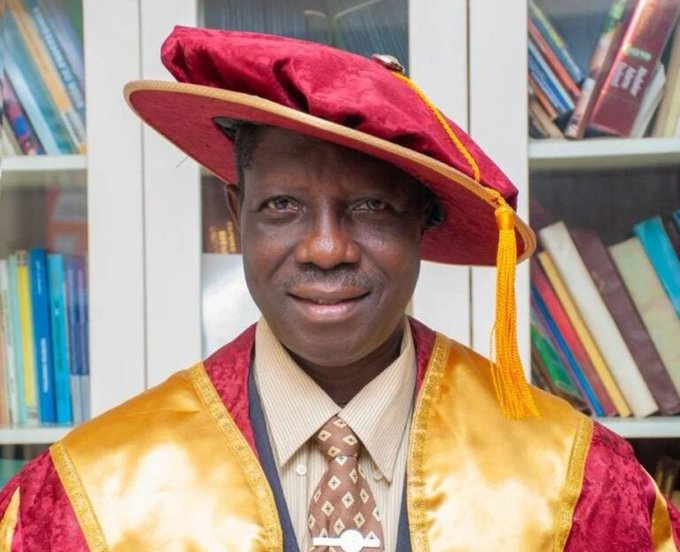
Vice-Chancellor of Ladoke Akintola University of Technology, Ogbomoso, Professor Razaq Kalilu, has disclosed that about 15,000 students of the institution approved for the Nigerian Education Loan Fund in 2026 are yet to receive disbursement, a development that has intensified concern among students and stakeholders.
Speaking during a press briefing ahead of the institution’s 18th convocation ceremony, the vice-chancellor explained that out of about 19,000 applications received from students in the 2026 cycle, more than 15,000 had been approved, while disbursement was still pending.
He noted that the institution had recorded about 5,000 beneficiaries from the scheme in 2025, adding that students had continued to express frustration over delays in payment despite approval notifications.
Kalilu also provided figures from the ongoing convocation exercise, stating that out of 10,223 graduating students, 137 achieved first-class honours while others fell across different degree classifications.
He added that 3,438 students graduated in the second class upper and lower divisions, 1,008 in third class, and 37 in the pass category, reflecting the academic spread within the institution.
He further disclosed that the university’s Nursing Science programme produced 1,021 graduates, including 17 distinctions, while others were distributed across credit and pass categories.
According to him, the institution also processed postgraduate outcomes, with 1,850 students moving into master’s programmes, nine into Master of Philosophy, and 127 into doctoral programmes.
He also said 7,641 of the graduating students were undergraduates, while 2,582 were postgraduate students, highlighting the institution’s expanding academic profile.
In total, he explained that about 2,852 individuals would receive postgraduate diplomas across various disciplines, while 596 others would be awarded professional diplomas during the convocation ceremonies.
Students across Nigerian tertiary institutions have increasingly raised concerns about delays in disbursement of loans under the Nigerian Education Loan Fund scheme, despite approvals being issued in several institutions, with stakeholders calling for improved processing timelines and transparency in implementation.
LAUTECH’s 18th convocation ceremony also highlighted the institution’s academic output across undergraduate and postgraduate levels, reflecting its continued expansion in science, technology, and professional training programmes.
University officials said the graduation figures reflect both academic performance distribution and the institution’s growing postgraduate enrolment, with emphasis on professional and research-based advancement.
NELFUND, established to improve access to higher education financing in Nigeria, has become a central component of federal education support policy, aimed at reducing financial barriers for students in public tertiary institutions across the country.
However implementation of the scheme has faced logistical and administrative challenges in some institutions, particularly regarding verification processes, disbursement scheduling, and coordination between federal agencies and universities.
These delays have contributed to uncertainty among students who rely on the funding for tuition and living expenses, with some institutions reporting growing concern among affected beneficiaries.
Despite these concerns, LAUTECH proceeded with its convocation ceremonies, recognising graduating students across multiple faculties, including health sciences, engineering, and postgraduate studies.
The institution’s management emphasised that the convocation reflects consistent academic output, with thousands of students completing programmes annually despite funding challenges affecting parts of the student population.
Observers say the situation underscores broader tensions in Nigeria’s higher education financing system, where rising enrolment continues to outpace funding mechanisms and administrative efficiency.
LAUTECH, one of Nigeria’s prominent state-owned universities, continues to play a key role in producing graduates in science and technology disciplines, contributing to workforce development in Oyo State and beyond.
Convocation ceremonies at Nigerian universities typically serve as formal recognition of academic completion and provide a platform for institutional leaders to present performance statistics and development updates.
Student reactions to loan delays have largely been expressed through informal channels, including social media discussions, where many have called for faster processing and clearer communication from relevant authorities.
The unfolding situation at LAUTECH reflects a broader national conversation on how education financing reforms are being implemented and the capacity of institutions to manage large-scale student support programmes.
Education stakeholders have urged improved coordination between federal agencies and tertiary institutions to ensure that approved funds translate more quickly into actual disbursements for students in need.
Analysts note that while approval figures indicate strong uptake of the loan scheme, disbursement delays risk undermining public confidence in education financing initiatives.
The university administration has continued to encourage students to remain focused on their academic pursuits while engaging relevant authorities on the loan disbursement process.
As the convocation proceedings conclude, attention now shifts to how quickly financial support mechanisms will be aligned with student needs, particularly as institutions prepare for the next academic cycle.
The case highlights the importance of timely policy execution in education financing, especially in systems where student populations are expanding rapidly and rely heavily on structured government support.
Stakeholders continue to monitor developments surrounding the NELFUND scheme, with expectations that improved administrative efficiency will reduce delays in future disbursement cycles.
Educational authorities have reiterated commitment to strengthening student support systems and ensuring that approved beneficiaries are not left without access to essential funding.
Overall, the LAUTECH case illustrates the intersection of academic achievement and financial policy implementation within Nigeria’s higher education system, drawing attention to both institutional performance and the operational challenges that accompany large-scale student funding programmes. As discussions continue, the outcome of ongoing administrative processes will be closely watched by students, educators, and policymakers alike. The situation continues to serve as a reminder of the need for stronger coordination between education financing agencies and institutional administrators to ensure that policy approvals translate into timely student benefits especially in large public universities where enrolment figures remain significant and administrative demands are high Additionally stakeholders have emphasised that transparency and accountability remain essential to sustaining confidence in government backed student loan schemes across the country as implementation continues to evolve within the education sector overall Furthermore continuous monitoring of disbursement processes is expected to improve efficiency and reduce delays in subsequent academic cycles moving forward sustainably nationwide system 📩 Stone Reporters News | 🌍 stonereportersnews.com
📩 Stone Reporters News | 🌍 stonereportersnews.com
✉️ info@stonereportersnews.com | 📘 Facebook: Stone Reporters News | 🐦 X (Twitter): @StoneReportNew | 📸 Instagram: @stonereportersnews
Add comment
Comments