

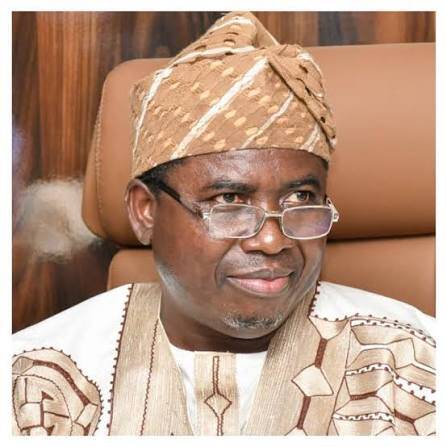
CSOs Back Amupitan, Urge Nigerians to Ignore Distractions Amid Mounting Political Tensions
A growing coalition of civil society organisations (CSOs) in Nigeria has come out in strong support of Joash Ojo Amupitan, urging citizens to disregard what they describe as politically motivated distractions surrounding the embattled chairman of the Independent National Electoral Commission (INEC). The intervention comes at a time of heightened political tension, as competing narratives continue to shape public perception ahead of key electoral milestones.
The latest show of support reflects a broader pattern of engagement by civil society groups since Amupitan’s emergence as head of Nigeria’s electoral body, a position he assumed following the end of the tenure of his predecessor. From the outset, his appointment generated intense scrutiny, with stakeholders divided over both the process and the implications for electoral integrity in Africa’s most populous democracy.
Civil society organisations had initially reacted with cautious optimism when Amupitan was nominated, acknowledging his academic credentials and legal background while insisting on transparency in his confirmation process. Groups including Yiaga Africa and International Press Centre emphasized that while they did not oppose his nomination in principle, the credibility of Nigeria’s electoral system depended on a rigorous and open vetting process. They stressed that approval by the Council of State could not replace the constitutional responsibility of the Senate to conduct a thorough screening that inspires public confidence.
That early caution has now evolved into a more assertive defense, as recent allegations and political attacks against Amupitan have intensified. Civil society leaders argue that many of the claims circulating in public discourse lack verifiable evidence and appear strategically timed to undermine confidence in INEC at a critical moment.
The controversy surrounding Amupitan has been fueled in part by accusations from opposition figures, particularly within the African Democratic Congress, which has called for his resignation over alleged bias. The party cited claims linked to past social media activity purportedly suggesting political alignment, though INEC officials have dismissed such narratives as misinformation and warned about the activities of impersonators spreading false content.
This clash has escalated into a broader institutional confrontation, with the electoral body and opposition actors trading accusations over legal interpretations and administrative decisions. In one instance, disputes over internal party leadership and court orders drew sharp criticism from political stakeholders, further placing Amupitan at the center of a growing storm.
Amid these tensions, civil society groups have warned that the focus on personality-driven controversies risks diverting attention from more pressing structural challenges facing Nigeria’s electoral system. They point to persistent issues such as voter registration inefficiencies, technological failures in result transmission, and the need for stronger safeguards against political interference—problems that have plagued previous election cycles and eroded public trust.
The background to these concerns lies partly in the legacy of Amupitan’s predecessor, whose tenure introduced significant technological reforms but was also marked by operational lapses and controversies, particularly during the 2023 general elections. Analysts note that while innovations like electronic accreditation and result viewing systems represented progress, their inconsistent implementation contributed to widespread skepticism about electoral credibility.
Civil society organisations have consistently argued that restoring confidence in the electoral process requires more than leadership changes; it demands systemic reform and sustained institutional independence. In their view, the current wave of allegations against Amupitan threatens to derail these efforts by shifting the national conversation away from substantive policy issues.
Supporters of the INEC chairman have also mobilized at the grassroots level. In Kogi State, for example, youth groups and community activists recently staged public demonstrations in solidarity with Amupitan, describing the allegations against him as politically motivated attempts to destabilize the electoral commission. Protesters emphasized the need to protect the integrity of INEC as an institution, rather than allowing it to become a battleground for partisan disputes.
At the same time, political endorsements have emerged from other quarters. Figures within the New Nigeria Peoples Party have expressed support for Amupitan’s appointment, urging him to prioritize rebuilding public trust in the electoral system. They argue that his leadership presents an opportunity to address longstanding weaknesses within INEC and reposition the institution as a credible arbiter of democratic processes.
President Bola Ahmed Tinubu, who nominated Amupitan, has defended the decision, citing the professor’s perceived neutrality, integrity, and professional track record. The endorsement by the National Council of State further reinforced the administration’s confidence in his capacity to lead the electoral body during a critical period in Nigeria’s political evolution.
Despite these endorsements, skepticism persists among segments of the public and political class, reflecting deeper concerns about the independence of electoral institutions in Nigeria. Critics argue that the process of appointing INEC leadership—largely controlled by the executive—creates inherent vulnerabilities that can undermine public trust, regardless of the individual occupying the position.
This tension underscores a fundamental challenge facing Nigeria’s democracy: balancing the need for accountability with the risk of politicizing oversight mechanisms. Civil society groups backing Amupitan have emphasized that while scrutiny is essential, it must be grounded in evidence and conducted within the framework of due process.
Their latest call for Nigerians to “ignore distractions” is therefore not merely a defense of one individual but a broader appeal to refocus national discourse on substantive governance issues. They argue that excessive attention to unverified allegations can weaken institutions and create an environment in which misinformation thrives.
Looking ahead, the stakes remain high. With future elections on the horizon, the performance of INEC under Amupitan’s leadership will be closely watched both domestically and internationally. Key tests include the conduct of upcoming state elections, the implementation of electoral reforms, and the commission’s ability to maintain neutrality in an increasingly polarized political landscape.
For now, the intervention by civil society organisations signals a determination to shape the narrative and ensure that debates around Nigeria’s electoral future remain anchored in facts rather than speculation. Whether this effort will succeed in restoring public confidence—or further deepen existing divisions—remains to be seen.
What is clear, however, is that the controversy surrounding Amupitan has become a focal point for broader questions about governance, accountability, and the resilience of democratic institutions in Nigeria. As competing voices continue to vie for influence, the ability of citizens to critically assess information and engage constructively will play a decisive role in shaping the country’s political trajectory.
📩 Stone Reporters News | 🌍 stonereportersnews.com
✉️ info@stonereportersnews.com | 📘 Facebook: Stone Reporters News | 🐦 X (Twitter): @StoneReportNew | 📸 Instagram: @stonereportersnews
Add comment
Comments