

Reported by: Oahimire Omone Precious | Edited by: Pierre Antoine
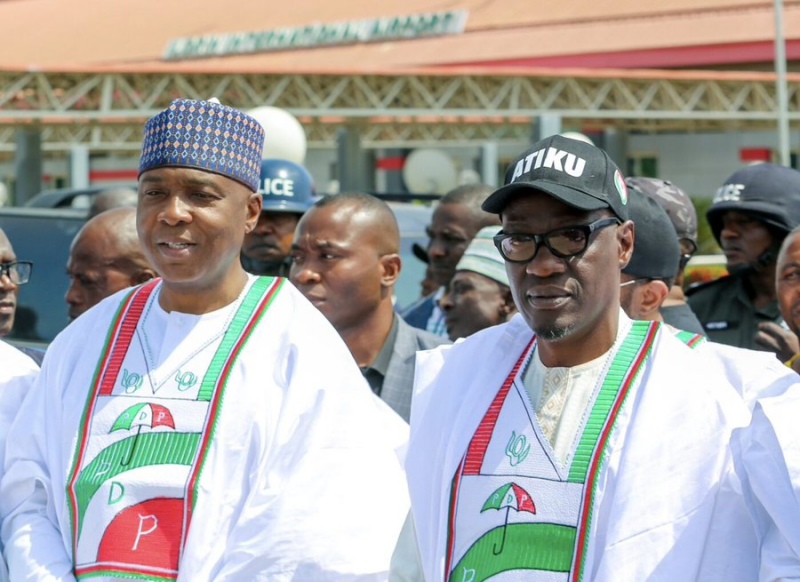
The Kwara State Government has formally filed a 20-count charge against former Senate President Bukola Saraki and ex-governor Abdulfatah Ahmed, marking a significant escalation in a long-running legal and political controversy tied to the infamous Offa robbery incident that shook Nigeria in 2018. The charges, lodged before the Kwara State High Court in Ilorin on April 9, 2026, also name two former aides—Yusuf Abdulwahab, who served as chief of staff to Ahmed, and Alabi Olalekan—as co-defendants in the case.
According to court filings, the state government alleges that the accused individuals were involved in providing material support, including firearms, to individuals later convicted for their roles in the Offa bank robbery. The robbery, which occurred in April 2018 in Offa, Kwara State, resulted in the deaths of more than 30 people, including police officers and civilians, and remains one of the deadliest armed robbery incidents in Nigeria’s recent history.
The latest legal move revives a matter that has lingered in Nigeria’s judicial and political space for years. At the height of investigations into the Offa robbery, several suspects arrested by security agencies reportedly made confessional statements alleging links to prominent political figures in the state. Among those named at the time were Saraki and Ahmed, both of whom were leading figures in Kwara politics during the period under review.
Bukola Saraki, who served as Senate President from 2015 to 2019 and previously as governor of Kwara State, has consistently denied any involvement in the Offa robbery or any association with the suspects. In earlier responses to similar allegations, he described them as politically motivated attempts to tarnish his reputation. Abdulfatah Ahmed, who succeeded Saraki as governor and served from 2011 to 2019, has also rejected the claims, maintaining that he had no connection to the criminal activities in question.
Details of the 20-count charge indicate that the state government is seeking to establish a pattern of alleged complicity, focusing on claims that weapons used by the robbery suspects were sourced through networks linked to the defendants. Prosecutors are expected to rely heavily on prior confessions, witness testimonies, and material evidence gathered during earlier investigations conducted by federal security agencies.
The inclusion of Yusuf Abdulwahab and Alabi Olalekan in the charge sheet reflects the prosecution’s effort to extend responsibility beyond the principal political figures to individuals who allegedly acted as intermediaries. Abdulwahab, as chief of staff during Ahmed’s administration, held a key position within the state government, while Olalekan is described as an aide whose role is also under scrutiny in connection with the alleged transactions.
The Offa robbery case has remained a sensitive issue in Kwara State, both because of the scale of the violence and the prominence of the individuals implicated during investigations. At the time of the incident, public outrage was widespread, with demands for accountability from both security agencies and political leaders. Several suspects were eventually tried and convicted, but questions persisted regarding whether all those involved, particularly any alleged sponsors, had been brought to justice.
Stone Reporters note that the decision by the Kwara State Government to pursue fresh charges at this stage suggests either the emergence of new evidence or a renewed determination to revisit unresolved aspects of the case. Legal analysts indicate that the prosecution will face the challenge of substantiating claims that directly link the defendants to the provision of arms, especially given the high-profile nature of the accused and the time that has elapsed since the original incident.
The filing of the charges has already drawn attention from political observers, given Saraki’s continued influence in national politics and Ahmed’s role in the state’s recent political history. While neither Saraki nor Ahmed had issued an immediate public statement in response to the latest charges at the time of reporting, both have historically maintained their innocence and have expressed confidence in the judicial process.
The case is expected to proceed through preliminary hearings in the Ilorin High Court, where issues such as jurisdiction, admissibility of evidence, and bail conditions may be addressed. Defence counsel for the accused are likely to challenge the credibility of the evidence, particularly any reliance on confessional statements obtained during earlier investigations, which have been contested in similar cases across Nigeria.
Legal proceedings of this magnitude often attract significant public and media scrutiny, not only because of the individuals involved but also due to broader concerns about accountability, the rule of law, and the independence of the judiciary. The outcome of the case could have implications for public trust in Nigeria’s justice system, especially in handling cases that intersect with politics and security.
For residents of Offa and the wider Kwara community, the revival of the case may reopen painful memories of the 2018 tragedy. Families of victims have, over the years, called for comprehensive justice, emphasizing the need to identify and prosecute all those responsible, whether directly or indirectly. The new charges could be seen as part of ongoing efforts to address those demands, though the legal process is expected to be lengthy and complex.
At the national level, the development underscores the continuing interplay between law enforcement, judicial processes, and political dynamics in Nigeria. Cases involving high-ranking former officials often test the resilience of legal institutions and their capacity to operate without undue influence. As proceedings unfold, attention will likely focus on whether the prosecution can present a compelling case that meets the burden of proof required under Nigerian law.
The Kwara State Government has not publicly detailed the full scope of evidence underpinning the charges, but officials have indicated that the case will be pursued diligently. Observers expect that further disclosures may emerge as the trial progresses, providing greater clarity on the specific allegations and the basis for the prosecution’s claims.
As the court process begins, both supporters and critics of the accused are preparing for what could become a defining legal battle in Kwara State’s recent history. The proceedings will not only determine the legal fate of the defendants but may also shape public perceptions of justice and accountability in cases involving powerful political figures.
📩 Stone Reporters News | 🌍 stonereportersnews.com
✉️ info@stonereportersnews.com | 📘 Facebook: Stone Reporters News | 🐦 X (Twitter): @StoneReportNew | 📸 Instagram: @stonereportersnews
Add comment
Comments