

Opara Moves to Challenge Nigeria’s Reintegration of Former Insurgents as Fresh Release of 744 Deepens National Dispute
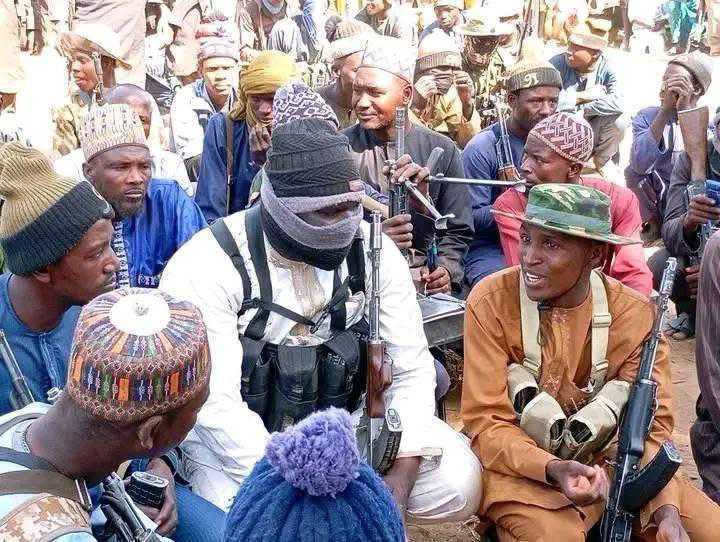
A fresh legal and political confrontation is building around Nigeria’s controversial policy of deradicalising and reintegrating former insurgents after lawyer Maxwell Opara vowed to approach the Federal High Court to stop what he described as the “madness” of returning so-called repentant terrorists to society. His intervention followed the latest graduation of 744 former terrorists and victims of violent extremism from the federal government’s Operation Safe Corridor camp in Gombe, a development that has reignited fierce arguments over justice, security, rehabilitation and the rights of communities devastated by insurgency.
The immediate trigger for the backlash was the government’s announcement on April 16 that 744 individuals had completed the De-radicalisation, Rehabilitation and Reintegration programme under Operation Safe Corridor. According to reporting on the ceremony, Chief of Defence Staff Christopher Musa was represented by senior officials, while Defence Headquarters framed the initiative as a strategic non-kinetic tool intended to reduce violence, weaken extremist recruitment and support long-term stabilisation in the North-East. Officials stressed that the programme should not be confused with amnesty and argued that it is designed to complement military operations rather than replace prosecution where necessary.
Operation Safe Corridor itself is not new. It was launched in 2016 as part of Nigeria’s wider counter-insurgency strategy, built on the premise that not everyone found within insurgent structures was a hardened ideologue or active combatant. According to officials involved in the programme, some participants were abducted, forcibly conscripted or drawn in by coercion and deception. The programme’s defenders say such people require structured disengagement, counselling, religious reorientation, education and vocational support if the state hopes to reduce the pool of recruits available to Boko Haram and ISWAP. Premium Times reported that officials at a recent Centre for Democracy and Development engagement said only those classified as low-risk are admitted into the programme, while people linked to serious crimes are supposed to be referred for prosecution.
That official distinction is precisely where critics say the system loses public trust. Opara, speaking on Arise TV and quoted by Vanguard, said he would go to the Federal High Court “by next week” to stop the programme, which he called an “epitome of fraud” and a mockery of both victims and the justice system. He argued that Nigerian law requires investigation, prosecution and conviction before any consideration of clemency, and rejected the defence that some adults were coerced into participating in terrorism. He also questioned where exactly such former insurgents were being reintegrated, saying many of the communities they once terrorised no longer exist as functioning communities because they were destroyed in the conflict.
His argument goes beyond rhetoric. He is effectively challenging the legal architecture of the programme by saying that international frameworks encouraging rehabilitation do not override Nigerian criminal law. Vanguard reported that he maintained United Nations guidance is advisory, not binding, and that the country must apply its own legal standards to mass atrocities and terrorism-related crimes. He also challenged Defence Headquarters to show whether the programme has actually reduced terrorism since it began, and called on the Economic and Financial Crimes Commission to examine how public money is being spent on the rehabilitation process.
The emotional force of the criticism comes from the reality of the insurgency itself. Reuters reported in 2024 that Boko Haram’s campaign, which began in 2009, has killed thousands and displaced millions across northeastern Nigeria. The same Reuters report noted that Nigerian courts convicted 125 Boko Haram militants and financiers in a mass trial in July 2024 and said that from earlier convictions, 400 defendants who had completed their sentences were moved to Operation Safe Corridor for rehabilitation, deradicalisation and reintegration. That detail is important because it shows that at least some people entering the programme have already passed through the criminal justice system, even though critics insist that many others are being processed too leniently or opaquely.
The present controversy has been sharpened by the scale of the latest graduation and by the national mood after continued attacks in the northeast. Vanguard reported that the 744 beneficiaries were drawn largely from Borno State and included some foreign nationals from Niger, Chad, Cameroon and Burkina Faso. The same report quoted retired military officers, lawyers, youth leaders and Christian elders warning that the policy could deepen mistrust, create a sense of reward for violence and even encourage future criminality if would-be recruits believe they can later pass through a rehabilitation track instead of facing punishment.
Yet the state’s defence of the programme has not been frivolous or improvised. Premium Times’ recent review of Operation Safe Corridor showed that officials see it as one component of a broader peacebuilding framework, not a standalone answer to insurgency. Their case is that a purely kinetic strategy may kill or capture fighters but cannot fully address disengagement, recidivism and ideological collapse among lower-risk participants. Officials also reject a recurring public claim that former insurgents are being absorbed into the Nigerian military, calling that false and inconsistent with recruitment rules. Even so, the same report noted that independent verification of long-term outcomes remains limited and that much of the publicly available information comes from official sources, a gap that leaves plenty of room for public suspicion.
That lack of independently verifiable outcome data is a central weakness in the government’s public case. If Operation Safe Corridor is meant to persuade traumatised communities that reintegration can coexist with justice and security, then transparency matters. Critics are not only asking whether participants are genuinely deradicalised; they are also asking how many reoffend, how communities are consulted, what monitoring exists after release, and why victims still seem far less visible in official messaging than former insurgents. Opara’s formulation is blunt, but it captures a wider grievance now echoing through civic and media spaces: many Nigerians believe the state is investing more visibly in rehabilitating perpetrators than in rebuilding the lives of those they displaced, orphaned or maimed.
At this stage, there is no public evidence from the sources reviewed that Opara has already filed the court action; what exists is his declared intention to do so. That distinction matters. The legal challenge may still come, and if it does, it could force the judiciary to examine whether Operation Safe Corridor is operating within Nigerian law, whether its screening mechanisms are sufficient, and whether reintegration without fuller public accountability can survive constitutional scrutiny. Until then, the programme remains in place, defended by security officials as a necessary instrument of stabilisation and attacked by opponents as an unjust experiment carried out at the expense of victims.
For now, the argument is no longer marginal. It has become a national test of how Nigeria understands justice after terrorism: whether peace is better served by controlled reintegration for low-risk former insurgents, or whether the state has moved too far, too fast, and too opaquely in asking devastated communities to accept the return of those associated with their destruction.
📩 Stone Reporters News | 🌍 stonereportersnews.com
✉️ info@stonereportersnews.com | 📘 Facebook: Stone Reporters News | 🐦 X (Twitter): @StoneReportNew | 📸 Instagram: @stonereportersnews
Add comment
Comments