

Baba Yusuf Warns Bandits Are Becoming Parallel Rulers in Northern Nigeria as Taxation, Failed Deals and Battlefield Humiliation Expose State Weakness
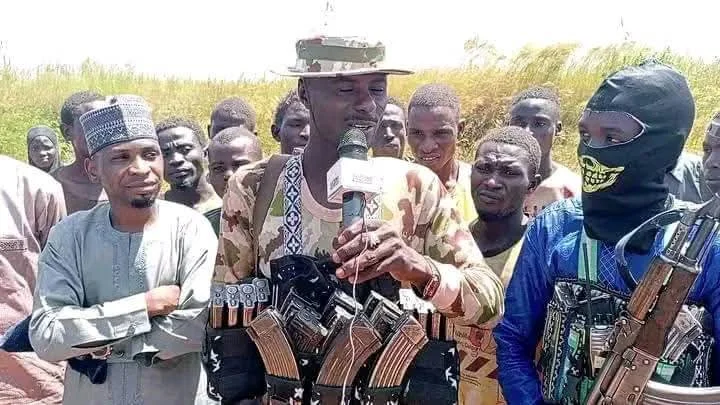
Political strategist and business executive Baba Yusuf has issued a stark warning over the trajectory of insecurity in northern Nigeria, arguing that bandit groups are becoming so entrenched that they could eventually begin to shape formal politics if the state continues to tolerate parallel authority in large rural areas. His remarks, carried in a widely circulated ARISE-linked clip and reposted across social media, centred on a grim thesis: that communities paying levies to armed groups, governments engaging them without consequences, and repeated attacks on military formations together amount to a dangerous erosion of state sovereignty.
Yusuf’s language was deliberately provocative. He said bandits were “daring the state and taunting us,” pointing to incidents in which armed groups have attacked soldiers, worn military uniforms, issued threats in advance, participated in mediation efforts, and then returned to violence without facing meaningful punishment. While the phrasing that they would “soon be in the Senate and House of Reps” is rhetorical rather than literal, the underlying claim is grounded in a pattern documented by multiple credible reports: in parts of northern Nigeria, armed groups have already established systems of coercion that resemble informal governance, including extortion, taxation, control of movement and negotiations with communities outside normal state channels.
The issue of “tax” is central to Yusuf’s argument, and there is substantial reporting to support that this is not mere metaphor. Reuters reported in February that remote communities in northern Nigeria have been sending representatives to negotiate directly with bandits and kidnappers, often paying money or making other concessions in fragile local peace deals because they feel abandoned by the state. That report described the collapse of one such arrangement after a deadly raid in Katsina State, illustrating both the desperation of residents and the weakness of agreements reached without durable enforcement.
Separate Reuters-based reporting from late 2025 also found that bandit violence is increasingly intertwined with illegal gold mining and that armed groups in northwestern and north-central Nigeria routinely tax miners and demand a share of extracted ore in exchange for access to pits and local territory. That is significant because it shows the “taxation” Yusuf referenced is not confined to ransom or village levies; in some areas it extends into control over resource extraction and economic life, further blurring the line between criminal predation and parallel administration.
Other reporting has described similar patterns at village level. Communities in parts of the North-West have for years complained of being forced to pay protection money to avoid raids, surrender livestock, or permit farming access under the shadow of armed gangs. Analysts say this creates a vicious cycle: once citizens begin funding their own survival through payments to non-state actors, the authority of government is further hollowed out, while the armed groups gain revenue, intelligence and legitimacy by force. That dynamic is exactly what Yusuf appears to be warning about when he says Nigerians are “paying them tax in the North.”
His criticism of mediation is also tied to a real and controversial policy reality. In several northern states, especially where communities are isolated and military coverage is thin, local leaders have at times entered informal talks with bandit groups in the hope of reducing attacks or securing the release of abductees. Reuters’ February report on Katsina showed how precarious those efforts can be: a peace arrangement that had held for months unraveled after a fresh massacre, leaving residents with funerals instead of security. Yusuf’s argument is that repeated resort to negotiation without credible deterrence only emboldens the armed groups by showing them that the state will bargain from weakness.
His references to attackers humiliating the military also align with recent events. Associated Press reported last month that armed assailants ambushed security personnel in Plateau State, killing numerous operatives, including senior officers according to local accounts. Reuters also reported in early February that nearly 200 people were killed in separate attacks in Kwara and Katsina states, with one massacre involving militants who reportedly demanded that villagers abandon allegiance to the Nigerian state. These incidents, alongside repeated attacks on rural security posts and patrols, have deepened the impression that some armed groups now act with extraordinary boldness.
That does not mean Yusuf’s most dramatic line should be taken literally. There is no evidence in the sources reviewed that bandit commanders are on the verge of formally entering the National Assembly. But as a political warning, it captures a serious concern shared by analysts: where armed groups become entrenched, they may shape politics indirectly through intimidation, control of territory, influence over local economies, disruption of voting, coercion of communities and dealings with officials who prioritise short-term calm over accountability. In that sense, the statement is less a forecast of candidacies than an alarm about creeping state capture from below.
The broader insecurity environment strengthens that reading. Northern Nigeria is facing overlapping threats from jihadist insurgents, bandit gangs, kidnappers and local armed networks. Reuters’ recent reporting on mass killings and AP’s reporting on deadly ambushes both point to a security ecosystem that is not only persistent but adaptive. When communities negotiate privately, when illegal economies fund violence, and when attackers strike security forces repeatedly, public trust in the state erodes. Yusuf’s intervention reflects anger at that pattern and frustration that warnings, notices and repeated atrocities are still not being met with consequences strong enough to restore deterrence.
So the real story behind his quote is not simply outrage. It is the steady normalization of a condition in which armed groups collect revenue, dictate terms, challenge uniformed forces and survive repeated cycles of talks and violence. That is the danger Yusuf is pointing to: if the Nigerian state does not reassert authority with credible force, justice and governance, the country risks allowing criminal power to become structurally embedded in northern public life.
📩 Stone Reporters News | 🌍 stonereportersnews.com
✉️ info@stonereportersnews.com | 📘 Facebook: Stone Reporters News | 🐦 X (Twitter): @StoneReportNew | 📸 Instagram: @stonereportersnews
Add comment
Comments