

Reported by: Ijeoma G | Edited by: Oravbiere Osayomore Promise.
A growing dispute has emerged between affected families and Nigeria’s examination authorities following the abduction of passengers along the Makurdi–Otukpo road, with relatives of some victims strongly rejecting official claims that those kidnapped were not candidates of the country’s university entrance examination.
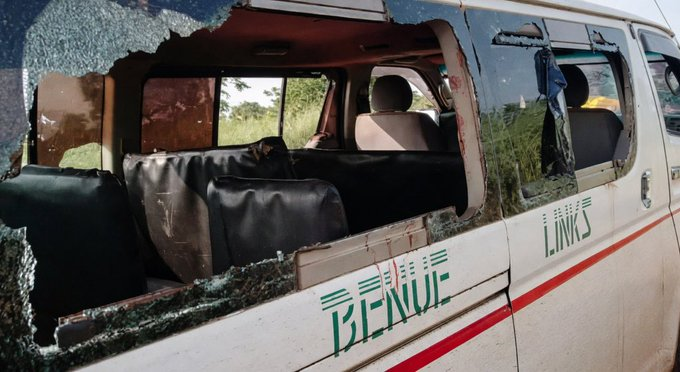
The controversy centres on the April 15 attack on a commercial bus operated by Benue Links, which was conveying 18 passengers when it was intercepted by armed assailants. The incident occurred along a stretch of road long associated with security concerns, triggering renewed anxiety over the safety of travellers in the region.
In the days following the abduction, the Joint Admissions and Matriculation Board and the Benue State Police Command issued statements clarifying that the victims were not part of any organised group of candidates travelling for the Unified Tertiary Matriculation Examination. According to both institutions, the passengers were not officially linked to the examination process, and some had reportedly travelled for other purposes, including participation in a police recruitment exercise.
However, this position has been met with strong resistance from families of the victims, who insist that several of those on board were indeed travelling to sit for the examination scheduled for the following day. A relative of one of the abducted passengers, who spoke on condition of anonymity, described the official denial as both inaccurate and insensitive.
According to the family member, his nephew was among those on the bus and had been preparing to sit for the examination in Otukpo. He stated that many of the passengers were students who had embarked on the journey specifically because their examination centres were located outside their immediate communities.
The relative argued that the urgency of the trip, which took place on the eve of the examination, reflected the time-sensitive nature of the candidates’ plans. He maintained that only a minority of those on board were not travelling for the examination, contradicting the narrative presented by authorities.
Beyond disputing the official account, the family member also raised broader concerns about the examination body’s placement system. He criticised what he described as a pattern of assigning candidates to distant centres, often requiring them to undertake long and potentially risky journeys in order to participate in the examination.
According to him, candidates from Makurdi and surrounding areas are frequently posted to towns such as Otukpo and even locations outside the state, forcing them to travel across regions with known security challenges. While he stopped short of directly blaming the examination body for the abduction, he argued that such logistical arrangements create conditions that expose candidates to danger.
The relative also expressed disappointment with the tone of the official response, suggesting that it lacked empathy for families dealing with the trauma of the incident. He said that at a time when relatives are anxiously awaiting news of their loved ones, the focus should be on support and solidarity rather than disputing the status of the victims.
He further called on the Joint Admissions and Matriculation Board to reconsider its position and issue a statement acknowledging the concerns of affected families. According to him, even if the journey was not organised by the examination body, the connection between the victims and the examination process should warrant a more compassionate response.
The dispute highlights a broader tension between official narratives and eyewitness or family accounts in the aftermath of security incidents. While authorities rely on verified intelligence and structured investigations, families often draw on personal knowledge and direct connections to victims, leading to differing interpretations of events.
Security experts note that such discrepancies are not uncommon in crisis situations, particularly in cases involving mass abductions or attacks on public transport. They stress the importance of thorough investigations to establish accurate accounts while also acknowledging the emotional impact on those directly affected.
Meanwhile, efforts to rescue the abducted passengers and apprehend those responsible remain ongoing. The police have confirmed that some victims have been rescued through joint operations involving multiple security agencies, and several suspects have been arrested in connection with the attack. However, authorities have not yet provided a full account of how many victims remain in captivity or the exact circumstances of their rescue.
The incident has once again drawn attention to persistent security challenges along key routes in Benue State and neighbouring areas. Travellers have long expressed concerns about attacks on highways, particularly in rural corridors where response times may be slower and security presence limited.
For families of the abducted passengers, the immediate priority remains the safe return of their loved ones. Yet the disagreement over whether the victims were examination candidates has added another layer of distress, reflecting the complexities that often accompany public crises in Nigeria.
Observers say the situation underscores the need for clearer communication between authorities and affected communities, as well as greater sensitivity in official responses to incidents involving civilians. They argue that bridging the gap between institutional accounts and personal experiences is essential for maintaining public trust during times of uncertainty.
As investigations continue and rescue efforts progress, the conflicting narratives surrounding the victims’ status remain unresolved. What is clear, however, is that the incident has exposed not only the risks faced by travellers but also the challenges of managing information in a rapidly evolving security situation.
📩 Stone Reporters News | 🌍 stonereportersnews.com
✉️ info@stonereportersnews.com | 📘 Facebook: Stone Reporters News | 🐦 X (Twitter): @StoneReportNew | 📸 Instagram: @stonereportersnews
Add comment
Comments