

Published by Oravbiere Osayomore Promise.
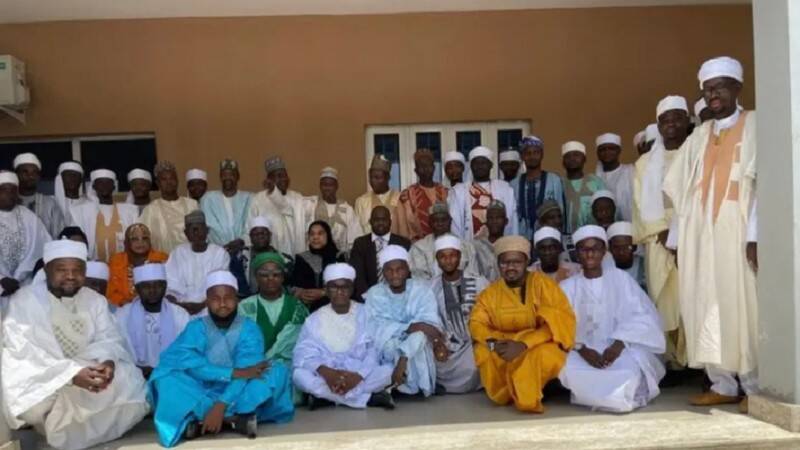
The Chief Judge of Kano State, Justice Dije Abdu-Aboki, has sworn in 30 newly appointed Shari’a Court judges in a move widely regarded as a significant reinforcement of the state’s Islamic judicial system, coming at a time of increasing demand for adjudication under Shari’a law and mounting pressure on existing courts.
The swearing-in ceremony, held in Kano, brought together senior judicial officers, government officials, and key stakeholders within the justice sector. The event underscored the importance of the judiciary in maintaining social order and delivering justice within the framework of Islamic law, which remains central to the lives of many residents in the state.
In her address, Justice Abdu-Aboki described the development as a major step toward strengthening justice delivery in Kano. She noted that the expansion of the Shari’a bench was necessary to improve efficiency, reduce delays in case handling, and enhance access to justice for citizens seeking legal redress through Islamic courts. According to her, the increasing volume of cases across Shari’a courts in the state made it imperative to appoint more judges to ensure timely and effective adjudication.
The Chief Judge also emphasized the weight of responsibility placed on the newly sworn-in judges, urging them to uphold the highest standards of integrity, fairness, and professionalism. She called on them to remain conscious of their moral obligations, stressing that judicial authority must be exercised with a deep sense of accountability to both the law and society. She further reminded them that public confidence in the judiciary depends largely on the conduct of judicial officers.
Also speaking at the event, the Attorney-General and Commissioner for Justice in Kano State, Abdulkarim Kabiru-Maude, a Senior Advocate of Nigeria, highlighted the importance of ethical conduct within the judiciary. He urged the judges to ensure that their decisions reflect justice and equity, noting that the courts play a vital role in maintaining peace and stability within communities.
The ceremony was attended by prominent figures within the Shari’a judicial system, including the Grand Khadi of Kano State, Tijjani Yusuf-Yakasai, alongside Khadis of the Shari’a Court of Appeal and judges of the High Court. Their presence reflected institutional support for the expansion and the importance of coordination within the broader judicial framework.
Kano operates a dual legal system that accommodates both conventional courts and Shari’a courts. The latter primarily handle matters involving personal status, family disputes, inheritance, and other civil issues governed by Islamic jurisprudence. Since the reintroduction of Shari’a law in northern Nigeria in 1999, the system has remained a key pillar of justice administration in states like Kano, where it aligns closely with the religious and cultural values of the population.
Legal analysts view the appointment of 30 judges at once as a strategic response to the growing caseload within Shari’a courts. Population growth, urbanization, and increasing awareness of legal rights have contributed to a rise in disputes brought before these courts. As a result, delays in proceedings and case backlogs have become persistent challenges, often affecting the timely resolution of disputes.
By expanding the bench, the Kano State Judiciary aims to address these issues directly. The deployment of additional judges is expected to improve case management, accelerate the pace of hearings, and reduce the burden on existing judicial officers. It may also enhance access to justice, particularly for residents in rural or underserved areas who rely heavily on Shari’a courts for dispute resolution.
Beyond administrative efficiency, the development carries broader implications for governance and social cohesion. Shari’a courts play a crucial role in resolving conflicts in ways that are consistent with community values, thereby contributing to stability and harmony. Their effectiveness is often seen as essential to maintaining trust in the legal system, especially in communities where religious principles are closely intertwined with daily life.
Justice Abdu-Aboki’s remarks also reflected ongoing efforts within Nigeria’s judiciary to strengthen accountability and transparency. Concerns about corruption and bias have periodically affected public perception of the judicial system, making integrity a central focus of reforms. By emphasizing ethical conduct, the Chief Judge signaled a commitment to addressing these concerns and reinforcing public confidence.
Experts, however, caution that while increasing the number of judges is an important step, it must be complemented by sustained investment in training, infrastructure, and institutional oversight. Continuous professional development is considered essential for ensuring that judges remain well-versed in evolving interpretations of Islamic law and capable of delivering consistent and well-reasoned judgments.
The newly sworn-in judges are expected to undergo further orientation and capacity-building programs to prepare them for the demands of their roles. Senior judicial officers are also likely to provide mentorship and guidance, helping to ensure uniformity in judicial practice across the state.
For the appointees, the role comes with significant expectations. Shari’a courts often deal with deeply personal and sensitive matters, requiring judges to balance legal precision with empathy and cultural awareness. Their ability to handle such cases effectively will play a key role in shaping public perception of the judiciary.
Community leaders have welcomed the appointments, expressing optimism that the expanded bench will lead to faster resolution of disputes and improved access to justice. Many see the move as a timely intervention that will strengthen the capacity of the judiciary to meet the needs of a growing population.
As the new judges assume their positions, attention will be focused on how effectively they are integrated into the system and how quickly the anticipated improvements in justice delivery materialize. Observers will also be watching for greater consistency in rulings and a reduction in case backlogs.
The swearing-in of 30 Shari’a Court judges marks a notable development in Kano’s judicial landscape. It reflects a broader effort to adapt the justice system to evolving demands while maintaining alignment with the legal and cultural context of the state.
📩 Stone Reporters News | 🌍 stonereportersnews.com
✉️ info@stonereportersnews.com | 📘 Facebook: Stone Reporters News | 🐦 X (Twitter): @StoneReportNew | 📸 Instagram: @stonereportersnews.
Add comment
Comments