

Reported by: Ijeoma G | Edited by: Oravbiere Osayomore Promise.
A powerful and controversial declaration by David Oyedepo, founder of Living Faith Church Worldwide, has triggered widespread reactions across Nigeria after he pronounced what he described as imminent divine judgment against bandits and their alleged sponsors, placing a spiritual dimension on the country’s deepening security crisis.
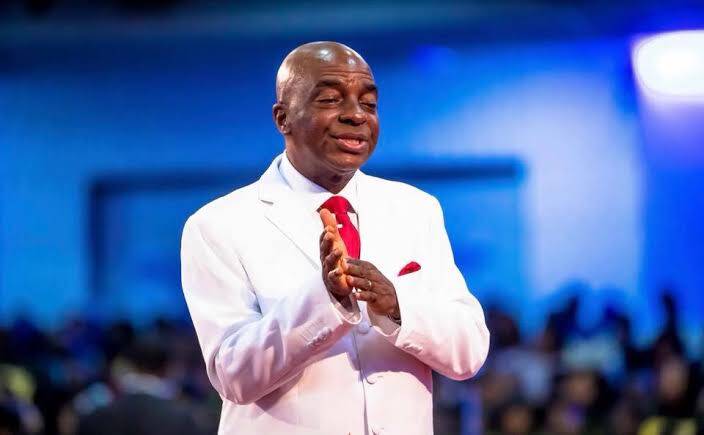
The statement was made during a Sunday service themed “Covenant Day of Vengeance” at the church’s headquarters in Faith Tabernacle, Ogun State, where Oyedepo addressed thousands of worshippers and spoke directly to the issue of violent crime and insecurity. During the sermon, he declared that within seven days, those responsible for killings, kidnappings, and widespread violence across the country would face divine retribution.
In a message that blended spiritual conviction with national concern, Oyedepo stated emphatically that unless his calling was false, a decisive turn of events would occur within the specified period. He told congregants to expect what he described as “testimonies of vengeance,” indicating that divine intervention would manifest in response to persistent bloodshed and criminality.
The declaration comes at a time when Nigeria continues to grapple with widespread insecurity, particularly in regions plagued by banditry and kidnapping. Armed groups operating across northern and central parts of the country have carried out repeated attacks on communities, schools, and highways, contributing to a prolonged climate of fear and instability.
Oyedepo’s remarks reflect a growing trend among religious leaders who have increasingly taken strong positions on national issues, especially security. In framing the crisis as both a spiritual and moral battle, he suggested that beyond political and military solutions, divine intervention remains a crucial element in restoring peace.
His sermon also emphasized the role of personal and collective responsibility, urging worshippers to pursue moral discipline and spiritual alignment. He warned that societal corruption and individual moral failings could hinder divine intervention, reinforcing the idea that national transformation is tied to spiritual renewal.
Reactions to the declaration have been mixed. Among followers and supporters, the statement has been widely embraced as a bold expression of faith and a necessary call to prayer in a time of national distress. Many believe that spiritual leadership has a vital role to play in confronting the scale of violence currently affecting the country.
However, some analysts and observers have questioned the practical implications of such declarations. While acknowledging the influence of religious leaders in shaping public opinion, they argue that spiritual pronouncements alone cannot replace the need for concrete security policies, effective law enforcement, and socio-economic reforms.
The issue of banditry in Nigeria is widely understood to be rooted in a combination of factors, including poverty, unemployment, weak institutional structures, and the proliferation of weapons. Efforts to address the problem have included military operations and various intervention strategies, though challenges persist.
Within this context, Oyedepo’s declaration has been interpreted by some as symbolic, reflecting public frustration and a desire for decisive action. Others see it as a direct spiritual intervention that aligns with deeply held beliefs about justice and accountability.
There has been no formal response from government authorities specifically addressing Oyedepo’s remarks, but the broader issue of insecurity continues to dominate national discourse. Security agencies remain under pressure to deliver results, while citizens continue to demand effective protection and lasting solutions.
As the seven-day period mentioned in the declaration draws attention, public discussion remains intense across religious and civic spaces. Whether viewed as prophecy or powerful rhetoric, the statement has amplified the national conversation on insecurity and the urgent need for change.
Ultimately, the development highlights the complex intersection of faith and governance in Nigeria, where religious voices often shape public discourse on critical national issues. Oyedepo’s message, rooted in spiritual conviction, has now become part of the broader debate on how the country confronts its ongoing security challenges.
📩 Stone Reporters News | 🌍 stonereportersnews.com
✉️ info@stonereportersnews.com | 📘 Facebook: Stone Reporters News | 🐦 X (Twitter): @StoneReportNew | 📸 Instagram: @stonereportersnews
Add comment
Comments