

Reported by: Ijeoma G | Edited by: Oravbiere Osayomore Promise.
A major disruption has struck Nigeria’s electricity transmission network after the Transmission Company of Nigeria (TCN) declared force majeure on the Ikeja West–Osogbo 330kV transmission line following the collapse of a critical transmission tower during a severe rainstorm in Lagos.
The incident occurred on Thursday, April 16, 2026, when heavy rainfall and strong winds swept across parts of Lagos, triggering a fault along one of the country’s most important power evacuation corridors. The affected line is a key backbone route that carries bulk electricity from Lagos through Ogun State to Osogbo and other parts of the South-West, making it essential to regional grid stability.
According to TCN, the line initially tripped during the storm after engineers detected a fault approximately 14.9 kilometres from the Ikeja West (Ayobo) substation. A subsequent technical inspection revealed that Tower 515 had completely collapsed at its midsection, bringing down part of the high-voltage structure and disrupting power flow along the route.
The company confirmed that the collapse was directly caused by the severity of the rainstorm, which destabilised the structural integrity of the transmission tower. Officials described the situation as beyond operational control, prompting the formal declaration of force majeure, a legal and technical recognition that the disruption resulted from natural forces that could not have been reasonably prevented.
Despite the damage, TCN clarified that power supply was not entirely cut off in the region. An alternative transmission line within the corridor remained functional and continued to evacuate bulk electricity, helping to prevent a complete blackout across affected states. However, the company acknowledged that system stability and transmission efficiency were reduced as a result of the incident.
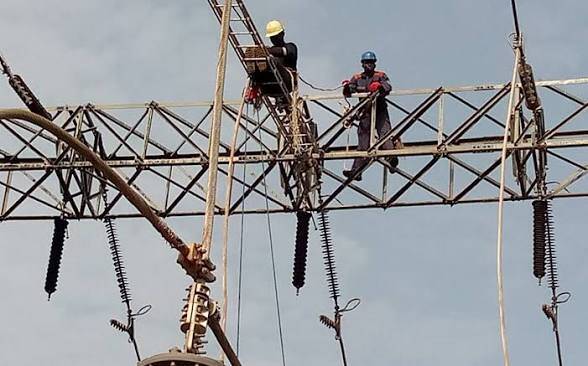
Immediately after the collapse was confirmed, TCN mobilised emergency response teams to the site. Engineers were deployed to secure the area, assess structural damage, and begin dismantling the remains of the collapsed tower in preparation for reconstruction. The company also began transporting materials and equipment needed to re-erect the structure and restore full capacity on the line.
Officials explained that the Ikeja West–Osogbo line is one of the most critical segments of Nigeria’s transmission network, forming part of the national grid backbone that supports electricity distribution across Lagos, Ogun, Oyo, Osun, and surrounding states. Any disruption along the route often has a ripple effect, reducing redundancy and placing additional pressure on alternative transmission pathways.
TCN’s declaration of force majeure effectively means it is not held responsible for delays or disruptions caused by the incident, as the damage was attributed to extreme weather conditions. The company stressed that restoration efforts are already ongoing and that engineers are working continuously to rebuild the collapsed infrastructure and restore full transmission capacity as quickly as possible.
While a specific timeline for full restoration has not been officially announced, the company assured stakeholders that emergency interventions are being prioritised to minimise prolonged disruption. Updates are expected as reconstruction progresses.
In a broader context, the incident has once again highlighted the vulnerability of Nigeria’s power transmission infrastructure to extreme weather conditions. Heavy storms, flooding, and environmental stress have repeatedly been identified as contributing factors to transmission failures across the country. Many high-voltage towers are exposed to open terrain, making them susceptible to wind pressure, corrosion, and foundation weakening during heavy rainfall.
Energy sector analysts note that the Ikeja West–Osogbo corridor has experienced similar disruptions in the past, though the complete collapse of a transmission tower is considered a more severe structural failure. Such incidents typically require extensive reconstruction efforts, including foundation rebuilding, tower reassembly, and line realignment before full restoration can occur.
The disruption also comes at a time when Nigeria’s power sector is under pressure to improve efficiency and reduce transmission losses. Regulatory targets have pushed the Transmission Company of Nigeria to strengthen grid reliability and reinforce infrastructure resilience. However, weather-related incidents like this continue to pose major challenges to those goals.
In addition to the immediate technical impact, the collapse has raised concerns among electricity distribution companies in the South-West, which depend heavily on stable transmission from the Ikeja West hub. Fluctuations in supply and reduced grid stability may result in temporary load management or uneven distribution until the damaged line is fully restored.
TCN has reiterated its commitment to strengthening the resilience of the national grid, including ongoing efforts to improve maintenance practices, reinforce vulnerable structures, and enhance redundancy across major transmission corridors. The company also assured the public that every effort is being made to restore normal power flow.
For now, engineers remain on-site working around the clock to rebuild the damaged tower and stabilise the affected section of the grid. Authorities say full restoration will depend on the speed of reconstruction and the completion of technical safety checks once the structure is reassembled.
The incident underscores the fragile balance of Nigeria’s electricity transmission system and the growing need for climate-resilient infrastructure capable of withstanding increasingly severe weather conditions.
📩 Stone Reporters News | 🌍 stonereportersnews.com
✉️ info@stonereportersnews.com | 📘 Facebook: Stone Reporters News | 🐦 X (Twitter): @StoneReportNew | 📸 Instagram: @stonereportersnews
Add comment
Comments