

Reported by: Ijeoma G | Edited by: Oravbiere Osayomore Promise.
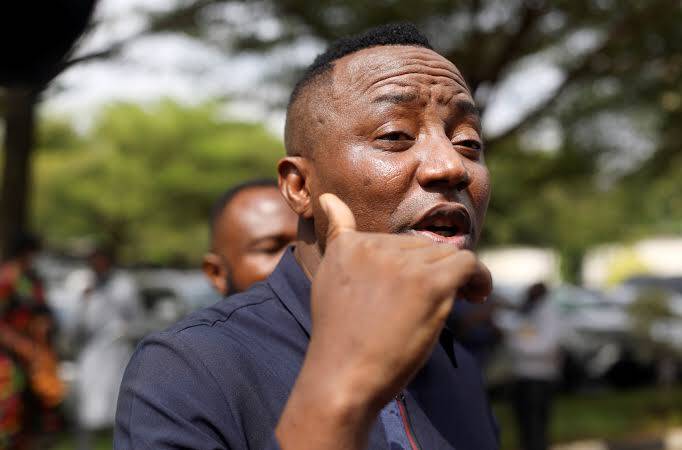
Human rights activist and former presidential candidate Omoyele Sowore has issued a forceful rejection of reports suggesting that Turkey may establish a military base in Nigeria, declaring that any such move must be resisted “with any form of energy in our body.” Sowore, who is also the publisher of online news platform Sahara Reporters, made the remarks in a statement that has since ignited intense debate across social media and political circles. “It’s terrible that a country like Turkey is coming to establish a military base in Nigeria,” Sowore said. “We should resist any form of foreign entity coming to Nigeria to establish a base, they should be resisted with any form of energy in our body.” He further questioned Nigeria’s capacity for self-defence, adding, “If we can’t defend ourselves, then we should go and sell this country on Temu.” The comments come amid growing public discourse over Nigeria’s expanding defence cooperation with Turkey, following a series of high-level bilateral meetings in Antalya over the weekend.
Sowore’s opposition to foreign military presence is consistent with his long-held position on national sovereignty. He has previously rejected calls for United States military intervention in Nigeria, arguing that foreign powers often exploit such arrangements to advance their own strategic interests rather than genuinely assist host nations. His latest intervention has found resonance among Nigerians who fear that allowing a foreign military installation could compromise the country’s sovereignty and lead to unwanted external influence. On social media, reactions have been sharply divided. Some users echoed Sowore’s concerns, with one commenter writing, “Who is even approving all these foreign bases in our country?” while another questioned the logic of hosting foreign troops when Nigeria struggles to provide basic infrastructure for its own citizens. Others, however, argued that international military cooperation is a routine aspect of modern defence strategy and that Nigeria stands to benefit from Turkey’s expertise in counterterrorism and special operations.
The controversy stems from a defence agreement reached between Nigeria and Turkey during the Antalya Diplomacy Forum 2026, where Nigeria’s Minister of Defence, retired General Christopher Musa, met with his Turkish counterpart. According to a statement issued by the Ministry of Defence, both parties agreed to establish a major military training facility in Nigeria as a long-term centre of excellence. The agreement outlines that Nigeria will provide a temporary training site while a permanent coastal location has already been identified for infrastructure development. The partnership includes structured training programmes for Nigerian Armed Forces personnel in Special Forces operations, counterterrorism, intelligence integration, counter-drone and counter-improvised explosive device operations, as well as United Nations pre-deployment training. An initial cohort of Nigerian troops is expected to be deployed to Turkey for training, alongside Turkish language instruction and field exercises.
The defence ministry has been careful to characterise the agreement as a training and capacity-building arrangement rather than the establishment of a sovereign military base. Official statements repeatedly refer to a “military training facility” and “centre of excellence,” emphasising that the infrastructure will be located on Nigerian soil and operated under Nigerian authority. The ministry’s statement noted that Turkey has offered to share best practices in reintegration programmes to support Nigeria’s management of surrendered combatants, and that both countries will collaborate on surveillance systems, unmanned aerial platforms, and satellite-enabled monitoring. Technology transfer and defence industry cooperation are also central components of the deal, with discussions covering potential co-development of military platforms and maintenance training.
Nevertheless, the distinction between a training facility and a military base has done little to calm public anxieties. Sowore’s characterisation of the arrangement as a “military base” has gained traction among critics who view any permanent foreign military infrastructure on Nigerian soil as an unacceptable erosion of sovereignty. Some commentators have also raised religious concerns, noting that Turkey is a predominantly Muslim nation and questioning whether the partnership could accelerate what they perceive as the gradual Islamisation of Nigeria’s security institutions. Defence officials have dismissed such concerns as unfounded, insisting that the agreement is purely technical and focused on addressing Nigeria’s pressing security challenges, including a 17-year-long insurgency in the North-East, widespread banditry, and escalating kidnappings for ransom.
The Turkey defence partnership is not occurring in isolation. Nigeria has in recent years expanded its military collaborations with several nations, including ongoing training and support engagements with the United States military. The deal with Turkey, however, carries unique geopolitical implications given Ankara’s growing military footprint across Africa. Turkey has established military training facilities in Somalia and has defence cooperation agreements with several other African nations, positioning itself as an alternative security partner to traditional Western powers. For Nigeria, the partnership offers access to advanced drone technology, counterterrorism expertise, and potentially cost-effective defence procurement at a time when the government is seeking to modernise its armed forces without overstretching the national budget.
Minister of Defence Christopher Musa has welcomed the agreement as “a significant step forward in Nigeria–Turkey defence relations,” expressing optimism that the partnership would deliver measurable improvements in national security. The ministry has committed to a phased implementation approach, with immediate actions including the commencement of training deployments, technical exchanges on surveillance systems, and planning for training infrastructure in Nigeria. Security analysts have offered cautious support for the deal, noting that international military cooperation can enhance technical capability but warning that operational success will ultimately depend on addressing deeper structural issues within Nigeria’s security apparatus, including troop welfare, intelligence coordination, and accountability.
As the debate over the Turkey defence agreement continues to unfold, Sowore’s intervention has succeeded in placing sovereignty concerns at the centre of public discussion. Whether the arrangement is ultimately implemented as a training facility or perceived as a foreign military base may depend less on the technical details of the agreement and more on the transparency with which the government communicates its intentions to a sceptical public. For now, Sowore’s warning has ensured that the government cannot move forward without accounting for the deep-seated anxieties that foreign military cooperation continues to provoke in a nation still mindful of its colonial history. The coming weeks will reveal whether the Tinubu administration can successfully navigate these concerns or whether opposition to the deal will grow into a broader political movement.
📩 Stone Reporters News | 🌍 stonereportersnews.com
✉️ info@stonereportersnews.com | 📘 Facebook: Stone Reporters News | 🐦 X (Twitter): @StoneReportNew | 📸 Instagram: @stonereportersnews
Add comment
Comments