

Reported by: Ijeoma G | Edited by: Oravbiere Osayomore Promise.
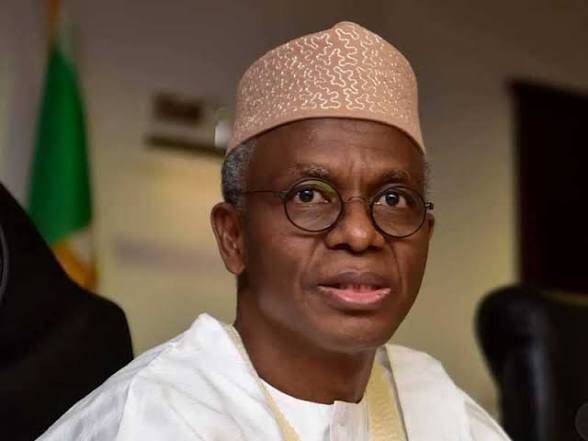
The Department of State Services on Thursday arraigned former Kaduna State Governor, Nasir El-Rufai, before a Federal High Court in Abuja on a five-count amended charge of allegedly intercepting the telephone communication of the National Security Adviser, Nuhu Ribadu, an indictment founded largely on his own public admissions during a nationally televised interview. The former governor, who also once served as Minister of the Federal Capital Territory under President Olusegun Obasanjo, was brought before Justice Joyce Abdulmalik, where he entered a plea of not guilty to all counts, setting the stage for a high-stakes legal battle that has sent shockwaves through the nation's political and security circles. At the heart of the prosecution's case is El-Rufai's appearance on Arise Television’s Prime Time programme on February 13, 2026, where he openly claimed that an associate had wiretapped the NSA's phone, which he said contained an order for his arrest. The security agency has anchored its amended charge, marked FHC/ABJ/99/2026, on this very television appearance, with the prosecution arguing that his statements amounted to a direct admission of committing acts that compromise public safety and national security. A team of five DSS prosecutors, led by M. E. Ernest, alleged that El-Rufai, acting with others who are still at large, not only unlawfully intercepted the NSA's communications but also failed to report the individual who performed the act to security agencies, an offence under the Cybercrimes (Prohibition, Prevention, etc.) (Amendment) Act, 2024. The prosecution further contended that the use of such technical equipment instilled a "reasonable apprehension of insecurity" among Nigerians, an action punishable under the Nigerian Communications Act 2003.
The courtroom drama unfolded with a series of procedural moves that highlighted the legal complexity of the case. At the commencement of proceedings on Thursday, DSS counsel, Oluwole Aladedoye (SAN), informed the court that the initial three-count charge had been further amended to five counts, a change that was not opposed by the defence. Consequently, Justice Abdulmalik struck out the earlier charge and read the new counts to the former governor, who again repeated his "not guilty" plea. The four-page charge sheet detailed two of the most significant allegations. Count four stated that El-Rufai "intentionally and without authorization, intercepted the communications of the National Security Adviser, Nuhu Ribadu, as admitted by you on 13 February, 2026, while appearing as a guest on Arise TV Station’s Prime Time Programme". Count five alleged that he, along with others still at large, "did use technical equipment or systems which compromised public safety, national security and instilled reasonable apprehension of insecurity among Nigerians" by unlawfully intercepting the NSA's communications. The prosecution's reliance on the defendant's own televised words represents a rare and legally potent strategy. In the February interview, El-Rufai had defiantly stated, "He made the call because we listened to their calls," and "Someone tapped his phone. The government listens to our calls all the time without a court order. Someone tapped his phone and told us that he gave the order." Those words, now central to a criminal charge, have transformed him from a vocal critic into the subject of a major state investigation.
As the legal arguments concluded, the court's attention turned to procedural matters, with Justice Abdulmalik adjourning the case to May 18, 19, and 20, 2026, for the hearing of various applications. The defence team, led by Oluwole Iyamu (SAN), informed the court of a pending bail application filed on February 17, as well as a separate motion seeking to quash the amended charge entirely. In a rare concession, the prosecution stated it would not oppose the bail application, though the defence noted that El-Rufai's access to counsel is constrained because he remains in custody of the Independent Corrupt Practices and Other Related Offences Commission over separate corruption allegations.
The case has drawn sharp reactions from across the political spectrum. Some observers argue that the charges, while legally grounded, are unprecedented and could set a new precedent for how the government handles claims of state surveillance. Others view the prosecution as a necessary step to assert that national security matters cannot be flippantly discussed in the public domain, especially by a former high-ranking official. El-Rufai's legal team has maintained that the charges are politically motivated and an attempt to intimidate opposition voices ahead of the 2027 general elections.
However, the prosecution has remained focused on the letter of the law, pointing to the existence of a case simply based on the former governor's televised statements. As the case moves toward its substantive hearing in May, the legal and political implications are profound. If convicted, El-Rufai faces severe penalties under the Cybercrimes Act. For the federal government, a successful prosecution would validate its stance that no individual, regardless of their former office, is above the law when it comes to national security. For El-Rufai, once a powerful governor and a vocal critic of the administration, the outcome will determine whether his public confessions will lead to his legal undoing. The nation now waits to see if his own words will convict him.
📩 Stone Reporters News | 🌍 stonereportersnews.com
✉️ info@stonereportersnews.com | 📘 Facebook: Stone Reporters News | 🐦 X (Twitter): @StoneReportNew | 📸 Instagram: @stonereportersnews
Add comment
Comments