

Reported by: Ijeoma G | Edited by: Oravbiere Osayomore Promise.
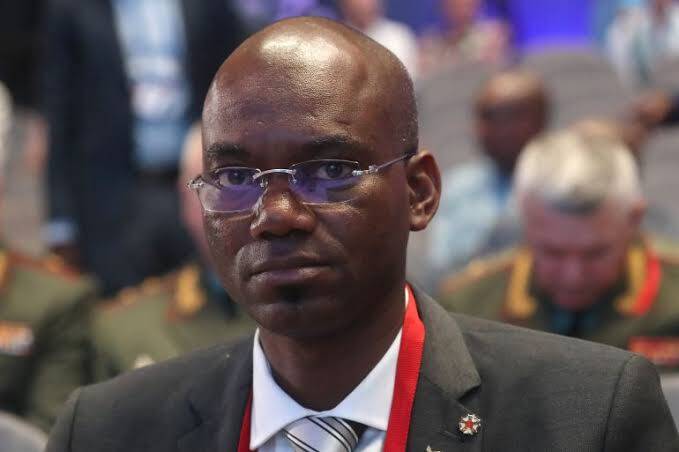
The al-Qaeda-linked group Jama’at Nusrat al-Islam wal-Muslimin (JNIM) has claimed responsibility for the assassination of Mali’s Defence Minister, General Sadio Camara, along with members of his immediate family, in one of the most audacious and coordinated assaults on the country’s military leadership in years. The attacks, which began on April 25, 2026, targeted multiple military installations across the country and have killed Camara, who was one of the most powerful figures in the ruling military junta.
The attack on Camara was carried out using a suicide car bomb at his residence in Kati, a heavily fortified garrison town approximately 15 kilometers northwest of the capital, Bamako. Al Jazeera reported that the residence was completely destroyed. Initially, Camara’s aides denied that the minister had been wounded. However, family sources and multiple officials later confirmed he was taken to a hospital in Bamako, where he died from his injuries. The bombing also killed the minister’s second wife and two of his grandchildren, according to reports from AFP and The Peninsula.
General Sadio Camara was a central figure in the military junta that seized power in the 2020 and 2021 coups. He had served as Defence Minister since October 2020, making him one of the longest-serving and most influential members of the regime. Due to his power within the military, he was seen by many analysts as a potential future leader of the country. The assault on his heavily guarded home in Kati, a military stronghold where interim President Assimi Goita also resides, represents a significant breach of the nation’s most secure zones.
The attack on Camara was part of a massive, simultaneous offensive launched by JNIM in coordination with the Tuareg-led separatist group, the Azawad Liberation Front (FLA). This marks the first time the two groups have publicly acknowledged operating together, signaling a dangerous new phase of the conflict. The FLA confirmed it had joined forces with the Islamist militants for this operation. JNIM claimed responsibility for the wave of attacks, which began before dawn on April 25. The assaults included a strike on the Bamako Modibo Keita International Airport, which forced its temporary closure and caused flights to be cancelled or diverted.
The coordinated assaults targeted military bases in several strategic cities, including Kati, Sevare, Gao, and the symbolic northern town of Kidal. Explosions and sustained gunfire were reported at multiple locations. While the Malian government announced that the situation was under control, fighting continued for a second day, particularly in Kidal. The FLA claimed their fighters successfully captured Kidal, which had been a major victory for the military when it was retaken from separatists in 2023. In response to the escalating violence, the governor of Bamako imposed a 72-hour overnight curfew from 9 p.m. to 6 a.m..
The Malian government confirmed that 16 people, including civilians and soldiers, were wounded in the attacks. The military claimed that several hundred militants were killed as they repelled the assaults. The international community has expressed its solidarity with Mali. United Nations Secretary-General Antonio Guterres strongly condemned the attacks, expressing deep concern over the renewed violence in several locations across the country. The African Union also condemned the attacks. Al Jazeera analyst Bulama Bukarti noted that the attacks were a clear implementation of an agreement the armed groups made last year to unite against the state.
The killing of General Camara represents the highest-profile assassination of a senior official since the junta took power in 2020. It has been described as one of the biggest blows to the military leadership and a major escalation in the country’s decade-long conflict. The attacks are seen as a direct challenge to the ruling junta’s central narrative of having restored security after turning away from Western partners and toward Russia.
The death of a key figure like General Camara leaves a significant power vacuum at the heart of Mali’s defense apparatus. As the West African nation continues to struggle against an entrenched and now more united insurgency, the coming days will be critical in determining whether the military leadership can reassert control and prevent the insurgents from capitalizing on this high-profile victory.
📩 Stone Reporters News | 🌍 stonereportersnews.com
✉️ info@stonereportersnews.com | 📘 Facebook: Stone Reporters News | 🐦 X (Twitter): @StoneReportNew | 📸 Instagram: @stonereportersnews
Add comment
Comments