

Reported by: Ijeoma G | Edited by: Oravbiere Osayomore Promise.
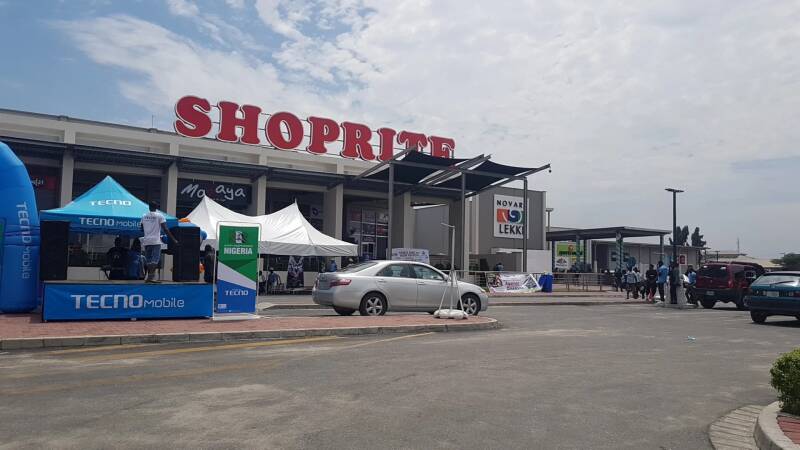
A Federal High Court sitting in Ikoyi, Lagos, has issued a sweeping order restraining the directors of Retail Supermarkets Nigeria Limited, the operator of Shoprite stores in Nigeria, from selling or transferring the company’s shares or any of its assets pending the full satisfaction of a judgment debt that has now ballooned to approximately N1.76 billion. Justice Ambrose Lewis-Allagoa granted the interim order following an ex parte application filed on November 21, 2025, by counsel to the judgment creditor, Tobenna Nnamani. The application was filed in furtherance of a consent judgment earlier entered by the same court on July 22, 2025, resolving a bitter commercial dispute that had threatened to force the retail giant into liquidation.
The court also directed the directors, including Jide Ogundare and other unnamed board members, to immediately file a full and detailed disclosure of all movable and immovable assets belonging to the company, including the firm’s sprawling distribution centre in the Ajao area of Lagos and all relevant trademarks. Creditors, who have grown impatient with the company’s failure to honour the terms of the settlement, are seeking to enforce the judgment by any lawful means, including attaching funds in multiple financial institutions across the country. Nnamani had urged the court to issue garnishee orders nisi attaching all monies standing to the credit of the judgment debtor across several banks, arguing that the company was clearly trying to dispose of assets to frustrate recovery.
The case has a long and winding history. The dispute originally involved two separate claims filed by African Retail Tabloid Limited (ARTL) and UEL Global Resources Limited (UEL) against Retail Supermarkets Nigeria Limited. ARTL had initiated winding‑up proceedings against Shoprite’s Nigerian operator over an alleged debt of N440 million, while UEL pursued a summary judgment claim of N1.33 billion. Rather than fight two protracted legal battles, the parties opted for an out‑of‑court settlement, which was subsequently formalised by Justice Lewis-Allagoa as a consent judgment. Under the terms of that agreement, the company was to pay a total sum of N1,765,991,433.23 (approximately N1.76 billion) in 13 instalments. The repayment plan commenced with a N400 million payment due on July 17, 2025, and was scheduled to end with a final payment of about N66 million on January 18, 2026. All payments were to be made into two designated accounts with Zenith Bank.
The settlement agreement contained a default clause that was both swift and savage. According to the consent judgment, if the company failed to meet any instalment payment on the due date, the entire outstanding balance would become immediately due and payable, and the debt would start accruing interest at the rate of 20 percent per quarter until fully liquidated. The creditors’ legal team, in a demand letter dated November 7, 2025, informed the company’s managing director that the repayment plan had been breached, thereby activating the default provisions. The letter triggered the fresh round of court battles that ultimately led to the asset restraint order now in place.
Relying on the court’s directive, the judgment creditor has formally demanded that Mr. Ogundare and other directors provide details of all of Shoprite’s assets, including the full inventory of the Ajao distribution centre, a list of all trademarks held by the company, and a comprehensive account of any property, whether movable or immovable, that could be reached to satisfy the debt. The creditor’s legal team has also moved to have the garnishee order nisi made absolute, which would compel banks to release funds directly from the judgment debtor’s accounts.
The development marks a significant escalation in the legal battle between the South African retail giant’s Nigerian arm and the two local companies that have been fighting for payment. While Shoprite continues to operate its stores across the country, the fresh court order has placed its directors in a legal vice, effectively barring them from disposing of any asset that could be used to satisfy the judgment debt. The company has not yet issued an official statement on the ruling, but sources close to the management say that negotiations are ongoing to avoid a full‑blown enforcement that could disrupt operations.
The matter has been adjourned to May 7, 2026, for continuation of proceedings. The court is expected to hear arguments on whether the garnishee orders should be made absolute and whether any further sanctions should be imposed on the directors for what the creditor describes as a persistent refusal to honour a binding court judgment. Until then, the directors of Retail Supermarkets Nigeria Limited remain restrained, their assets effectively frozen, and their lawyers likely scrambling for a way out of a debt that keeps growing every quarter.
📩 Stone Reporters News | 🌍 stonereportersnews.com
✉️ info@stonereportersnews.com | 📘 Facebook: Stone Reporters News | 🐦 X (Twitter): @StoneReportNew | 📸 Instagram: @stonereportersnews
Add comment
Comments