

Reported by: Ijeoma G | Edited by: Oravbiere Osayomore Promise.
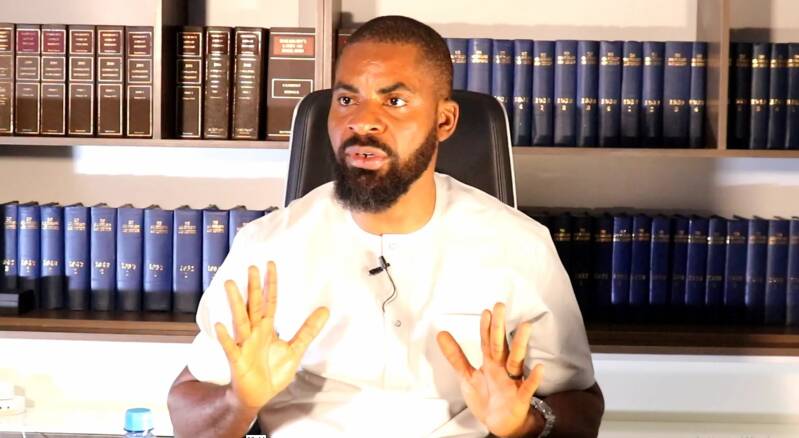
The price of Premium Motor Spirit (PMS), commonly known as petrol, has surged to nearly N2,000 per litre in several parts of Nigeria, a staggering increase from the approximately N200 per litre at the time President Bola Tinubu removed the fuel subsidy in June 2023. Amid this economic turmoil, human rights activist and lawyer Deji Adeyanju has launched a blistering attack on the administration, rejecting the president’s reputation as a "master strategist" and demanding the immediate return of the subsidy. In a viral video and subsequent statements over the weekend, Adeyanju argued that the removal has not only failed to deliver promised benefits but has also enriched political officeholders while ordinary Nigerians sink deeper into poverty.
Adeyanju, a prominent civil rights attorney known for his campaigns against police brutality and government excesses, did not mince words. "Fuel is almost N2,000 and people are still calling Tinubu the master strategist. Master of strategy in what?" he asked in the video, which has since been viewed millions of times across social media platforms. He insisted that the president should reverse the policy, arguing that the Nigerian economy is haemorrhaging and that fuel price is the fulcrum on which everything else turns. "The President should bring back fuel subsidy because the economy is suffering. If he brings back fuel subsidy today, fuel will come down. Majority of what we do in Nigeria including transportation is tied to petrol," he said.
The removal of the fuel subsidy was one of the most controversial decisions of the Tinubu administration. Upon taking office, the president declared that "subsidy is gone," a move that was initially welcomed by international financial institutions and some economic analysts as long overdue. However, the immediate hike in petrol prices triggered a cascade of inflation, pushing transportation costs up by over 150 percent and food prices even higher. The government introduced a series of palliative measures, including cash transfers and the distribution of grains, but these have been widely criticised as inadequate and poorly targeted. The Nigeria Labour Congress (NLC) and the Trade Union Congress (TUC) have staged multiple protests, and in August 2023, the NLC even declared a nationwide strike that briefly shut down the country.
Adeyanju's criticism, however, went beyond economics and touched on what he described as the growing decadence of the political class. He directly named Senate President Godswill Akpabio, pointing to his physical appearance as evidence of excess. "Now, today in Nigeria, is it not the governors that they are subsidizing? Can't you see how fresh and big Akpabio's stomach has become?" he asked rhetorically. He alleged that governors are now earning ten times what they earned before the Tinubu administration came to power. "The governors in today's Nigeria are earning 10 times what they used to earn before this administration came into power," he claimed, though he did not provide specific figures or a breakdown of how he arrived at that calculation.
While the claim about governors' salaries is difficult to verify officially – most states do not publicly disclose the full compensation packages of their governors – it is not without context. Since the removal of the subsidy, state governments have seen an increase in their allocations from the Federation Account, partly due to the higher revenue generated from petroleum taxes and exchange rate differentials. Some states have also raised internally generated revenues. However, whether this translates directly to a tenfold increase in governors' personal earnings is questionable and appears to be a rhetorical flourish aimed at highlighting perceived inequality.
The activist lawyer also tied the economic hardship to the broader insecurity crisis, arguing that poverty fuels banditry and kidnapping. In a separate interview, he had previously stated that the government cannot achieve peace without first addressing the economic desperation of millions of young Nigerians. His latest intervention, squarely focused on fuel subsidy, has reignited a debate that the Tinubu administration had hoped to put to rest. The ruling All Progressives Congress (APC) has not yet issued an official response to Adeyanju's comments, but party spokespersons have in the past defended the subsidy removal as a courageous reform that will yield long-term dividends.
Data from the National Bureau of Statistics (NBS) paints a grim picture. Inflation has remained stubbornly above 25 percent for most of 2025 and 2026, with food inflation even higher. The naira, despite some recent stability, has lost more than 60 percent of its value against the dollar since May 2023. The World Bank, in its April 2026 Nigeria Development Update, noted that while fiscal consolidation is necessary, the social impact of the reforms has been severe, and the government needs to do much more to protect the poor. The report recommended targeted cash transfers rather than a blanket subsidy, a position that successive Nigerian governments have struggled to implement due to corruption and logistical challenges.
Public reaction to Adeyanju's video has been sharply divided. Many social media users applauded him for "speaking truth to power," with some sharing their own stories of hardship. Others, however, accused him of oversimplifying a complex economic issue and noted that bringing back the subsidy would once again place an enormous burden on the national budget, which in 2025 spent more on debt servicing than on health and education combined. A prominent economist who spoke on condition of anonymity told this reporter that a return to the subsidy regime would be "disastrous" and would undo whatever progress has been made in fiscal discipline.
The government has consistently ruled out a return to the subsidy era. In a recent interview, the Minister of Finance, Taiwo Oyedele, said that the administration is instead focused on reducing production costs by tackling insecurity in oil-producing areas and encouraging local refining. The Dangote Refinery, which began operations in late 2025, has started supplying local gasoline, but its output has not yet been sufficient to bring prices down significantly.
As the 2027 elections draw closer, the fuel subsidy debate is likely to become an even more potent political weapon. Adeyanju, who has been a vocal critic of the APC, is not a neutral observer, but his arguments resonate with millions of Nigerians who see their living standards collapsing. Whether the government will heed his call or continue to defend its reform agenda remains to be seen. For now, petrol remains close to N2,000 per litre, and for many Nigerians, the question is not whether the subsidy should return, but how much longer they can survive without it.
📩 Stone Reporters News | 🌍 stonereportersnews.com
✉️ info@stonereportersnews.com | 📘 Facebook: Stone Reporters News | 🐦 X (Twitter): @StoneReportNew | 📸 Instagram: @stonereportersnews
Add comment
Comments