

Reported by: Ijeoma G | Edited by: Oravbiere Osayomore Promise.
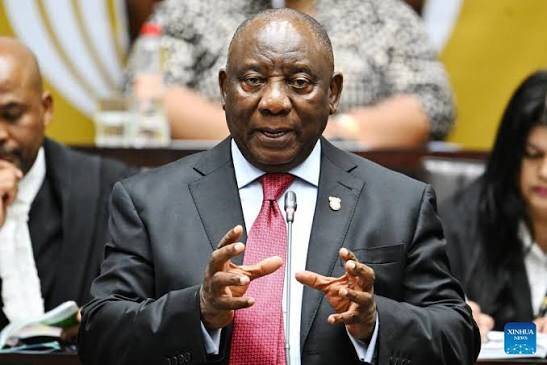
President Cyril Ramaphosa has broken his silence on the wave of anti-foreigner violence sweeping across South Africa, delivering a measured but firm message that while his government has legitimate concerns about illegal immigration, it will not tolerate xenophobic vigilantism or the targeting of foreign nationals. Speaking at the official Freedom Day celebrations in the Free State on Monday, Ramaphosa acknowledged the rising tensions but rejected any attempt to turn legitimate grievances into hatred against fellow Africans.
"We must not allow these concerns to give rise to xenophobia, to give rise to hatred that is directed towards people from other African countries or any part of the world," Ramaphosa told the gathering at Dr Rantlai Molemela Stadium in Bloemfontein. "We are South Africans. We cannot be driven by hatred towards others. Others gave us compassion. They gave us support. And we cannot be driven by hatred towards them." The president's comments come amid a surge of xenophobic attacks that have rocked major cities including Durban, Cape Town, East London and parts of Johannesburg, with foreign-owned shops looted, properties destroyed, and foreign nationals harassed and assaulted.
In recent weeks, tensions have flared in areas such as Yeoville and Rosettenville in Johannesburg, where vigilante groups have been stopping people on the streets, demanding identification documents, and blocking foreign nationals from accessing basic services. Reports from civil society organisations describe migrants being intimidated, beaten, and told to "go home." Videos circulating on social media show Ghanaian nationals being surrounded and forced to prove their legal status, prompting an official complaint from Ghana's Foreign Minister, Samuel Okudzeto Ablakwa, who described the situation as "a profound betrayal of the spirit of African cooperation."
Ramaphosa, whose African National Congress was supported by other African nations during the anti-apartheid struggle, reminded South Africans of the debt they owe to the continent. He acknowledged the genuine difficulties posed by undocumented migration but insisted that the answer lies in law enforcement, not mob violence. "Instead, we must insist that the law of our country be upheld and enforced," he said. "That is why we are clamping down on illegal migration and on businesses that flout the law by hiring undocumented persons at the expense of our citizens."
The president said the government was actively rooting out corruption in the immigration system and would not allow people to take the law into their own hands. His message carried a clear warning to vigilante groups such as Operation Dudula, which have normalised the practice of civilians stopping, questioning and intimidating anyone they perceive to be foreign. "We extend hospitality to those who are guests in our country with the expectation that generosity is honoured with respect for our society and its laws," Ramaphosa said. "Respect us as South Africans. Respect our laws. Respect our conventions and our traditions as you would want us to respect the laws and traditions of your own country."
The South African Police Service has been placed on high alert, with the Ministry of Police issuing a formal statement condemning the attacks and instructing law enforcement to act decisively. "The Ministry strongly condemns the recent xenophobic acts of violence and intimidation directed at Ghanaian nationals and other foreign nationals within the Republic," the statement read. "These actions are not only unlawful but stand in direct opposition to the values of dignity, equality, and human rights upon which our democracy is founded." The police have been ordered to apprehend anyone inciting or participating in such criminal conduct.
The African Commission on Human and Peoples' Rights has expressed grave concern over the latest incidents, noting that they form part of a longstanding pattern of xenophobic violence in South Africa stretching back to 1998. The Commission called on the South African government to conduct prompt and impartial investigations, ensure accountability for perpetrators, dismantle vigilante groups, and take decisive measures to protect migrants.
Meanwhile, Nigeria's Acting Ambassador to South Africa, Temitope Ajayi, has sought to calm fears among Nigerian nationals, describing the violence as "isolated tension" rather than a widespread siege. Speaking on Channels Television on Monday, Ajayi said South African authorities had responded promptly and that both governments were working closely to ensure the safety of all foreign nationals. The Nigerians in Diaspora Commission has, however, advised citizens to exercise caution, avoid protest zones, and monitor local media.
The wave of xenophobic attacks has drawn sharp criticism from across the region. Ghana has initiated high-level diplomatic talks with South Africa, and Nigeria's Minister of State for Foreign Affairs, Ambassador Bianca Onoh, is actively engaging with her South African counterpart. Human rights organisations have warned that the problem is worsening as police enforcement remains uneven and vigilante groups operate with impunity. As Ramaphosa himself made clear, the celebrations of Freedom Day cannot be separated from the hard work of defending the very freedoms that were won through continental solidarity. South Africa remains a welcoming nation, the president insisted, but has now drawn a firm line in the sand. For those in the country legally, the expectation is simple: respect the law. For those who take the law into their own hands, the warning is just as clear: the government will act.
📩 Stone Reporters News | 🌍 stonereportersnews.com
✉️ info@stonereportersnews.com | 📘 Facebook: Stone Reporters News | 🐦 X (Twitter): @StoneReportNew | 📸 Instagram: @stonereportersnews
Add comment
Comments