

Reported by: Ijeoma G | Edited by: Oravbiere Osayomore Promise.
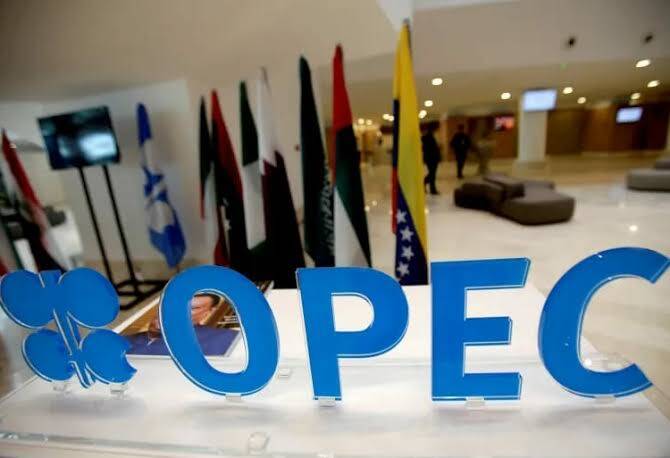
The United Arab Emirates has delivered a seismic blow to the world’s most powerful oil cartel, announcing on Tuesday that it is withdrawing from both OPEC and the broader OPEC+ alliance after nearly 60 years of membership. The decision, effective 1 May 2026, was announced by the state‑run Emirates News Agency (WAM) and cited the UAE’s “long‑term strategic and economic vision and evolving energy profile”. The move, which analysts say has been years in the making, hands a heavy defeat to OPEC’s de facto leader, Saudi Arabia, at a moment when the Iran war has already plunged global energy markets into unprecedented turmoil.
The UAE, which through Abu Dhabi joined OPEC in 1967 and retained membership after the nation’s founding in 1971, is the cartel’s third‑largest producer. According to OPEC’s most recent data, the Emirates accounted for about 2.9 million barrels of global crude output daily – roughly 9% of total OPEC production. Its departure strips the group of one of its most valuable and compliant members. “With the UAE leaving, OPEC loses about 15% of its capacity and one of its most compliant members,” said Saul Kavonic, head of energy research at MST Financial, who described the exit as “the beginning of the end of OPEC”.
The roots of the rupture lie in a long‑simmering disagreement over production quotas. OPEC caps had long limited the UAE to roughly 3.2 million barrels per day, even though the country has invested billions in expanding its capacity to nearly 5 million barrels per day – a target Abu Dhabi’s national oil company is racing to hit by 2027. “The UAE has been planning to grow oil production by up to 30%, and it would be difficult to do so within the limitations of OPEC and OPEC+,” said Sergey Vakulenko, a former Gazprom executive now at the Carnegie Russia Eurasia Center. Robin Mills, CEO of Dubai‑based consultancy Qamar Energy, confirmed that OPEC’s quotas had become a straitjacket. “OPEC quotas had most recently limited the UAE to 3.2 million barrels of production a day, when in fact it has capacity to produce closer to 5 million barrels a day,” he told CNN’s Connect the World.
The announcement caught global oil markets off guard, triggering a sharp but short‑lived sell‑off. Crude prices initially stumbled under algorithmic selling before stabilising as traders refocused on the far larger supply shock caused by the closure of the Strait of Hormuz. Brent crude futures for June settled 3.1% higher at US$111.60 a barrel, while West Texas Intermediate rose to just under US$100. Analysts at Rystad Energy noted that, while near‑term effects might be muted by the ongoing Hormuz disruption, “the longer‑term implication is a structurally weaker OPEC”. Outside the group, “the UAE would have both the incentive and the ability to increase production”, raising fundamental questions about Saudi Arabia’s role as the market’s central stabiliser and pointing to a potentially more volatile oil market once the strait reopens.
The exit is the second major defection from OPEC in seven years, following Qatar’s withdrawal in 2019. But Abu Dhabi’s departure is far more consequential. Alongside Riyadh, the UAE was one of the few members that maintained meaningful spare capacity – the very mechanism through which OPEC exerts influence over global prices. “Without the UAE, OPEC will be much weaker,” Vakulenko said. “Other major producers, Iran and Iraq, do not maintain any substantial spare capacity. It was mostly done by the UAE and Saudi Arabia.”
Geopolitically, the split deepens a growing rift between two former Gulf allies. Tensions have mounted over economic competition, diverging policies on Yemen, and, most intensely, over the response to the Iran war. The UAE has repeatedly complained that its Gulf neighbours have not done enough to protect it from Iranian missile and drone attacks. On the eve of the OPEC announcement, Anwar Gargash, a diplomatic adviser to the UAE president, publicly criticised the Gulf Cooperation Council for what he called “the weakest stance historically”. “I expect this weak stance from the Arab League, but I don’t expect it from the GCC, and I am surprised by it,” he told a Dubai conference.
The decision also strengthens the hand of U.S. President Donald Trump, who has long accused OPEC of “ripping off the rest of the world” through artificially high prices. Trump has repeatedly tied American military support for the Gulf to oil pricing, arguing that the U.S. should not defend members who “exploit this by imposing high oil prices”.
The UAE’s energy minister, Suhail Al Mazrouie, sought to present the exit as a sober, forward‑looking step. In a statement on X, he said the decision reflected “long‑term market fundamentals”. “We remain committed to energy security, providing reliable, responsible, and lower‑carbon supply while supporting stable global markets,” he said. The ministry added that, following its departure, the UAE would “continue to act responsibly, bringing additional production to market in a gradual and measured manner, aligned with demand and market conditions”.
For Saudi Arabia, the blow could not have come at a worse moment. The kingdom has already seen its oil revenues hammered by the Hormuz closure, and it now faces the prospect of managing OPEC’s remaining 11 members without its most important Gulf partner. “Saudi Arabia will struggle to keep the rest of OPEC together, and effectively have to do most of the heavy lifting regarding internal compliance and market management on its own,” Kavonic warned. Some analysts even suggested that other members could follow the UAE’s lead, further unravelling a cartel that has dominated global energy policy for six decades.
The coming weeks will be critical. OPEC+ is scheduled to hold its next regular meeting on 3 May, just two days after the UAE’s withdrawal takes effect. That gathering now looms as a crisis session, with the remaining members scrambling to adjust production targets and salvage what remains of the alliance’s coordinating power. In the words of one veteran analyst, the UAE’s departure “presents a fundamental geopolitical reshaping of the Middle East and oil markets”. For millions of consumers already reeling from war‑driven price spikes, the only certainty is that the global energy landscape has become significantly more unpredictable.
📩 Stone Reporters News | 🌍 stonereportersnews.com
✉️ info@stonereportersnews.com | 📘 Facebook: Stone Reporters News | 🐦 X (Twitter): @StoneReportNew | 📸 Instagram: @stonereportersnews
Add comment
Comments