

Reported by: Ijeoma G | Edited by: Oravbiere Osayomore Promise.
Authorities in Kebbi State have arrested four individuals following a coordinated raid on hotels in the state capital, in an operation that has again drawn attention to the activities of religious enforcement bodies in northern Nigeria.
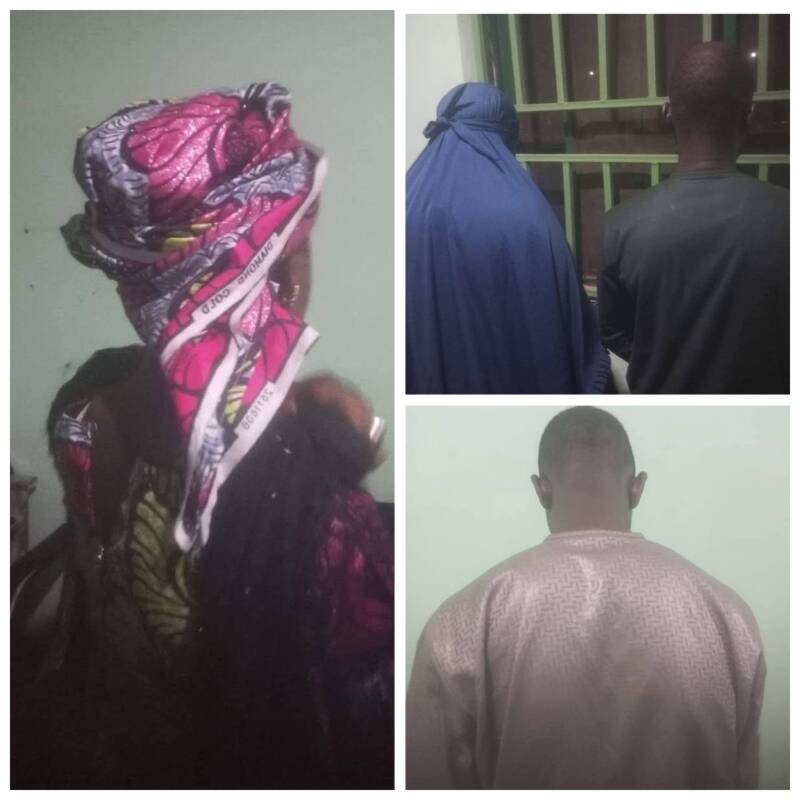
Officials of the Kebbi State Hisbah Board confirmed that the arrests were made during a targeted operation carried out on April 25, 2026, in Birnin Kebbi and surrounding areas. The agency said the suspects, comprising two men and two women, were apprehended in separate hotel locations over what it described as “immoral activities.”
The Director of the Hisbah Board, Surajo Usman, disclosed details of the operation while addressing reporters, stating that the raid was part of ongoing efforts to enforce moral standards and maintain social order in the state. He noted that the operation focused on hotels identified through surveillance and public complaints as hotspots for activities considered contrary to religious and cultural norms.
According to the official account, the suspects were found in compromising situations during the raid. Authorities further revealed that one of the women arrested is married and has four children, a detail highlighted by the agency as evidence of what it described as the erosion of family values and societal norms.
The Hisbah Board, which operates under the Kebbi State Ministry of Religious Affairs, emphasized that such enforcement actions are intended to deter behaviors seen as harmful to community stability. Officials reiterated calls for residents to adhere to moral standards, warning that those found engaging in similar acts would face strict consequences.
The raid extended beyond the initial four arrests. Authorities disclosed that additional individuals, including young men and women, were picked up during related operations in other locations. However, not all those detained were formally charged, as some cases involved counseling, mediation, or referral to family members.
Officials also highlighted a series of related interventions carried out during the same period. These included the recovery and reunification of missing persons with their families, such as two children found wandering and a mentally unstable woman who had reportedly been missing for three years before being returned to her relatives.
In another case cited by the agency, a woman experiencing marital issues outside the state was assisted and reunited with her family upon their request. Authorities also reported handling a case involving a teenage girl who had recently converted to Islam and was found in the company of an adult male, raising concerns about her welfare.
The Hisbah Board said it also uncovered cases involving individuals allegedly exchanging money for intimate relationships, which it described as exploitation driven by economic hardship. Officials stated that such situations are often handled with a combination of enforcement and social intervention, including counseling and support referrals.
Beyond enforcement, the agency reported involvement in dispute resolution during the same period, mediating conflicts between married couples and resolving domestic disagreements. It also handled a debt-related dispute involving parties from Kebbi and Abuja, which was reportedly settled amicably through its intervention.
The activities of Hisbah in northern Nigeria have long been a subject of debate, particularly regarding the balance between religious enforcement and individual rights. Hisbah groups, which operate in several states implementing Islamic law, are tasked with promoting moral conduct and discouraging behavior deemed inappropriate under Sharia principles.
While proponents argue that the agency plays a vital role in maintaining social order and providing community services, critics have raised concerns about potential overreach, particularly in cases involving private spaces such as hotels. Questions have also been raised about the legal scope of Hisbah operations, as enforcement powers are generally expected to complement, rather than replace, those of the conventional police.
In Kebbi, authorities maintain that their actions are guided by local laws and societal expectations. Officials stress that their interventions are not solely punitive but often include reconciliation, counseling, and community support, particularly in cases involving vulnerable individuals.
Nevertheless, incidents such as the recent hotel raid continue to spark public discussion about privacy, consent, and the limits of state-sanctioned moral enforcement. Observers note that enforcement practices can vary significantly across states, depending on local interpretations of religious and legal frameworks.
The Kebbi State government has not indicated any immediate policy changes following the latest arrests, but officials have reaffirmed their commitment to supporting the Hisbah Board’s mandate. They have also urged residents to cooperate with authorities and report activities they consider harmful to community values.
For now, the four individuals arrested in the hotel raid remain under investigation, with authorities expected to determine whether formal charges will be filed. The Hisbah Board has reiterated its warning that similar operations will continue, signaling an ongoing clampdown on activities it considers incompatible with the state’s moral and religious standards.
The development adds to a growing list of enforcement actions by Hisbah authorities across northern Nigeria, reflecting both the persistence of such operations and the continuing debate over their implications for law, society, and individual freedoms.
📩 Stone Reporters News | 🌍 stonereportersnews.com
✉️ info@stonereportersnews.com | 📘 Facebook: Stone Reporters News | 🐦 X (Twitter): @StoneReportNew | 📸 Instagram: @stonereportersnews
Add comment
Comments