

Reported by: Oahimire Omone Precious | Edited by: Oravbiere Osayomore Promise.
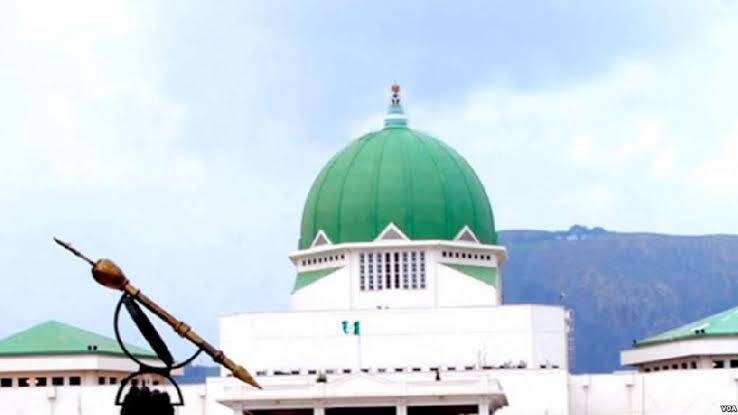
A coalition of women groups staged a protest at the National Assembly complex in Abuja on Wednesday, April 29, 2026, demanding the swift passage of the Special Seats for Women Bill, a constitutional amendment proposal that has remained pending for over a decade despite repeated legislative promises. Carrying placards with inscriptions reading “Nigerian Women National Rally on Submission of Constituency Petition for the Passage of the Special Seats Bill”, the protesters marched to the main gates of the assembly, calling on lawmakers in both chambers to prioritise the bill before the 2027 general elections. The demonstration, which saw hundreds of women and civil society representatives gather under a coalition led by the League of Women Voters of Nigeria (NILOWV), marked a final push as the window for implementing the reform narrows with each passing day. “We have come to submit our petitions and to remind our legislators that the clock is ticking,” said Irene Awunah Ikyegh, president of NILOWV, who addressed the crowd and delivered a formal petition to representatives of the National Assembly.
The Special Seats Bill, which has been pending before the legislature since the 9th National Assembly, seeks to alter the 1999 Constitution to create reserved legislative seats exclusively for women in both the federal and state legislatures. Under the current proposal, the bill would add six additional seats in the Senate, one per geopolitical zone; 37 additional seats in the House of Representatives, one per state and the Federal Capital Territory; and 108 additional seats across State Houses of Assembly, three per state. This temporary constitutional measure, designed to correct decades of systemic exclusion, would operate for a limited period of up to 16 years or four election cycles, after which it would be reviewed. At present, across 469 seats in the National Assembly, women hold only 21 seats, representing a dismal 4.5 per cent of total representation. At the state level, women occupy just 49 of 988 House of Assembly seats, less than five per cent nationwide, with 13 state assemblies currently having no female legislators at all.
The protest coincided with renewed legislative action on the bill in the House of Representatives, where a motion of urgent public importance was moved by Jesse Onuakalusi (ADC, Lagos) during Thursday’s plenary. The motion called on members to fast-track the passage of the bill, warning that the commencement of party primaries in the coming weeks could make the constitutional amendment too late to take effect in the 2027 elections. Leading the debate, Onuakalusi described the persistent underrepresentation of women as a fundamental democratic deficit that “deprives governance structures of inclusivity and balanced policy formulation”. Citing constitutional guarantees of freedom from discrimination and equal participation in governance, he reminded lawmakers that Nigeria is a signatory to international frameworks including CEDAW, the Maputo Protocol and the ECOWAS Gender Policy, yet has consistently failed to meet its obligations.
Speaking on behalf of the coalition at the National Assembly gates, Ikyegh called on lawmakers to reject any motion that seeks to oppose the bill and to hold an emergency sitting specifically to vote on the amendment. She reminded legislators that similar bills had failed during the 9th and 10th National Assemblies due to a lack of political will. “We ask that you use your good offices to influence the passage of this bill. We also advocate an emergency sitting to vote on it,” she said. “We urge you to support it when it is put to a vote on the floor of the House.” Ikyegh disclosed that the coalition had earlier visited constituency offices and residences of lawmakers across the country to deliver petitions, some of which were personally received while others were submitted in the absence of the legislators. She said that Wednesday’s visit was to submit the remaining copies and to formally acknowledge those already delivered. The coalition has representation across all 360 federal constituencies in the country, underscoring the national breadth of the demand.
The bill has attracted growing support from international partners. In March 2026, the National Assembly inaugurated the Nigerian Women Parliamentary Caucus, with participation from UN Women, the British High Commission, the High Commission of Canada in Nigeria, the Federal Ministry of Women Affairs, and the National Council of Women Societies. Speaking at the inauguration, the British High Commissioner to Nigeria, Richard Montgomery, represented by the Deputy Head of UK Development Agency, Graham Gass, urged the National Assembly to proceed with the vote, describing the period as an opportunity to advance democratic inclusion. Prof. Abubakar Sulaiman, Director-General of the National Institute for Legislative and Democratic Studies (NILDS), described the proposed legislation as a “constitutional mechanism” designed to address the under-representation of women in elective offices, noting that the National Assembly was approaching a critical stage in the constitutional amendment process.
Despite the growing momentum, significant obstacles remain. The bill has faced resistance from lawmakers who argue that it could increase the cost of governance or that women should compete for existing seats rather than being given reserved slots. Proponents have dismissed these concerns. Kafilat Ogbara, chairperson of the House Committee on Women Affairs and Social Development, has called for a decisive shift from political dialogue to concrete legislative results. “The Special Seats Bill is not about taking away anyone’s seat,” she said in a recent interview. “It is about creating additional seats to correct historic underrepresentation.” The House leadership has reaffirmed its commitment to the proposal, describing it as a temporary constitutional measure aligned with the Renewed Hope Agenda of President Bola Tinubu.
The timing of the protest is critical. With party primaries scheduled to commence in May 2026, the constitutional alteration may be too late to affect the 2027 elections if not passed in the coming weeks. The bill is one of 44 Constitution Alteration Bills that had been scheduled for voting in 2025 but remain pending, reflecting a broader slowdown in the amendment process. The National Assembly has yet to set a definitive date for the clause‑by‑clause voting that would determine the bill’s fate. The coalition has vowed to remain at the gates until they receive a formal commitment from legislative leadership. As Ikyegh put it, “We will not leave until our voices are heard and our votes are counted.” For Nigerian women, who constitute nearly half of the country’s population but hold less than five per cent of its elective seats, the outcome of this legislative battle will determine whether the 2027 elections offer a new dawn or a continuation of the same marginalisation.
📩 Stone Reporters News | 🌍 stonereportersnews.com
✉️ info@stonereportersnews.com | 📘 Facebook: Stone Reporters News | 🐦 X (Twitter): @StoneReportNew | 📸 Instagram: @stonereportersnews
Add comment
Comments