

Published by Oravbiere Osayomore Promise.
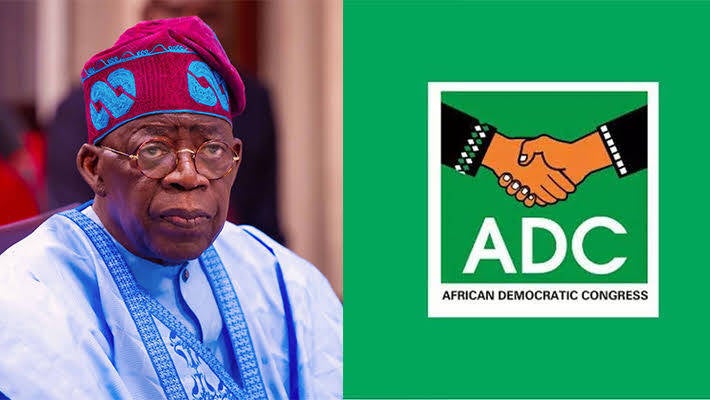
The Supreme Court of Nigeria is set to deliver judgment on Thursday, April 30, 2026, in two high‑stakes political disputes that could fundamentally reshape the country’s opposition landscape less than a year before the 2027 general elections. The apex court will rule on the protracted leadership crises tearing apart the African Democratic Congress (ADC) and the Peoples Democratic Party (PDP), two of the nation’s largest opposition platforms. At the centre of both disputes are fundamental questions about the limits of judicial intervention in political party affairs and the legitimacy of rival leadership factions that have plunged the parties into months of legal and organisational paralysis.
In the ADC case, a five‑member panel led by Justice Mohammed Lawal Garba will decide the appeal filed by a faction loyal to former Senate President David Mark. Mark is challenging a March 12, 2026, ruling of the Court of Appeal that ordered all parties to maintain the status quo ante bellum in the leadership dispute. That decision prompted the Independent National Electoral Commission (INEC) to withdraw recognition from the Mark‑led leadership pending judicial resolution. Mark, whose faction controls the party’s national secretariat, argues that the appellate court exceeded its jurisdiction and that the crisis is an internal party affair over which the courts have no power. His counsel, Jibrin Okutepa (SAN), has urged the apex court to uphold a March 21, 2025, Supreme Court precedent that held that such disputes fall outside judicial authority.
On the other side, the faction led by Nafiu Bala Gombe, a former deputy national chairman of the ADC, insists that Mark’s takeover of the party structure was unconstitutional. Gombe’s counsel, Robert Emukpero (SAN), told the court that Mark’s appeal lacks merit and should be dismissed, arguing that the lower courts acted within the law. The Court of Appeal had earlier described Mark’s appeal as premature and filed without leave, ordering the case to return to trial and directing all parties to maintain the status quo. Dissatisfied, Mark escalated the matter to the Supreme Court, also challenging an order enforcing the status quo. The ADC has emerged as a major opposition coalition, attracting heavyweights including former Vice President Atiku Abubakar, former Labour Party presidential candidate Peter Obi, former Kano State Governor Rabiu Kwankwaso, and former Rivers State Governor Rotimi Amaechi. A leadership vacuum could prevent the party from conducting primaries, submitting candidate lists, and meeting INEC’s deadlines, effectively sidelining the opposition coalition at a critical juncture.
In the parallel PDP case, the apex court will rule on a leadership tussle stemming from the party’s disputed national convention held in Ibadan, Oyo State. The appeal was filed by a faction led by Taminu Turaki (SAN), whose executives emerged from that convention. They are seeking to overturn a Court of Appeal judgment that nullified the entire exercise for violating a subsisting court order. The appellants, through their counsel Paul Erokoro (SAN), urge the Supreme Court to validate the convention and dismiss a cross‑appeal by a rival faction aligned with the Minister of the Federal Capital Territory, Nyesom Wike. However, respondents, including former Jigawa State Governor Sule Lamido, argue that the matter goes beyond internal party affairs and involves disobedience to a valid court order.
Lamido had secured a Federal High Court ruling restraining the PDP from holding the convention until he was allowed to participate as a candidate for national chairman. Despite that order, the party proceeded with the convention – an action that both the trial court and the Court of Appeal later ruled unlawful. The appellate court held that the case was not shielded by the doctrine of internal party affairs and consequently nullified the convention. The PDP, which governed Nigeria for 16 uninterrupted years before losing power in 2015, has been in near‑constant crisis since then, split between the Wike‑backed faction controlling the party’s national secretariat and the Turaki‑Lamido faction that insists on a rerun of the convention.
Both the ADC and the PDP have written urgent letters to the Chief Justice of Nigeria, Justice Kudirat Kekere‑Ekun, warning that further delays could lead to their exclusion from the 2027 elections. INEC’s timetable requires parties to submit their membership registers by May 10, 2026, with primaries scheduled between April 23 and May 30. Without a clear ruling on who leads the parties, both the ADC and the PDP risk missing critical deadlines, a scenario that could disqualify their candidates from the ballot. The Supreme Court has fixed 2:00 p.m. for the judgments, and all eyes are now on the apex court. The outcomes will determine whether Nigeria’s opposition enters the next election cycle as a unified force capable of challenging the ruling All Progressives Congress (APC) or remains paralysed by internal strife.
📩 Stone Reporters News | 🌍 stonereportersnews.com
✉️ info@stonereportersnews.com | 📘 Facebook: Stone Reporters News | 🐦 X (Twitter): @StoneReportNew | 📸 Instagram: @stonereportersnews
Add comment
Comments