

Reported by: Ijeoma G | Edited by: Oravbiere Osayomore Promise.
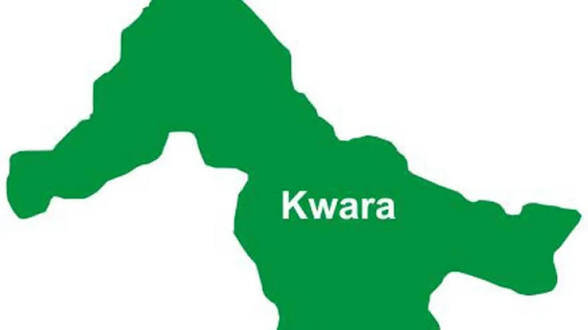
The Moro Bridge along the Ilorin–Igbeti Federal Highway in Kwara State collapsed in the early hours of Thursday, 30 April 2026, cutting off a critical transport link, stranding hundreds of commuters and raising urgent questions about the use of more than N1.2 billion allocated for a replacement bridge that remains largely unfinished. The bridge caved in at around 5 a.m. under the weight of a heavy‑duty truck, according to the Kwara State Commissioner for Works, Engr. Abdulquawiy Olododo. A viral video of the aftermath shows the wreckage of the truck lying upside down amid the debris, while a new concrete bridge under construction stands just metres away, estimated to be only about 40 per cent complete.
The Moro Bridge, a colonial‑era Bailey structure, has long been a fragile but vital crossing point linking Ilorin, the Kwara State capital, to the northern axis of the state, particularly Kaiama and Baruten Local Government Areas. It also serves as a major route for travel to Oyo State communities such as Igbeti, Igboho, Kishi and Saki, and extends towards the Nigeria–Benin Republic border. Its sudden collapse has severed access to more than 20 communities, effectively paralysing daily life and commerce. Travellers were left stranded on both sides of the broken span, and pedestrians were forced to seek dangerous alternative routes.
The economic impact was immediate and severe. The bridge is a key artery for the transport of food from Kwara’s northern agricultural belt, which supplies large volumes of yam, cassava, maize and grains to markets in Ilorin, Ogbomoso and other parts of the South‑West. With the crossing impassable, farmers and traders have been unable to move their produce, raising fears of spoilage and sharp price hikes in urban centres. “This development has negatively affected economic activities, causing delays and increasing the cost of transportation for commuters and businesses,” a businesswoman, Kafayat, told PUNCH. A farmer of perishable goods, Abdul Seidu, lamented, “Here we are again, like always each time this same bridge collapses, movement is always full stop.”
The collapse has also exposed a long‑standing infrastructure scandal. The contract for the construction of a new Moro Bridge was awarded to Bilijoe + Berger Construction Limited in March 2017 for N865 million. The contract sum was later revised upward to N938 million in 2019, and further augmented to over N1.2 billion (N1,214,822,585.65) in 2022. Yet the project remains incomplete. The contractor reportedly claimed that funds had not been fully released and blamed inflation and rising material costs, but stakeholders have accused both the contractor and the government of failing to follow due process. Investigations have also revealed that the Federal Ministry of Works allegedly violated the Public Procurement Act by awarding the contract above its initial budget without ensuring proper funding arrangements. A social accountability expert, Busayo Morakinyo, described the situation as part of a broader pattern of abandoned projects across Nigeria. “The saddest aspect is that contractors that abandon the projects go scot‑free without due reprimand,” he said.
The collapse of the bridge has reignited public outrage, especially as many residents had thought the nightmare would end when construction work began on the new bridge in 2017. “We thought that was the end of our misery,” a resident, Mumeen, told the International Centre for Investigative Reporting. Instead, years of delays and cost overruns have left the community no better off. The old colonial Bailey bridge, which had already shown signs of structural distress and was described as “life‑threatening” by ICIR, was the only crossing available until it finally gave way. The new bridge, still incomplete, now stands as a silent monument to official neglect.
In response to the crisis, the Kwara State Government announced immediate palliative measures. The Ministry of Works has deployed engineers to begin work on alternative routes, and traffic managers have been instructed to collaborate with transport unions to maintain orderly passage. “State traffic managers are to work with transport unions and commuters to maintain orderly passage on the alternative route while palliative work begins immediately on the old iron‑made bridge,” a statement from the Ministry of Works read. The government also appealed for patience, saying it is working with federal authorities to expedite work on the new Moro Bridge.
But for the thousands of commuters, traders and farmers who depend on the route daily, patience has long worn thin. Transport fares have already begun to rise as drivers are forced to take longer detours, adding hours to journeys that once took minutes. The collapse of the Moro Bridge is not an isolated failure; it is the inevitable result of years of neglect, mismanagement and broken promises. As the rainy season sets in, the risk of further deterioration of the old bridge remains high, and the incomplete new structure offers no relief. For the communities cut off by its fall, the question is no longer whether the government will act, but when. And whether, this time, it will finally do so for good.
📩 Stone Reporters News | 🌍 stonereportersnews.com
✉️ info@stonereportersnews.com | 📘 Facebook: Stone Reporters News | 🐦 X (Twitter): @StoneReportNew | 📸 Instagram: @stonereportersnews
Add comment
Comments