

Reported by: Oahimire Omone Precious | Edited by: Oravbiere Osayomore Promise.
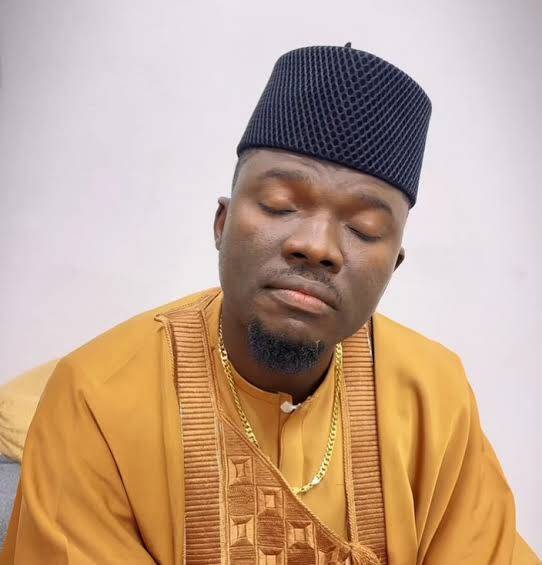
When Kevin Chinedu, the young Nigerian skitmaker better known as his satirical character "Governor Amuneke," first saw the message in his social media inbox, he wept. The tears were not of sadness but of joy. The Independent National Electoral Commission (INEC) had reached out with an offer to make him one of its youth ambassadors, a role that would place him alongside other notable figures to promote civic engagement, voter registration, and election participation among millions of Nigerian youths. For a creator who had risen from obscurity to become one of the country's most recognisable voices in political satire, the offer felt like a national honour beyond his wildest dreams. "I have never felt as proud of myself when I got that message," Chinedu said in a video posted on his X (formerly Twitter) handle on Monday, May 4, 2026. "This is supposed to be a national honour. I do not know how to feel about it, but it brought me tears of joy when I thought about how far I have come."
But that joy did not last. Before accepting the multi‑million naira appointment, Chinedu decided to ask one simple question. "I asked, 'Am I going to still be able to criticise INEC if I'm appointed?'" he recounted. The response he received, he said, was polite but clear. He was told that he could continue creating his content. He could keep using his platform to encourage young Nigerians to get their Permanent Voter Cards (PVCs) and participate in elections. But there was a catch. "I cannot criticise directly INEC," he was informed. The officials, he explained, had reviewed the type of content he produces. They acknowledged his sharp political satire and his fearless criticism of governance and public institutions. All of that could continue, they assured him. Except the criticism of the electoral body itself.
For Chinedu, that was an impossible condition. He explained that his entire platform is built on holding institutions accountable and amplifying the voices of ordinary Nigerians who have lost faith in the system. "My passion is rooted in so many things," he said. "First, the tears of millions of Africans. Second, messages I get from different parts of Africa about governance. Thirdly, my background where I came from and what I have seen." He argued that the pressure to remain silent on critical issues would be worse than the challenges he already faces as a public critic. "The pressure is worse when I am doing nothing. Those voices keep resounding, and that is what drives me."
Within hours of receiving the clarification, his excitement evaporated. "The moment I heard that, what seemed like congratulations disappeared," Chinedu said. "I wish it did not come with certain conditions to box my voice." He made his decision swiftly and without hesitation. He would not accept the ambassadorial role. The money, which multiple sources described as being in the multi‑million naira range, was not worth the price of his independence. He explained that his work is deeply influenced by the lived experiences of ordinary Nigerians and broader African realities, which require honest and sometimes critical commentary. Accepting a restriction on his ability to criticise INEC would undermine the very essence of what he had built. "I cannot accept conditions that box my voice," he declared.
This is not the first time the young satirist has turned down a lucrative offer that came with strings attached. Chinedu disclosed that he has previously rejected financial inducements from political actors who allegedly attempted to shape his content. On each occasion, he has chosen to preserve his creative freedom and his integrity over immediate financial gain. His decision to walk away from the INEC offer, therefore, fits a consistent pattern of prioritising principle over profit. The comedian stressed that while he remains grateful for the recognition and open to collaborations with brands and institutions, any partnership that compromises his message or erodes the trust of his audience is simply not acceptable.
Chinedu also used the moment to speak directly to his fellow content creators, urging them to protect their voices and avoid compromising their integrity for recognition or financial incentives. "If you have a platform today and you do not compromise, always remember there are millions of people whose hope is on that voice," he said. "That voice is not just yours." He added that there are millions of Nigerians whose hope depends on the willingness of independent voices to speak truth to power, even when it is uncomfortable. "It is bigger than you," he reminded his colleagues.
The skitmaker's refusal to accept the INEC ambassadorial role has ignited a broad conversation across Nigerian social media and news platforms about the limits of free expression and the ethics of government agencies co‑opting independent critics. While some commentators expressed disappointment that INEC would impose any restrictions on a creator whose fan base consists largely of disillusioned young voters, others pointed out that the commission's stance might be legally and politically necessary to maintain the appearance of impartiality. But for Chinedu, the issue was not about legality. It was about principle. He explained that his work is shaped by the messages he receives from Nigerians across the country, people who share their frustrations, their struggles, and their hopes with him daily. Those voices, he said, are the engine of his creativity, and he cannot simply turn them off for a contract.
Despite declining the offer, Chinedu expressed deep gratitude to those who recommended him for the position. "I want to thank the person who recommended me," he said. "I do not take these opportunities for granted." He reiterated that he remains open to collaborating with institutions that do not seek to restrict his creative freedom. But for now, his decision stands as a powerful statement in Nigeria's evolving digital media landscape: some things are worth more than money, and a free voice is one of them.
📩 Stone Reporters News | 🌍 stonereportersnews.com
✉️ info@stonereportersnews.com | 📘 Facebook: Stone Reporters News | 🐦 X (Twitter): @StoneReportNew | 📸 Instagram: @stonereportersnews
Add comment
Comments