

Reported by: Oahimire Omone Precious | Edited by: Oravbiere Osayomore Promise.
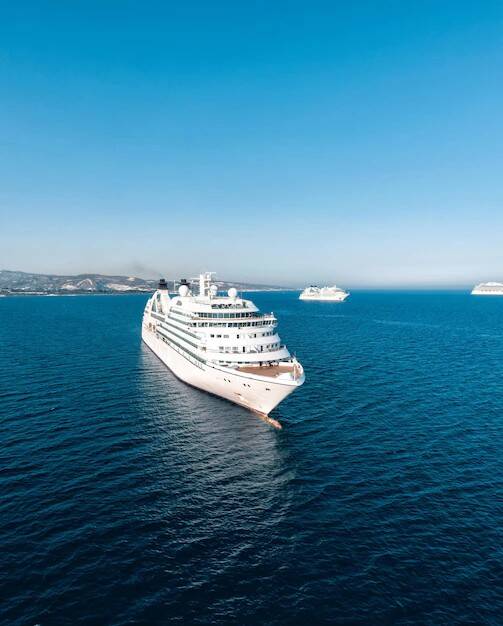
More than 170 passengers and crew have been trapped aboard a luxury Antarctic cruise ship for days after a deadly outbreak of a rare rodent-borne virus was detected, with health authorities confirming two cases of hantavirus and five suspected cases, together with three associated deaths. The Dutch-flagged vessel, the MV Hondius, operated by Oceanwide Expeditions, is currently stationed off the coast of Cape Verde, a small island nation off the coast of West Africa. It was denied permission to dock after local health authorities took the decision as a precaution to prevent any potential outbreak on the islands. The World Health Organisation (WHO) has confirmed that among the seven cases identified so far, two are laboratory-confirmed infections of hantavirus and five are currently suspected.
The vessel, which holds roughly 150 passengers and crew from 23 different countries, had been on a polar expedition. The passengers, who had paid between 14,000 and 22,000 euros, mainly hail from the UK, the US, and Spain. The high-stakes drama off the coast of Africa began on Sunday when the WHO initially reported one confirmed case alongside five suspected cases. However, that small number quickly escalated to seven concurrent cases. The grim tally of those connected to the voyage includes three individuals who have tragically lost their lives.
The timeline of the outbreak reveals the severity of the situation. The first death occurred on 11 April 2026 when a 70-year-old Dutch man tragically died after the ship docked at the British Overseas Territory of St. Helena. The man’s 69-year-old wife, a Dutch national, disembarked with the remains but exhibited gastrointestinal symptoms. Her condition deteriorated during a flight to South Africa, and she collapsed at Johannesburg’s O.R. Tambo International Airport. She was rushed to a hospital where she passed away on 26 April. A German passenger also died on the ship on 2 May, though the cause of death has not been officially confirmed by the WHO.
A British passenger who required urgent medical attention after falling ill on 27 April was evacuated to a private medical facility in Sandton, South Africa. Here, it was confirmed that he had tested positive for hantavirus and was in a critical condition in isolation. Two crew members with symptoms, one mild and one severe, are still on board the ship and require urgent medical care, while three suspected cases who are only experiencing mild symptoms are stable and remain onboard the vessel.
The WHO is now deeply involved in a complex, multi-country emergency response. According to an agency statement, the organisation has released funds from its Contingency Fund for Emergencies to support the response in the maritime zone. The agency confirmed it is actively coordinating with the governments of Cape Verde, the Netherlands (the ship's flag state), and the ship's operator to arrange for the urgent medical evacuation of the two remaining critically ill patients. Officials are also working on arrangements to repatriate the deceased.
However, the WHO is not only dealing with the ship’s immediate quarantine; it is also attempting to track down anyone who may have come into contact with infected passengers before they were discovered. One of the most troubling details to emerge is the contact tracing effort for a commercial flight. The WHO confirmed it is trying to trace all passengers who flew on a specific route between St. Helena and Johannesburg on 25 April. According to investigators, the Dutch woman who died of the virus was on this flight, and officials are now reaching out to every passenger who could have been exposed.
Hantavirus is a rare but potentially fatal zoonotic disease that is transmitted to humans primarily through contact with infected rodents or their urine, droppings, or saliva. It causes two different syndromes based on the region: in the "New World" (the Americas), it can cause Hantavirus Pulmonary Syndrome (HPS), which leads to respiratory failure. In the "Old World" (Europe, Asia, and Africa), infection often results in Hemorrhagic Fever with Renal Syndrome (HFRS), which affects the kidneys. A WHO acting director stated that typical contact tracing is underway to determine the exact source of exposure and identify the specific strain involved.
(Note: The story includes reports of three deaths, but it is important to note that the WHO has only confirmed that three people have died. What remains unconfirmed is whether the virus was the definitive direct cause of death for all three individuals).
📩 Stone Reporters News | 🌍 stonereportersnews.com
✉️ info@stonereportersnews.com | 📘 Facebook: Stone Reporters News | 🐦 X (Twitter): @StoneReportNew | 📸 Instagram: @stonereportersnews
Add comment
Comments