

Reported by: Oahimire Omone Precious | Edited by: Oravbiere Osayomore Promise.
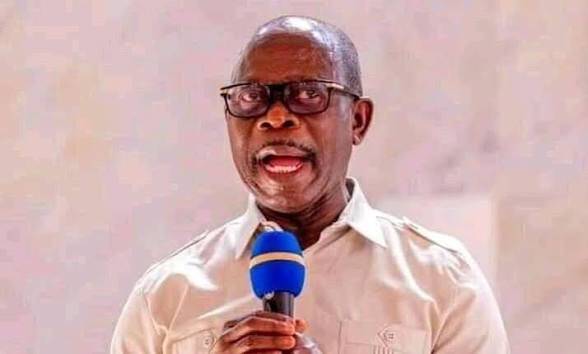
Senator Adams Oshiomhole, representing Edo North, has called on the Federal Government to revoke the operating licences of South African companies operating in Nigeria, specifically MTN Nigeria and MultiChoice, which operates DStv, as a direct economic response to the renewed wave of xenophobic attacks against Nigerian citizens in South Africa. Speaking during plenary on Tuesday, May 5, 2026, while contributing to a motion on “urgent national, diplomatic and humanitarian action to defend the dignity, safety and honour of Nigerian citizens,” the former Edo State governor and ex‑labour leader proposed that Nigeria should not limit itself to diplomatic protests but should take immediate, measurable economic action. His most dramatic suggestion was that MTN Nigeria should be nationalised and its operating licence withdrawn entirely, arguing that the telecom giant repatriates billions of naira in profits daily while Nigerian citizens face brutal hostility in South Africa. “I don’t want this Senate to be shedding tears, to sympathise with those who have died. We didn’t come here to share tears,” Oshiomhole declared. “I am not going to shed tears. If you hit me, I hit you. I think it is appropriate in diplomacy. It’s an economic struggle.”
Oshiomhole built his argument on the principle of reciprocity in international relations, insisting that Nigeria has for too long relied on verbal condemnation while South African authorities repeatedly fail to protect Nigerians and their businesses. “This Senate should adopt a position that MTN, a South African company that is carting away millions of dollars from Nigeria every day. That Nigeria nationalise it and withdraw its licence,” he said. He argued that such a move would not only serve as a firm deterrent but would also create opportunities for indigenous Nigerian companies to take over roles currently dominated by foreign firms. Extending his demand, Oshiomhole also called for the revocation of DStv’s licence, accusing the pay‑TV operator of economic exploitation and draining millions of dollars out of the country. “I call on the Federal Government to revoke DSTV, which is also a South African company that is cutting away millions of dollars,” he added.
The senator’s remarks came amid a spike in attacks on Nigerian nationals in South Africa. According to the Ministry of Foreign Affairs, two Nigerians have been confirmed dead in separate incidents involving security personnel: Amamiro Chidiebere Emmanuel died from injuries sustained after being beaten by military personnel of the South African National Defence Force on April 20, while Nnaemeka Matthew Andrew died following an alleged encounter with Tshwane Metro Police. A third Nigerian, Kelvin Chidiebere Amaramiro, was also listed among those killed. The House of Representatives, during its own session on Tuesday, condemned the attacks and called for urgent evacuation plans, summoning the South African High Commissioner and demanding a review of bilateral agreements. The Senate equally resolved to constitute a joint ad‑hoc committee to undertake a fact‑finding visit to South Africa. However, Oshiomhole insisted that diplomatic gestures alone were insufficient. “When we hit back, the president of South Africa will go on his knees to recognise that Nigerians cannot be intimidated,” he said.
While Oshiomhole’s hardline position drew attention, it was not formally adopted by the Senate. Senate President Godswill Akpabio stressed that the upper chamber prefers diplomatic engagement over economic retaliation against businesses, and the specific proposal for licence revocation was declined on procedural grounds. Nonetheless, the debate itself revealed a profound frustration simmering among Nigerian lawmakers. Senator Victor Umeh, representing Anambra Central, described the situation as alarming, noting that Nigerians in South Africa are “hiding for their lives, they can’t move freely.” Umeh called on the African Union to impose sanctions on South Africa, adding that “we cannot allow this to continue.” The Senate also observed a minute of silence in honour of Nigerians killed in the attacks.
The controversy is not without economic irony. MTN Nigeria is one of the largest taxpayers and employers in the Nigerian telecom sector, with millions of subscribers. A unilateral revocation of its licence or nationalisation would trigger massive legal battles, capital flight, and severe damage to Nigeria’s reputation as an investment destination. DStv, despite growing competition from indigenous streaming services, remains a dominant player in the pay‑TV market. Oshiomhole acknowledged these complexities but dismissed them as secondary to the protection of Nigerian lives. “These Nigerians who are in South Africa, they are not there on holiday. They are there to work and to earn,” he said. “If a crime has been committed under South African law, they have the right to bring such a person to justice, but to kill our people as if we are helpless—we will not allow that.”
What makes Oshiomhole’s intervention particularly striking is the personal and political shift it represents. As a former president of the Nigeria Labour Congress, he once led strikes against mass layoffs by multinationals, including MTN. Now, as a lawmaker, he is advocating for the very same company to be taken over by the state. But the common thread is his belief in economic nationalism: that Nigeria must stop exporting profits to countries that treat its citizens as disposable. Oshiomhole also turned the xenophobic narrative on its head, advising South Africans who accuse Nigerians of taking their jobs that the reverse is actually true. “Nigerians should return home and take over employment opportunities created by major South African companies operating in the country, including MTN and DSTV,” he said.
The immediate trigger for the Senate debate was a motion by Senator Osita Izunaso, but the debate expanded into a wider discussion about Nigeria’s credibility in protecting its diaspora. The attacks in South Africa have spurred President Bola Tinubu to direct close monitoring, summon the South African envoy, and commence a voluntary evacuation process. As of May 4, 130 Nigerians had registered for repatriation flights. But for Oshiomhole, these measures are still too passive. His proposal – revoke MTN and DStv licences – may not have passed, but it has forced a national conversation about what real economic deterrence looks like. At its core, his message to Pretoria is simple and blunt: “You cannot kill our people and continue to enjoy our market.”
📩 Stone Reporters News | 🌍 stonereportersnews.com
✉️ info@stonereportersnews.com | 📘 Facebook: Stone Reporters News | 🐦 X (Twitter): @StoneReportNew | 📸 Instagram: @stonereportersnews
Add comment
Comments