

Published by Oravbiere Osayomore Promise.
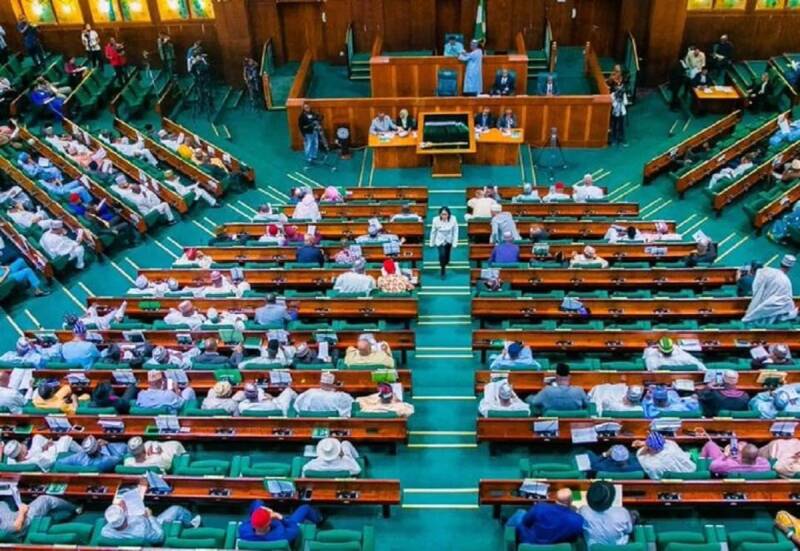
The House of Representatives has issued an urgent call for government intervention in Nigeria’s aviation sector as the relentless rise in jet fuel prices threatens to cripple domestic airlines, drive ticket prices beyond the reach of millions, and send the country’s fragile aviation industry into a tailspin. Lawmakers warned during plenary on Tuesday that the spiraling cost of Aviation Turbine Kerosene, the sector’s lifeblood, is not just grounding aircraft but also jeopardizing jobs, regional connectivity, and the broader national economy. The lawmakers’ action came barely two weeks after the government had to step in to prevent a threatened shutdown by carriers, a situation that exposed how a single commodity has become an existential threat to an entire industry.
The resolution, which followed a motion of urgent public importance moved by Hon. Paschal Agbodike, representing Ihiala Federal Constituency of Anambra State, highlighted how the jet fuel crisis has taken a devastating toll on carriers. Agbodike told the House that fuel now accounts for a staggering 40 to 60 percent of airlines’ total operational expenses, making it the single largest cost burden for domestic operators. He lamented that several airlines have already been forced to cut flight frequencies or ground aircraft entirely, leading to a serious drop in capacity and connectivity across the country’s domestic network. Agbodike expressed alarm that the continued instability in jet fuel pricing, if not addressed urgently, could lead to the collapse of major domestic airlines, a scenario he said would have devastating consequences for the national economy, employment, and regional integration.
The crisis is not a sudden shock. It reflects a confluence of global and local pressures that have driven prices through the roof. The Airline Operators of Nigeria has revealed that jet fuel prices skyrocketed from about NGN900 per litre in February 2026 to a peak of NGN3,300 per litre by mid‑April, a staggering increase of over 300 percent within a matter of weeks. Industry data further shows that the cost of fueling a single flight on domestic routes has exploded from an average of N2.1 million in January 2026 before the Middle East conflict began, to about N7.6 million as of April, representing an increase of over 350 per cent within three months. This surge, triggered primarily by the closure of the Strait of Hormuz following the escalation of the US‑Israeli war on Iran, has sent shockwaves through global energy markets and hit Nigerian carriers particularly hard due to their heavy reliance on imported refined products.
In response to the growing threat, the House of Representatives has passed a resolution mandating a series of concrete actions. Lawmakers called on the Federal Government, through the Ministry of Petroleum Resources and the Nigerian National Petroleum Company Limited (NNPCL), to establish a direct price stabilization agreement with local airlines to ensure more predictable and affordable jet fuel costs. It also directed the Minister of Aviation and Aerospace Development, Festus Keyamo, to present an emergency roadmap to reduce aviation fuel costs within two weeks. In a further step, the House mandated its joint Committees on Aviation, Petroleum Resources (Downstream), and Finance to investigate the persistent price increase and report back within the same two‑week deadline.
The legislative intervention follows a series of frantic emergency measures by the executive branch in recent weeks. In April, the Federal Government convened a high‑level stakeholders meeting that included the Minister of Aviation, airline operators, and oil marketers. The minister appealed to the Airline Operators of Nigeria to exercise restraint in increasing airfares and to avoid suspending operations, warning that such actions would place an additional burden on passengers and erode public confidence in the aviation sector. President Bola Tinubu also intervened, approving a 30 per cent relief on airlines' outstanding obligations to aviation agencies and directing fuel marketers, airlines, and regulators to agree on a "fair" fuel price to prevent a sector‑wide shutdown.
Following extensive negotiations, a technical committee convened by the Nigerian Midstream and Downstream Petroleum Regulatory Authority (NMDPRA) recommended that aviation fuel should be sold at a price band of N1,760 to N1,988 per litre in Lagos and N1,809 to N2,037 per litre in Abuja, based on market benchmarks from mid‑April. The committee also recommended that fuel marketers sell directly to airlines, implement a 30‑day credit window to ease liquidity pressures, and include aviation fuel under the Federal Government's naira‑for‑crude initiative to reduce foreign exchange exposure. The committee also called for engagement with the Dangote Petroleum Refinery to adjust premiums on international benchmarks and to validate airside distributors to reduce intermediaries and improve supply‑chain transparency.
While these measures have provided some stability, the government’s cap on prices has not been universally accepted. Fuel marketers and independent analysts have disputed airline claims of N3,300 per litre, placing current prices closer to N2,000 per litre. The Dangote Refinery has itself pegged the gantry price of aviation fuel at N1,820 per litre, a benchmark that introduces some predictability in a market historically characterised by opacity. However, industry stakeholders argue that this still reflects elevated cost levels that continue to strain airline finances, with fuel remaining the single largest cost component, accounting for over 40 per cent of total operating expenses.
The aviation crisis is not just a story of rising fuel prices; it is a story of how a commodity shock can destabilize an entire industry and expose the chronic vulnerabilities of an economy that is still heavily dependent on imported refined products. As lawmakers in Abuja push for immediate action, the reality on the ground is that domestic airfares have already surged, with a return ticket now ranging from N350,000 to N400,000 depending on the airline, route, and booking time. For the millions of Nigerians who rely on air travel, the cost is becoming prohibitive. For the airlines, the margin for survival is shrinking. And for the government, the question is no longer whether to intervene, but how quickly it can act to prevent the collapse of a sector that is essential to trade, security, employment, and economic integration.
📩 Stone Reporters News | 🌍 stonereportersnews.com
✉️ info@stonereportersnews.com | 📘 Facebook: Stone Reporters News | 🐦 X (Twitter): @StoneReportNew | 📸 Instagram: @stonereportersnews
Add comment
Comments