

Reported by: Oahimire Omone Precious | Edited by: Oravbiere Osayomore Promise.
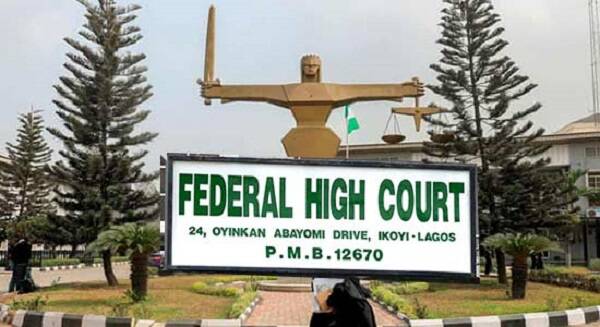
The Federal High Court in Lagos has issued an interim injunction barring the National Broadcasting Commission from using its newly issued ‘Formal Notice’ to threaten, sanction, or punish broadcast stations and their presenters for expressing personal opinions as facts, bullying or intimidating guests, or failing to maintain neutrality. Justice Daniel Osiagor granted the order on Monday following an ex parte motion filed by the Socio-Economic Rights and Accountability Project (SERAP) and the Nigerian Guild of Editors (NGE). The ruling effectively freezes the NBC’s enforcement of the controversial notice pending the hearing and determination of the substantive suit filed by the two rights organisations.
The case, argued on behalf of SERAP and the NGE by their lawyer, Adeyinka Olumide-Fusika, Senior Advocate of Nigeria, challenges what the applicants described as “an arbitrary and unlawful attempt by the NBC to sanction broadcasters for allegedly expressing personal opinions as facts,” “bullying or intimidating guests,” or failing to maintain “neutrality.” The certified true copy of the ruling was obtained on Tuesday, May 5, 2026, confirming that the court had stopped the broadcast regulator from taking any punitive action against any station or journalist based on the disputed notice.
The ‘Formal Notice’ issued by the NBC had sparked widespread outcry within the media industry. The document warned broadcast stations against allowing their presenters to pass off personal opinions as factual news, engage in bullying or intimidation of guests, or fail to uphold neutrality in political discussions. While the NBC argued that the notice was aimed at promoting professionalism and curbing the spread of misinformation, critics saw it as a thinly veiled attempt to muzzle the press and impose government control over editorial content, particularly ahead of the 2027 general elections.
In the lawsuit, SERAP and the NGE argued that the NBC’s directive violated constitutionally guaranteed freedom of expression and the press, as well as the rights of broadcasters to operate without fear of arbitrary state sanctions. They contended that the commission lacked the legal authority to police the content of opinions expressed by presenters, especially where those opinions are clearly distinguished from news reporting. The applicants also raised concerns that the vague wording of the notice, particularly terms like “bullying,” “intimidation,” and “lack of neutrality,” could be interpreted subjectively and used to silence critical voices.
Justice Osiagor, after hearing arguments from Olumide-Fusika, agreed that there was a prima facie case warranting judicial intervention. The judge granted the interim injunction, stopping the NBC from taking any steps to enforce the notice or impose any sanctions on any broadcast station or individual until the court has fully considered the substantive matter. The court also ordered that the status quo be maintained, meaning the NBC cannot use the notice as a basis for any regulatory action.
Reacting to the ruling, SERAP deputy director Kolawole Oluwadare described it as a victory for press freedom and democratic accountability. “The court has sent a clear message that no government agency can use vague, discretionary powers to intimidate or silence journalists and broadcasters. This ruling protects the right of Nigerians to express their opinions, even when those opinions are critical of the government,” Oluwadare said. The Nigerian Guild of Editors also issued a statement commending the judiciary for upholding the rule of law and reaffirming that the media is not an arm of the state. “Editors and broadcasters can now breathe easier knowing that the NBC cannot arbitrarily punish them for the content of their programmes, provided they operate within the bounds of defamation and hate speech laws,” the statement read.
The NBC has not yet issued an official response to the court order. However, legal analysts note that the interim injunction is temporary and that the commission may still defend its notice when the substantive case is heard. The court has adjourned the matter to a future date for the hearing of the motion on notice, at which point both parties will present full arguments. If the court ultimately decides to make the injunction permanent, the NBC would be permanently barred from using the notice as a regulatory tool. If the court lifts the injunction, the notice could take effect again.
The case has attracted significant attention from media advocacy groups and international press freedom organisations. The International Press Centre (IPC) described the ruling as a setback for attempts to control editorial content. The Centre for Journalism Innovation and Development (CJID) noted that the notice’s requirement for “neutrality” is particularly troubling in a political context, as it could discourage journalists from exposing corruption, electoral malpractices, or human rights abuses. “Journalists need the freedom to analyse, criticise, and hold power accountable. The concept of ‘neutrality’ is often used to silence the very voices that need to be heard,” a CJID spokesperson said.
The NBC had previously defended the notice, insisting that it was not aimed at censorship but at ensuring professionalism. In a statement prior to the court ruling, the commission’s director general had said that broadcasters must distinguish between news and opinion, and that personal attacks disguised as commentary would no longer be tolerated. However, the court’s intervention suggests that the commission may have overstepped its statutory boundaries. The Nigerian Constitution guarantees freedom of expression, and the NBC’s powers are limited to technical and content standards that do not infringe on fundamental rights.
For broadcasters across the country, the ruling provides temporary relief. Many stations had already begun expressing self‑censorship, with some presenters reportedly instructed avoid any statements that could be interpreted as “opinion” or “lack of neutrality.” The injunction allows them to resume normal operations without fear of fines, licence suspensions, or shutdowns. However, the case is far from over. The substantive hearing will determine whether the temporary injunction becomes permanent or is set aside. Until then, the NBC is effectively handcuffed, and the media has won a crucial breathing space.
The lawsuit by SERAP and the NGE is part of a broader pattern of civil society resistance against regulatory overreach. In recent years, the NBC has issued several controversial directives, including a ban on live coverage of protests and a prohibition of the use of foreign news sources on certain issues. Each time, civil society groups have challenged these directives in court, with varying degrees of success. This latest ruling adds to the growing body of jurisprudence that protects the media as the fourth estate of the realm.
As the legal battle continues, the fundamental question remains: can a government agency require broadcasters to be “neutral” without infringing on the right of their presenters to hold opinions? The answer may ultimately come from the Supreme Court. For now, however, the NBC’s ‘Formal Notice’ is in deep freeze, and journalists across Nigeria have won a temporary reprieve from the threat of state punishment.
📩 Stone Reporters News | 🌍 stonereportersnews.com
✉️ info@stonereportersnews.com | 📘 Facebook: Stone Reporters News | 🐦 X (Twitter): @StoneReportNew | 📸 Instagram: @stonereportersnews
Add comment
Comments