

Reported by: Oahimire Omone Precious | Edited by: Oravbiere Osayomore Promise.
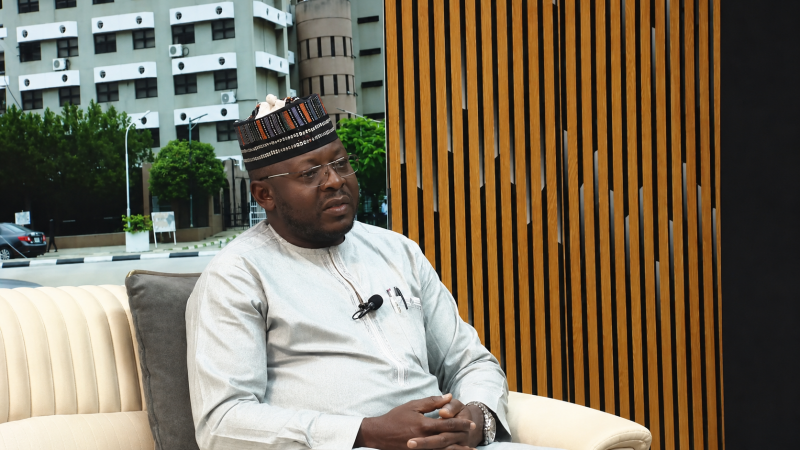
A Nigerian academic has offered a pointed explanation for the recurring xenophobic violence in South Africa, arguing that the country’s stubbornly high unemployment rate, particularly among its black youth, has created a fertile ground for the scapegoating of foreign nationals. Dr. Abdurazak Salihu Ibrahim of the Department of Political Science and International Relations at Nile University, Abuja, made the analysis on Thursday, May 7, 2026, during an appearance on ‘Good Morning Nigeria’, a flagship programme of the Nigerian Television Authority (NTA). Speaking against the backdrop of fresh attacks on Nigerian citizens and businesses in Gauteng and other provinces, Ibrahim said the failure of South African political leaders to fulfil the social contract with their own citizens is a fundamental cause of the hostility toward immigrants.
“Structural unemployment is one of the major causes of xenophobic attacks in South Africa,” Ibrahim stated. He explained that when a government is unable to provide jobs, housing, or basic services to its population, the resulting frustration often spills over into violence against vulnerable outsiders who are perceived as competitors for scarce resources. “The failure of South African political leaders to effectively address unemployment and fulfil the social contract with citizens has contributed significantly to the growing wave of xenophobic attacks in the country,” he added.
South Africa’s unemployment rate has remained one of the highest in the world for more than a decade. According to Statistics South Africa, the country’s official unemployment rate stood at 32.1 percent in the first quarter of 2026, while youth unemployment (aged 15‑34) hovered near 45 percent. The figures are even higher in impoverished townships and informal settlements where many migrants live and work. Economic growth has consistently lagged behind population growth, and the COVID‑19 pandemic further damaged already fragile sectors such as tourism, retail, and manufacturing. In this environment, foreign nationals—many from other African countries, including Nigeria, Zimbabwe, Somalia, and Ethiopia—have become convenient targets for political entrepreneurs and frustrated mobs.
Ibrahim’s intervention is not the first time an analyst has linked unemployment to xenophobia, but it is notable for coming from a Nigerian scholar on state television, at a moment when diplomatic tensions between Abuja and Pretoria are running high. Over the past three weeks, at least two Nigerian citizens have been killed in separate incidents involving South African security personnel, while several businesses owned by foreigners have been looted and set ablaze. The Nigerian government has summoned the South African acting High Commissioner, demanded compensation for victims, and launched a voluntary evacuation of citizens who wish to return home. President Bola Tinubu has personally expressed “grave concern” over the situation.
Yet Ibrahim urged a more structural understanding of the cycle of violence. He pointed out that South Africa’s transition from apartheid to democracy in 1994 came with high expectations of shared prosperity. The Black Economic Empowerment (BEE) programme and other affirmative action policies were designed to redress historical injustices, but they have not succeeded in lifting the majority of black South Africans out of poverty. “The social contract is broken. When people feel that the state has failed to protect their interests, they take matters into their own hands,” Ibrahim said. He noted that while South Africa’s constitution guarantees freedom of movement and non‑discrimination, the lived reality for many poor South Africans is one of exclusion, marginalisation, and competition with migrants for informal trading spaces, cheap housing, and low‑skilled jobs.
The don also drew a distinction between the political leadership and the general population. “The attacks are not organised by the state, but state officials are often slow to intervene, and when they do, prosecution rates are low. This impunity emboldens further violence,” he said. He cited the 2019 xenophobic attacks in Johannesburg and Durban, in which dozens of people died and hundreds of foreign‑owned shops were destroyed. Only a handful of perpetrators were ever convicted. “That sends a message that the lives of foreign nationals are cheap,” Ibrahim added.
To break the cycle, Ibrahim called for a two‑pronged approach. First, South African authorities must invest aggressively in job creation, skills development, and economic inclusion for their own citizens, particularly in the informal sector where most migrants work alongside locals. Second, they must hold perpetrators of xenophobic violence accountable, regardless of public pressure. “You cannot build a rainbow nation on the graves of foreign nationals,” he said.
The academic also offered advice to Nigerian and other African migrants living in South Africa. “Be law‑abiding, integrate into communities, and form alliances with progressive civil society organisations that are fighting against xenophobia. Solidarity with local workers who are also exploited can break down the ‘us versus them’ mentality.” He urged the African Union to do more than issue condemnatory statements, calling for a binding protocol on the protection of the rights of African citizens within the continent, with enforcement mechanisms that go beyond toothless declarations.
Reactions to Ibrahim’s analysis have been mixed. In Nigeria, many social media users praised him for offering a reasoned diagnosis rather than emotional condemnation. “This is the kind of intellectual engagement we need, not just outrage,” one X user wrote. In South Africa, however, some commentators accused the don of excusing the attackers by pointing to economic factors. “No amount of unemployment justifies dragging a man out of his shop and burning him alive. That is pure hatred,” a Johannesburg resident said in a radio interview.
The Nigerian Television Authority did not release a clip of the interview at press time, but the statement from Ibrahim has been widely circulated on social media. The Nile University Department of Political Science declined to comment further, saying Dr. Ibrahim was speaking in his personal capacity. Nevertheless, the don’s intervention adds a valuable voice to a debate that has often been reduced to finger‑pointing and retaliatory diplomacy. For Nigerians who have lost relatives or livelihoods in South Africa, the call to address structural unemployment may seem remote. But for those who want to prevent the next round of violence, Ibrahim’s diagnosis points to a truth that political leaders on both sides have been reluctant to confront: xenophobia will not end until economic despair ends first.
📩 Stone Reporters News | 🌍 stonereportersnews.com
✉️ info@stonereportersnews.com | 📘 Facebook: Stone Reporters News | 🐦 X (Twitter): @StoneReportNew | 📸 Instagram: @stonereportersnews
Add comment
Comments