

Reported by: Oahimire Omone Precious | Edited by: Oravbiere Osayomore Promise.
The Ekiti State Government has intensified its crackdown on environmental pollution following the arrest of a man accused of dumping decomposing animal waste into a stream near Summit Resort in the Federal Housing Estate area of Ado‑Ekiti. The suspect, Tunde Oshin, was apprehended after vigilant residents reportedly caught him discharging offensive waste, including degraded cattle blood and other animal remains, into the flowing stream. Witnesses said the incident caused a severe odour nuisance that kept many residents awake through the night.
According to reports, the suspect allegedly attempted to flee the scene after dumping the substance, but residents pursued and stopped him before alerting authorities. Police officers from the Oke‑Ila Division later detained the suspect for questioning. A joint response team comprising officials from the Ekiti State Ministry of Environment and Natural Resources, the Ministry of Health and Human Services, the National Environmental Standards and Regulations Enforcement Agency (NESREA), and security personnel immediately visited the affected area.
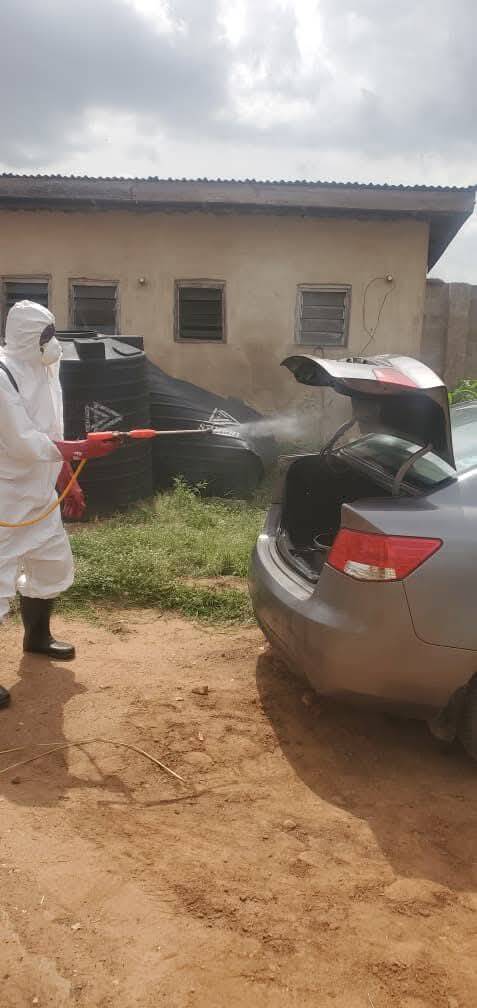
Preliminary investigations revealed that the decomposing cattle blood had reportedly been stored for several weeks to generate maggots allegedly used in feeding catfish. However, residents have called for further investigations to determine the true source and safety implications of the waste. Environmental officials subsequently carried out fumigation and decontamination exercises around the polluted stream, while samples were collected for laboratory analysis to assess the environmental and public health impact of the contamination.
Further inspections conducted by government officials, police representatives, residents, and journalists led to an abattoir along Iworoko Road in Ado‑Ekiti, where workers confirmed that the suspect had purchased cattle blood in April. The workers also disclosed that several fish farmers regularly buy cattle blood for maggot production. The development has raised fresh concerns that indiscriminate disposal of decomposing cattle blood by fish farmers may be contributing to the persistent foul odour affecting parts of Ado‑Ekiti.
Reacting to the incident, the Commissioner for Environment and Natural Resources, Mrs Tosin Aluko‑Ajisafe, condemned the act and warned that the government would not tolerate environmental violations capable of endangering public health. “Dumping decomposing animal waste into a flowing stream is not only illegal but also poses serious health risks to residents who depend on that water source,” she said. She assured that the government would ensure that the suspect faces the full wrath of the law.
In a related development, the state government has also initiated legal action against a waste management company accused of indiscriminate sewage disposal within the Ado‑Ekiti metropolis. Officials of the company have been arraigned before a Magistrate Court and granted bail, with the case adjourned until May 19, 2026. Authorities say new regulatory measures and stricter penalties are being considered for maggot producers and cattle blood vendors across the state as part of efforts to curb environmental pollution and protect residents.
The odour crisis in Ado‑Ekiti had been a recurring complaint from residents of the Federal Housing Estate and surrounding areas for weeks. Many complained of sleepless nights, respiratory discomfort, and a general decline in the quality of life. The arrest of Mr Oshin brought a temporary sense of relief, but community leaders have called for sustained monitoring to prevent future occurrences.
Speaking with journalists after the decontamination exercise, the Community Development Association chairman of the Federal Housing Estate, Mr Adewale Ogundipe, commended the government for its swift response. “We have been living with this stench for too long. Our children cannot play outside, and we cannot open our windows at night. This arrest sends a strong signal that environmental offenders will be held accountable,” he said.
The Ekiti State Government has also launched a public awareness campaign to educate fish farmers and abattoir operators on proper waste disposal methods. The campaign, which involves community town halls and radio jingles, emphasises the dangers of dumping untreated animal waste into water bodies and the legal consequences of such actions.
Meanwhile, the police confirmed that Mr Oshin remains in custody pending further investigation. The Commissioner of Police in Ekiti State, CP Oluwole Adetoyi, said the suspect would be charged with violation of the state’s environmental laws and possibly endangering public health. “We are working closely with the Ministry of Environment to ensure that this case is properly investigated and prosecuted,” the CP said.
The incident has also sparked a broader conversation about the regulation of fish farming in the state. Many operators use maggots as protein‑rich feed for catfish, but the practice of storing cattle blood for extended periods to breed maggots often leads to offensive odours and attracts disease vectors. Environmental health experts have called for the adoption of alternative, more hygienic feed sources, as well as the establishment of centralised maggot production facilities where waste can be managed safely.
As the case against Mr Oshin progresses, the Ekiti State Government has reiterated its zero‑tolerance policy for any activity that degrades the environment or threatens public health. Officials have announced that enforcement teams will conduct routine inspections of abattoirs, fish farms, and waste disposal sites across the state. Offenders will face fines, community service, or imprisonment, depending on the severity of the violation.
For the residents of Ado‑Ekiti, the arrest of the suspect is a small but significant victory in their long struggle for a clean and healthy environment. The odour that once hung heavy over their neighbourhood has subsided, but they know that vigilance is the only way to keep it from returning. As one resident put it, “We will not rest until our streams run clean and our lungs can breathe freely again.”
📩 Stone Reporters News | 🌍 stonereportersnews.com
✉️ info@stonereportersnews.com | 📘 Facebook: Stone Reporters News | 🐦 X (Twitter): @StoneReportNew | 📸 Instagram: @stonereportersnews
Add comment
Comments