

Reported by: Ijeoma G | Edited by: Oravbiere Osayomore Promise.
A commercial driver bled to death at a military checkpoint in Owo, Governor Mbah's hometown. The army says he failed to stop. Witnesses say the soldiers opened fire without warning after the highway checkpoints were dismantled to curb rising banditry.
The Enugu-Abakaliki Expressway, at first light, is a river of taxis—Toyota Sienna minivans ferrying traders, civil servants and pregnant women across state lines. On the morning of 5 May 2026, a convoy of seven such minivans set out from Enugu towards Ebonyi State, their drivers navigating a stretch of road that had, only weeks before, been stripped of its formal military checkpoints. Those checkpoints had been dismantled following residents' complaints that they enabled, rather than prevented, criminality.
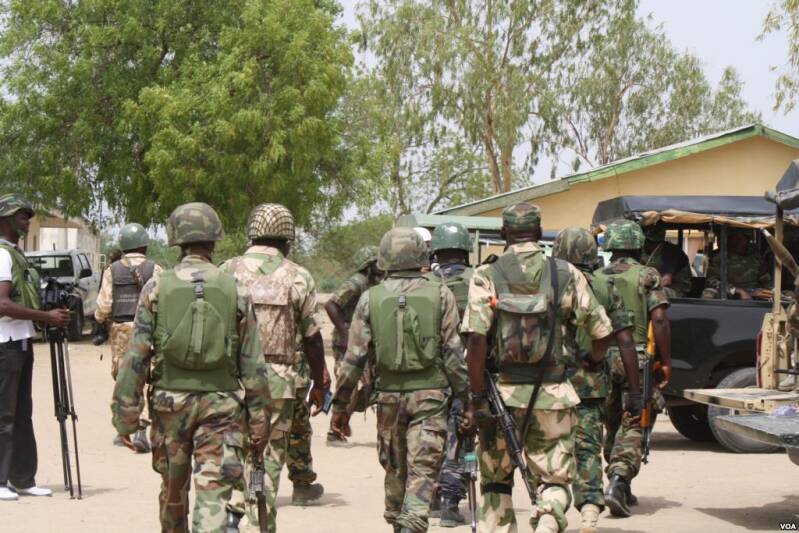
Just outside the village of Owo, the drivers saw armed men on the road. According to security sources, the soldiers were members of the Nigerian Army's 82 Division, conducting an unscheduled stop‑and‑search operation in an area where armed robberies and kidnappings had recently spiked. What happened next has become the subject of two irreconcilable narratives.
The first vehicle in the convoy did not come to a halt quickly enough, according to military authorities. One source claimed that the driver tried to accelerate past the soldiers, prompting them to open fire at close range. The driver, a 36‑year‑old father of three, was struck by multiple rounds and died at the wheel. The remaining six minivans, witnesses told SaharaReporters, immediately stopped. Soldiers searched those vehicles thoroughly and found no weapons, no contraband, and nothing that would justify the shooting of the lead driver.
"When the first driver was shot, every other vehicle stopped immediately. The soldiers searched all of them and found absolutely nothing suspicious," a source told SaharaReporters. "They shot the man at close range. There was no reason for it." Another source pointed to a crucial change in the roadway itself: for several kilometres, including at the spot where the convoy was stopped, the formal military checkpoint had been removed. "Before this incident, most of the checkpoints, including the military checkpoint at Km 17 in Owo, had been dismantled up to the Ebonyi boundary," the source said. "After the checkpoints were removed, incidents of kidnapping and armed robbery reduced significantly in the area." The source added that when the drivers saw armed men on the road in the early morning darkness, they likely mistook them for kidnappers or armed robbers. "But instead of shooting the tyres or finding another way to stop the vehicle, the soldiers shot the driver dead."
Three days after the shooting, the victim's family had still not received an official statement from the Nigerian Army. Calls to the spokesperson for the Nigerian Army, Colonel Apollonia Anele, went unanswered. The Acting Deputy Director of Army Public Relations for the 82 Division, Lieutenant Colonel Olabisi Ayeni, could not be reached. Governor Peter Mbah, whose political base is in Owo and who has publicly pledged continued support for the armed forces, had not commented on the incident as of Sunday evening.
In the absence of an official account, residents of Owo have drawn their own conclusions from a single, devastating detail: the convoy stopped after the first shot. Every other driver pulled over. No one else fled. The soldiers searched every vehicle and found nothing. Yet the shooting continued. The checkpoint had been dismantled. The incident, as one source described it, "looked like a kidnap attempt, not a lawful military operation".
On the Enugu-Abakaliki road, the morning convoys continue. But drivers now whisper to each other when they see armed men ahead. Some have begun carrying mobile phones in their hands, ready to record. The dead driver's name has not been released by the military, and his family has not spoken publicly, waiting for an investigation that may never come.
The official toll of the encounter is one dead civilian. The unofficial toll is a little more trust chipped away from an already battered compact between the state and its citizens. In Owo, the story is repeated in fragments: the convoy of taxis, the flash of a gun, the thud of a body hitting the dashboard. And the unsettling silence from those who wear the uniform, who have not said whether the dead man was a security threat or simply a man who did not stop quickly enough.
📩 Stone Reporters News | 🌍 stonereportersnews.com
✉️ info@stonereportersnews.com | 📘 Facebook: Stone Reporters News | 🐦 X (Twitter): @StoneReportNew | 📸 Instagram: @stonereportersnews
Add comment
Comments