

Reported by: Ijeoma G | Edited by: Oravbiere Osayomore Promise.
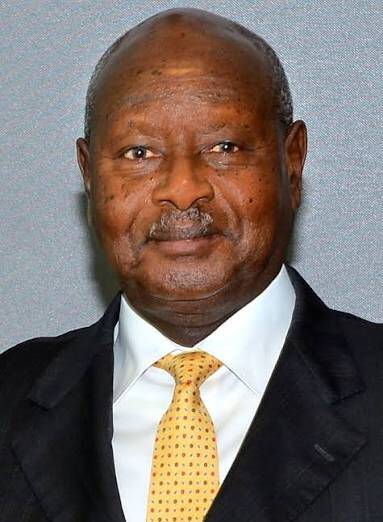
Ugandan President Yoweri Museveni has been sworn in for a seventh consecutive term after securing victory in the country’s disputed January elections, extending his nearly four‑decade grip on power. The 81‑year‑old leader took the oath of office in Kampala on Tuesday, May 12, 2026, amid tight security that saw armoured vehicles and heavily armed operatives deployed across the capital. Authorities said the measures were necessary to maintain order during the ceremony, but critics saw them as a signal of the regime’s fear of public dissent.
Museveni was declared winner of the presidential election with more than 70 percent of the vote, a result that allows him to remain in office until 2031. His main challenger, singer‑turned‑politician Bobi Wine, whose real name is Robert Kyagulanyi Ssentamu, has rejected the outcome, alleging widespread electoral malpractice including ballot stuffing, voter intimidation, and manipulation of results. Electoral officials have denied the accusations and insisted that the poll was free and credible. Nevertheless, international observers from the European Union and the Commonwealth have reported irregularities, though they stopped short of declaring the election invalid.
Bobi Wine, who had emerged as the most formidable opposition figure to challenge Museveni’s long reign, has since fled Uganda, claiming he feared for his safety and accusing the government of orchestrating a campaign of violence against opposition figures. His party, the National Unity Platform, has accused security forces of raiding its offices, arresting its members, and using tear gas to disperse peaceful protests following the election results. The Ugandan government has denied targeting opposition supporters and accused Bobi Wine of inciting violence.
Museveni first took power in 1986 after leading a rebel movement that toppled the government of Tito Okello, a former military ruler. Since then, he has remained one of Africa’s longest‑serving leaders, overseeing economic growth and stability in parts of the country while also presiding over a government repeatedly accused of human rights abuses, suppression of political opposition, and corruption. His government has also been a key Western ally in the fight against Islamist militancy in Somalia and the region, a factor that has insulated him from sustained international pressure.
Political analysts are divided on whether this seventh term will be Museveni’s last. The president has not publicly indicated any intention to step down, and speculation has increasingly focused on his son, General Muhoozi Kainerugaba, as a possible successor. Muhoozi, who commands the military’s land forces and has a fervent social media following, has drawn criticism over controversial online posts directed at opposition politicians, including threats of violence. While Museveni has not formally endorsed his son, the general’s rising profile and the placement of loyalists in key security positions have fueled concerns of a dynastic succession.
The inauguration ceremony itself was a display of military might and political theatre. Dozens of African leaders and international diplomats attended, including representatives from China, Russia, and several East African Community member states. Western powers, including the United States and the United Kingdom, sent lower‑level delegations, signaling their unease with the electoral process. In his inaugural address, Museveni struck a defiant tone, dismissing foreign criticism and vowing to continue his government’s focus on infrastructure development, regional security, and economic transformation.
For ordinary Ugandans, the seventh term of Yoweri Museveni brings a familiar mix of resignation and frustration. While the economy has grown and roads have been built, unemployment remains high, especially among the youth, and corruption is widely seen as endemic. Bobi Wine’s flight into exile has left the opposition without a visible leader on the ground, and many fear that the space for political dissent will shrink further. Yet, even at 81, Museveni has shown no sign of letting go. As he raised his right hand to take the oath, the man who once promised to be a “transitional leader” cemented his place as an institution, leaving Ugandans to wonder when, and if, the transition will ever come.
📩 Stone Reporters News | 🌍 stonereportersnews.com
✉️ info@stonereportersnews.com | 📘 Facebook: Stone Reporters News | 🐦 X (Twitter): @StoneReportNew | 📸 Instagram: @stonereportersnews
Add comment
Comments