

Reported by: Oahimire Omone Precious | Edited by: Oravbiere Osayomore Promise.
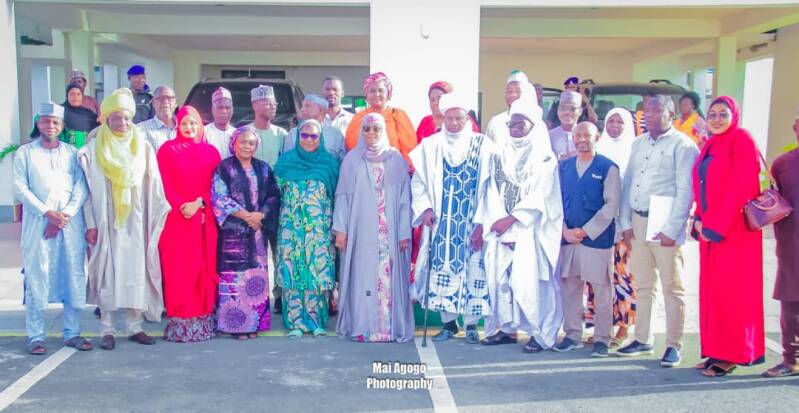
The Bauchi State Action Committee on Sexual and Gender‑Based Violence (BSACGBV) has recorded 218 cases of gender‑based violence across the state since its inauguration on April 17, 2020, the committee’s chairperson and wife of the state governor, Hajiya Aisha Bala Mohammed, announced during a media chat in Bauchi on Monday, May 11, 2026. According to the breakdown provided by the Special Adviser to the Governor on Gender‑Based Violence, Barrister Sha’awanatu Yusuf, the 218 cases include 94 rape cases, 37 domestic violence cases, 51 family dispute cases, 19 forced marriage cases, 11 child abuse cases, five child exploitation cases and one abduction case. Many of the rape and other criminal cases have already been taken to court, with some offenders convicted and serving prison sentences, while others remain pending due to investigations and judicial procedures. The committee disclosed that it had so far secured convictions in 34 cases.
While the committee has recorded notable successes since its establishment, Hajiya Aisha Bala Mohammed expressed displeasure over the persistent high numbers and singled out delays in the judicial process as a major challenge. She explained that constitutional provisions and lengthy legal procedures often slow down the resolution of cases, a situation that can discourage survivors and their families. The First Lady called for a review of relevant laws, including the Violence Against Persons Prohibition Act and the Child Rights Law, as well as constitutional provisions affecting criminal justice administration, to ensure timely justice for victims of gender‑based violence. The committee plans to intensify public sensitisation campaigns and community outreach programmes in the coming months to educate residents on how to prevent and address gender‑based violence, while also stressing that achieving meaningful progress requires stronger collaboration among lawmakers, community leaders, civil society organisations, religious institutions, traditional rulers, security agencies and the media.
Concern over the vulnerability of specific groups also took centre stage during the media chat. Aisha Bala Mohammed, who is widely known as “Uwar Marayu” (Mother of Orphans), raised the alarm over the increasing vulnerability of street‑roaming Quranic children, known as Almajiri, to sexual exploitation, physical abuse and neglect across Northern Nigeria. She blamed the situation on a combination of poverty, parental neglect and the inability of some traditional Quranic teachers to properly accommodate the number of children under their care, noting that some teachers admit more than 100 children when they do not even have the capacity to feed or house 20. According to the First Lady, some parents leave their children behind with as little as N20,000 or N30,000 and rarely check on their welfare, leaving the boys hungry, homeless and without supervision. She called on religious leaders, traditional rulers, media organisations and government agencies to work together to reform the Almajiri system and protect vulnerable children.
The committee’s work has also received international recognition. Speaking during a two‑day training for investigative officers, prosecutors and judicial officers organised by the Bauchi State Ministry of Justice in collaboration with the United Nations Population Fund (UNFPA), the UNFPA State Programme Officer, Ms Deborah Tabara, commended Bauchi for creating a standard that other states could replicate in terms of GBV response and survivors’ access to justice. She stressed that survivors’ access to justice depends heavily on the capacity and dedication of law enforcement, the judiciary and other frontline service providers. The permanent secretary of the Bauchi State Ministry of Justice, Yusuf Adamu, acknowledged that while the state now has laws, policies and institutional reforms in place, their effectiveness depends on how well duty bearers investigate cases, prosecute offenders and secure justice for survivors. The state’s GBV Desk Officer, Maimuna Ibrahim, provided a harrowing illustration of the urgency of the work, recounting a recent case from Toro Local Government Area in which a stepmother used a hot metal spoon to burn the private parts of a minor.
Despite the challenges, the committee reaffirmed its commitment to protecting survivors and reducing violence against women and children, while urging members of the public to report cases of abuse, violence and neglect for prompt intervention and legal action. Hajiya Aisha Bala Mohammed stressed that the committee’s activities are humanitarian and community‑driven, and that the government alone cannot address all societal problems without the support and participation of citizens. She also expressed concern over the low level of public awareness regarding laws, rights and responsibilities, noting that many citizens remain uninformed about the legal protections available to them. “Your role in public enlightenment and advocacy remains invaluable in the collective fight against gender‑based violence,” she told journalists.
📩 Stone Reporters News | 🌍 stonereportersnews.com
✉️ info@stonereportersnews.com | 📘 Facebook: Stone Reporters News | 🐦 X (Twitter): @StoneReportNew | 📸 Instagram: @stonereportersnews
Add comment
Comments