

Reported by: Oahimire Omone Precious | Edited by: Oravbiere Osayomore Promise.
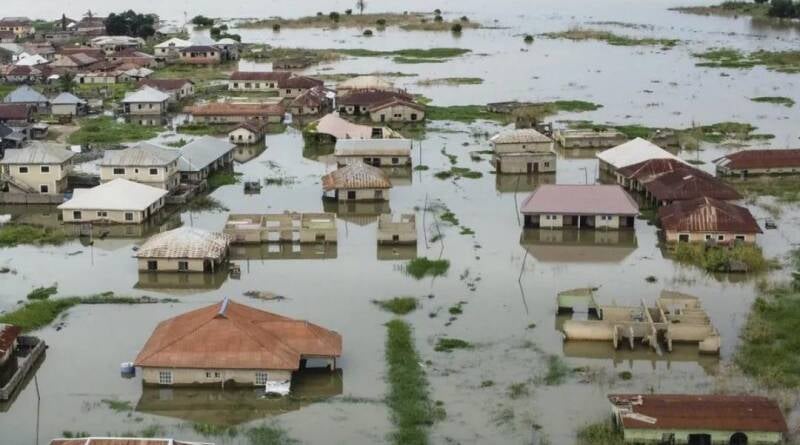
The Governor of Cross River State, Senator Bassey Otu, has raised an urgent alarm over the worsening flood disasters that have ravaged communities across the state for years, describing the situation as a growing ecological threat that demands immediate and coordinated intervention from all levels of government. Speaking on Thursday, May 14, 2026, in Calabar while receiving the Director‑General of the National Emergency Management Agency (NEMA), Mrs Zubaida Umar, along with a delegation that included the Chairman of the House Committee on Disaster Management and Emergency Preparedness, Honourable Joseph Bassey, Otu declared that Cross River remains one of the country’s high‑risk states for flooding. “Flooding has continued to confront our state year after year, and it is already common knowledge that Cross River remains one of the high‑risk states in the country,” the governor stated.
During the courtesy visit, which formed part of the 2026 National Flood Preparedness and Awareness Campaign, Otu recalled that he had engaged relevant federal authorities as far back as 2019, urging them to take proactive measures to mitigate the devastating impact of floods. He lamented that despite those efforts, the problem has persisted, leaving communities to face repeated destruction year after year. According to the governor, several intervention projects designed to tackle flooding were either abandoned or left incomplete, a situation that has worsened the plight of affected residents. He explained that investigations had revealed plans for a comprehensive drainage system and flood channels that would have effectively managed the release and movement of excess water. “There was supposed to be a dam system and proper drainage channels that would collect and redirect water whenever releases occurred, but somehow those projects were not completed,” Otu said. “The consequence is that communities directly along these flood corridors continue to suffer repeated destruction of homes, farmlands and livelihoods.”
The governor warned that what the state is experiencing is no longer merely seasonal flooding but a steady slide toward a broader environmental crisis. “What we are witnessing is no longer just seasonal flooding; it is gradually becoming an ecological problem with far‑reaching implications for our environment and the survival of vulnerable communities,” he added. He therefore called on the Federal Government and relevant intervention agencies to expedite action on critical flood‑control infrastructure across the state, stressing that proper drainage systems and ecological remediation projects would significantly reduce the impact of flooding on residents.
In her response, NEMA Director‑General Zubaida Umar confirmed that the agency’s visit was part of nationwide activities under the 2026 National Flood Preparedness and Awareness Campaign, which follows emergency flood predictions issued for several states across the country. She disclosed that Cross River had been identified among the states at high risk of severe flooding this year. According to her, the vulnerable local government areas in the state include Abi, Akamkpa, Calabar Municipality, Calabar South, Etung, Ikom, Odukpani, Obubra and Obanliku. “The purpose of our visit is to work closely with the state government and relevant stakeholders so that together we can reduce the impact of possible flooding on lives and livelihoods,” Umar said. “While we may not be able to stop the floods entirely, preparedness and coordination can greatly minimise the damage.”
The NEMA boss further explained that the agency had already engaged critical stakeholders, including traditional rulers, religious leaders, road safety officials and community representatives, to deepen public awareness and strengthen grassroots disaster preparedness. She revealed that mitigation and preparedness documents had been presented to the state government, while technical teams were already being deployed across vulnerable communities for assessments and early response coordination. Umar emphasised the importance of community‑based disaster management structures, noting that effective emergency response must begin at the grassroots level before escalating to state and federal authorities. She commended the Cross River State Government for its longstanding cooperation with NEMA and called for sustained partnership to ensure safer and more coordinated responses throughout the flood season.
Governor Otu’s urgent appeal comes after years of repeated flooding that has devastated farming communities, displaced families and destroyed critical infrastructure. In the 2025 rainy season alone, over 150 communities were submerged, with the most affected areas including Calabar Municipality, Odukpani and Ikom. The governor noted that the persistence of the problem has forced many families to abandon their ancestral homes and relocate to safer but overcrowded urban centres, placing additional pressure on already strained public services. He reiterated his call for the completion of abandoned drainage and dam projects, arguing that without such infrastructure, no amount of emergency response can prevent the cycle of destruction.
Cross River is not alone in facing this threat. The Nigerian Meteorological Agency (NiMet) had earlier predicted a high likelihood of flooding in Cross River and 17 other states in 2026, warning that coastal and riverine flooding is expected due to rising sea levels and tidal surges. The Federal Ministry of Environment has also identified Cross River as one of the states most vulnerable to sustained flooding, along with Kogi, Niger, Delta, Anambra, Benue, Kebbi, Rivers, Bayelsa and Adamawa. In the face of these forecasts, Governor Otu has called for a shift from reactive emergency responses to proactive, long‑term solutions that address the root causes of the flooding crisis.
The Cross River State Government has already rolled out preventive measures to protect lives and property during the 2026 rainy season. The Executive Secretary of the Calabar Urban Development Agency (CUDA), Dr Effiong Ayi, disclosed that the state is actively dredging waterways, widening canals, constructing and clearing drains, demolishing structures on flood paths, and conducting public sensitisation on proper waste disposal. The government has adopted a coordinated, science‑based and community‑focused approach to mitigate flood risks, including the development of a local alert system to provide real‑time flood updates. The state is also working with NEMA, the State Emergency Management Agency (SEMA), private security groups and environmental NGOs to strengthen response capacity. “We don’t wait until rainy season sets in before we start working to prevent flooding,” Ayi said. “Across all the local governments in the state, we ensure that all the drainages are open and cleared both in dry and rainy seasons.”
Despite these efforts, Governor Otu insists that federal assistance remains critical to completing the large‑scale infrastructure needed to protect communities. As the rainy season intensifies, the people of Cross River look to both state and federal authorities to translate warnings and promises into tangible action before the next floodwaters rise.
📩 Stone Reporters News | 🌍 stonereportersnews.com
✉️ info@stonereportersnews.com | 📘 Facebook: Stone Reporters News | 🐦 X (Twitter): @StoneReportNew | 📸 Instagram: @stonereportersnews
Add comment
Comments