

Reported by: Oahimire Omone Precious | Edited by: Oravbiere Osayomore Promise.
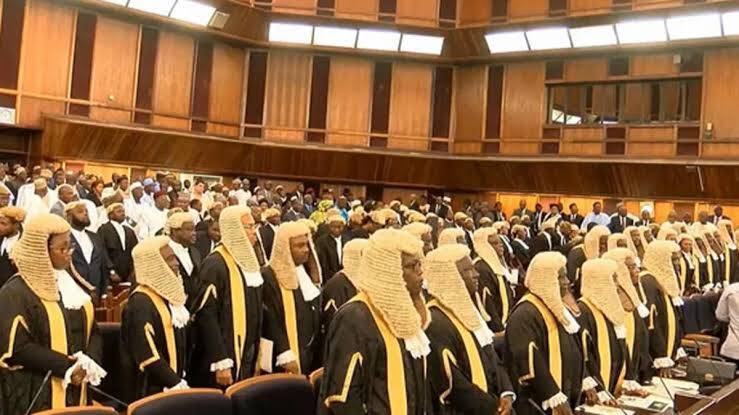
The National Judicial Council (NJC) has dismissed a petition filed against Justice Charles Wali of the Rivers State High Court over his handling of the protracted leadership crisis in the Rivers State House of Assembly, describing the allegations as "reckless and unsupported by facts". The council, which reached the decision at its just‑concluded 107th meeting, also ordered that the petitioner be referred to the Legal Practitioners Disciplinary Committee (LPDC) for what it deemed professional misconduct. The ruling brings an end to a months‑long legal and political battle that had thrust Justice Wali into the centre of one of Nigeria's most volatile political disputes.
The Rivers Assembly crisis erupted in late 2023 when a faction of lawmakers loyal to the then‑Minister of the Federal Capital Territory, Nyesom Wike, attempted to impeach Governor Siminalayi Fubara. The power struggle split the 32‑member House into two factions, one led by Speaker Martin Amaewhule and the other by Victor Oko‑Jumbo. At the height of the crisis, Justice Wali issued several orders that favoured the Oko‑Jumbo faction, including an interim injunction that barred Amaewhule and 24 other pro‑Wike lawmakers from accessing the Assembly complex or carrying out any legislative business. The orders were widely seen as having stabilised the pro‑Fubara faction, but they also drew the ire of the opposition, which accused the judge of overstepping his jurisdiction.
The petitioner, whose identity was not disclosed in the NJC's statement, alleged that Justice Wali acted with bias and exceeded his powers by entertaining a matter that ought to have been filed at a Federal High Court. Section 272(3) of the 1999 Constitution, which the petitioner cited, provides that a State High Court has no jurisdiction over disputes concerning the tenure of a State House of Assembly. The petitioner also accused the judge of ignoring a subsisting order of a Federal High Court, an allegation that the NJC found unsubstantiated.
At its 106th meeting held in April, the NJC had reviewed a preliminary report on the petition and decided to investigate further. A committee was constituted to examine the allegations and report back at the 107th meeting. That committee, after reviewing the facts and hearing from both sides, concluded that the petition lacked merit. According to a statement issued by the NJC's Director of Information, Soji Oye, the council unanimously agreed that the petitioner had failed to provide any credible evidence to support the claims of bias, abuse of office, or judicial misconduct. "The petition was reckless, unsupported by facts, and amounted to an abuse of the complaints process," the statement read.
In addition to dismissing the petition, the NJC referred the petitioner to the Legal Practitioners Disciplinary Committee for what it termed professional misconduct. The LPDC is the statutory body responsible for disciplining lawyers for unprofessional conduct. The referral is significant because it signals that the council views the petitioner's actions not merely as a misguided attempt at accountability but as a deliberate attempt to harass a judicial officer. The NJC did not disclose whether the petitioner is a lawyer, but legal observers note that the referral implies that the petitioner was either a legal practitioner or that the complaint was prepared and filed by one.
The Rivers Assembly crisis has generated several petitions against judges who have handled cases arising from the dispute. In 2024, a coalition of 92 civil society organisations had called on the NJC to investigate Justice Wali and other judges for allegedly issuing conflicting orders. The coalition accused the judges of deepening the political crisis by acting outside their constitutional jurisdiction. However, the NJC had previously declined to act on those petitions, stating that the matters were sub judice and that the judges could not be investigated while appeals were pending. The dismissal of this latest petition appears to affirm the council's view that Justice Wali acted within his powers.
Justice Wali's handling of the Assembly crisis was not without physical danger. In 2024, the Ahoada High Court, where Wali presided, was twice rocked by explosions. The attacks, which occurred shortly after the judge issued orders restraining pro‑Wike lawmakers from accessing the Assembly complex, were widely condemned as acts of terrorism aimed at intimidating the judiciary. The police later increased security around Wali's residence and court premises, but no arrests were ever announced. The attacks highlighted the extreme tensions that have characterised Rivers politics since the fallout between Wike and Fubara.
The NJC's decision has been hailed by the Rivers State Government and supporters of Governor Fubara as a vindication of the judiciary's independence. "This ruling confirms that Justice Wali acted strictly in accordance with the law and his judicial oath," a government spokesman said. "The petition was a desperate attempt to intimidate the judge and sway the course of justice. We are pleased that the NJC saw through it." However, critics of the ruling argue that the council's decision to refer the petitioner to the LPDC could have a chilling effect on future complaints against judges. "Citizens have a right to petition the NJC when they believe a judge has acted improperly. Referring a petitioner to the LPDC simply for filing a complaint, even if the complaint was weak, could discourage legitimate oversight," a human rights lawyer said on condition of anonymity.
The NJC's dismissal of the petition also has implications for the broader Rivers crisis. With the judiciary now effectively affirming Justice Wali's orders, the legal foundation for the pro‑Fubara faction's control of the Assembly is strengthened. The Amaewhule faction had repeatedly challenged the validity of Wali's orders, but those challenges have so far been unsuccessful. The Court of Appeal had earlier declined to set aside the orders, ruling that the appeal was premature. The NJC's decision adds another layer of judicial endorsement to the status quo.
Justice Wali, a judge of the Rivers State High Court with decades of experience, has not commented publicly on the petition or its dismissal. However, sources close to him said he was relieved by the NJC's decision and was eager to focus on his judicial duties. The judge had continued to hear cases throughout the petition process, and his docket includes several high‑profile matters unrelated to the Assembly crisis. The NJC's ruling clears his name of any suspicion of misconduct and reaffirms his reputation as a competent and impartial judicial officer.
The legal battle over the Rivers State House of Assembly is far from over, but the NJC's decision provides a measure of closure on the question of Justice Wali's conduct. For the petitioner, the dismissal and referral may mark the end of the road. For the Fubara administration, it is a victory. And for the judiciary, it is a reminder that the NJC will not hesitate to defend its own when it believes the attack is unfounded. The council's message is clear: judges cannot be intimidated by reckless petitions, and those who file frivolous complaints will face consequences.
📩 Stone Reporters News | 🌍 stonereportersnews.com
✉️ info@stonereportersnews.com | 📘 Facebook: Stone Reporters News | 🐦 X (Twitter): @StoneReportNew | 📸 Instagram: @stonereportersnews
Add comment
Comments