

Reported by: Ijeoma G | Edited by: Oravbiere Osayomore Promise.
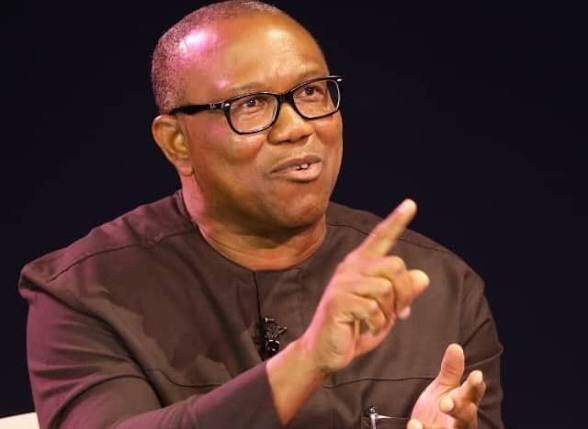
The former Labour Party presidential candidate, Peter Obi, has launched a scathing condemnation of the Economic and Financial Crimes Commission (EFCC) following the agency’s controversial raid on the University of Uyo Teaching Hospital (UUTH) on Tuesday, May 12, 2026. In a personal statement posted on his verified X handle on Thursday, Obi described the alleged use of teargas inside the hospital as a “thoughtless act” that endangered the lives of patients, medical staff, and other vulnerable individuals who were receiving treatment at the facility. Obi’s intervention came as the fallout from the raid deepened, leading to an indefinite strike by doctors, a threatened N1 billion lawsuit by the Nigerian Medical Association (NMA), and conflicting accounts from the hospital management and the anti‑graft agency.
Obi said he had read troubling reports about how EFCC operatives stormed the teaching hospital in an attempt to arrest Professor Eyo Ekpe, a renowned cardiothoracic surgeon and Deputy Chairman of the hospital’s Medical Advisory Committee. According to widely shared accounts, the operatives fired teargas canisters within the hospital premises, causing patients, nurses, doctors and visitors to flee in panic. “This thoughtless act greatly compromised the general safety in the hospital environment and further jeopardised the health of the medical personnel and the sick people in the hospital,” Obi wrote in a post that quickly went viral. While acknowledging that the EFCC and other government agencies have a constitutional mandate to investigate and arrest suspects, Obi insisted that the manner in which such duties are carried out must respect the sanctity of places of healing. “Nothing justifies the use of teargas canisters in a fragile hospital environment,” he declared.
The former Anambra governor also highlighted the enormous human cost of such aggressive tactics. He noted that Nigeria has only about 80 cardiothoracic surgeons serving a population of over 230 million people, and that Professor Ekpe is the only specialist of his kind in Akwa Ibom State. “If a Professor of Cardiothoracic Surgery is arrested in such a demeaning manner in a hospital environment, what signal are we sending to other medical professionals working hard to keep our health sector afloat?” Obi asked. He added that the rule of law remains the most fundamental intangible asset upon which any nation functions, and that the alleged disorderliness displayed by the EFCC operatives must not be encouraged.
The confrontation at UUTH began when a team of EFCC operatives, some of them masked and others wearing EFCC‑branded jackets, visited the hospital to authenticate a medical report presented by a suspect standing trial for allegedly defrauding several microfinance banks, including the University of Uyo Microfinance Bank. According to the EFCC spokesman, Dele Oyewale, the Commission had written two letters, dated March 11 and April 20, 2026, to the hospital management requesting verification of the report but received no response. When an investigating officer’s follow‑up visit also failed, operatives were sent as a last resort to the Chief Medical Director’s office. The situation quickly escalated. Hospital staff, who said they had never seen a formal warrant or court order, resisted the attempted arrest of Professor Ekpe. The EFCC claimed its operatives were locked inside the hospital and pelted with stones. However, the Chief Medical Director, Professor Ememabasi Bassey, and Ekpe himself have painted a very different picture: they said the operatives arrived without a warrant, refused to identify themselves properly, and immediately resorted to force.
In a press conference on Wednesday, Professor Ekpe gave a harrowing account of the incident. He said he had just returned from official leave and was already assisting with the inquiry into the fake medical report when armed officers suddenly told him he was under arrest. “I told them I did not issue the report, my name was not on it, and it did not come from my unit. But they asked me to explain that at their office,” he recounted. He alleged that operatives refused to let him wait for a colleague who had stepped out, then began dragging him out of his office. “They dragged me to the walkway, and I started crying. Staff members who heard me rushed out,” he said. He claimed that when hospital workers attempted to intervene, masked reinforcements arrived, guns were drawn, teargas was fired inside the hospital building, and live bullets were shot. Professor Ekpe, along with several other staff members, was eventually bundled into an EFCC van.
In response, the NMA’s Akwa Ibom branch held an emergency congress and declared an indefinite strike, shutting down health services across the state. The association is demanding the immediate release of all detained staff, a public apology from the EFCC, and disciplinary action against the officers involved. The NMA also announced plans to file a N1 billion lawsuit against the Commission for what it called “physical, emotional, professional and institutional damage.” The Joint Health Sector Unions (JOHESU) also directed a total hospital shutdown.
On Thursday, the Chief Medical Director of UUTH, Professor Bassey, acknowledged that the hospital, which serves between 600 and 800 patients daily, could not afford to remain closed. He appealed to the striking health workers to return to duty, even as he confirmed that the medical report at the centre of the dispute was fake and that some insiders may have collaborated with outsiders to produce it. However, he added that he would not allow a single incident to discredit the entire EFCC, describing the agency as a vital national institution. “Because of a single incident, please let us refrain from rubbishing the very noble institution of government that is doing a good job. Rather, we can condemn the activities of a few operatives who have led to this unfortunate situation,” he said.
Peter Obi’s intervention has added significant political weight to the medical community’s outcry. He has called on public institutions to embrace civility in the discharge of their duties and to shed what he described as the rascality and disorderliness that have continued to characterise some public offices. “Let us condemn and eschew the rascality and disorderliness that have continued to characterise some of our public offices and bring in civility in the discharge of our duties,” Obi wrote. “A new Nigeria is possible.” His statement has been widely shared and has intensified pressure on the EFCC to account for the methods its operatives employed inside the walls of a teaching hospital, where the sick come to heal, not to flee teargas.
📩 Stone Reporters News | 🌍 stonereportersnews.com
✉️ info@stonereportersnews.com | 📘 Facebook: Stone Reporters News | 🐦 X (Twitter): @StoneReportNew | 📸 Instagram: @stonereportersnews
Add comment
Comments