

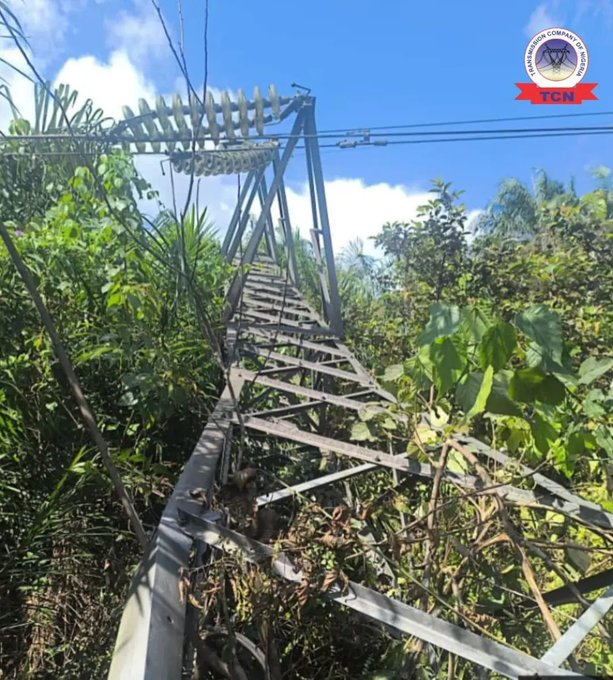
ABUJA, Nigeria — The Transmission Company of Nigeria (TCN) has reported 40 separate incidents of vandalism targeting its power transmission infrastructure since the beginning of the year, highlighting persistent security challenges affecting the stability of the national electricity grid and raising renewed concern over the protection of critical energy assets.
The disclosure was made by the company in a statement reviewing operational disruptions across its transmission network, where officials noted that repeated attacks on transmission towers, conductors, and associated equipment have continued to undermine efforts to maintain consistent power delivery across the country. TCN said the incidents have resulted in significant technical setbacks, emergency repairs, and intermittent power interruptions in several regions.
According to the company, the recorded cases span multiple transmission corridors and involve the destruction or attempted removal of key components of high-voltage infrastructure. Officials explained that such acts of sabotage not only damage physical assets but also compromise system stability, sometimes triggering partial grid disturbances that require urgent technical intervention to prevent broader outages.
TCN expressed concern that despite ongoing public sensitisation efforts and collaboration with security agencies, vandalism of transmission installations remains a recurring challenge. The company noted that the frequency of incidents within the reporting period indicates a sustained threat to national energy infrastructure, which is essential for electricity supply to distribution companies and end users across the country.
The transmission operator said it has been working closely with security formations, host communities, and local surveillance teams to reduce the incidence of attacks on its installations. It added that emergency response teams are routinely deployed to affected sites to restore damaged structures and ensure the resumption of power flow along impacted routes.
Officials also emphasised that the economic impact of vandalism extends beyond immediate repair costs. They explained that damage to transmission towers and lines often leads to forced outages, reduced system reliability, and increased operational expenses, all of which place additional pressure on the already constrained power sector.
Energy sector analysts note that Nigeria’s transmission network has long faced structural and security challenges, including ageing infrastructure, difficult terrain in some transmission corridors, and exposure of high-voltage installations in remote or poorly monitored areas. These conditions, combined with illegal interference, have contributed to recurring disruptions in electricity supply nationwide.
The latest figures from TCN suggest that infrastructure vandalism remains one of the most persistent threats to grid stability. While the company did not release a detailed breakdown of locations or timelines for each incident, it indicated that the attacks occurred across different regions within its operational coverage, reflecting a widespread rather than isolated pattern of activity.
Officials warned that repeated vandalism incidents could undermine ongoing efforts to strengthen Nigeria’s power transmission capacity, particularly at a time when the sector is undergoing reforms aimed at improving efficiency and expanding electricity access. They stressed that sustained damage to transmission infrastructure could delay grid expansion projects and slow down service improvements.
The company reiterated its call for greater community involvement in protecting transmission assets, urging residents in host communities to report suspicious activities around power installations. It also appealed for stronger enforcement measures to deter perpetrators, noting that many of the affected structures are located in areas that are difficult to monitor continuously.
Security experts have previously highlighted the vulnerability of critical infrastructure in Nigeria, including power lines, pipelines, and telecommunications facilities, which often run through remote or lightly policed areas. In many cases, vandalism is linked to attempts to steal metal components for resale, although officials caution that the broader implications include systemic risks to national infrastructure.
TCN said it continues to invest in preventive measures, including increased patrol coordination and improved surveillance in high-risk areas. However, it acknowledged that the scale of the network makes comprehensive physical monitoring challenging without sustained collaboration from security agencies and local communities.
The company also noted that repeated repairs divert resources that could otherwise be used for network expansion and modernization. It warned that if the trend continues, it could slow down efforts to improve grid resilience and reduce transmission bottlenecks that currently affect electricity distribution across the country.
Industry stakeholders argue that addressing the issue requires a multi-layered approach, including stronger legal consequences for vandalism, improved community engagement, and enhanced infrastructure protection strategies. Some analysts have also called for technological solutions such as remote monitoring systems and improved tower design to reduce susceptibility to tampering.
Despite the challenges, TCN maintained that it remains committed to stabilising the transmission network and ensuring reliable electricity delivery nationwide. It said restoration efforts are ongoing at affected sites, with technical teams working to repair damaged installations and restore normal operations as quickly as possible.
The company reiterated that safeguarding transmission infrastructure is critical to national development, given its role in connecting power generation sources to distribution networks. It stressed that without adequate protection, gains made in generation and distribution improvements could be undermined by recurring transmission disruptions.
As investigations into recent incidents continue, TCN said it will maintain collaboration with relevant security agencies to identify and prosecute those responsible for damaging critical power infrastructure. It also called for increased public awareness on the importance of protecting national assets that support electricity supply and economic activity.
The 40 recorded cases since the start of the year underscore the scale of the challenge facing Nigeria’s power transmission system and highlight the ongoing need for coordinated efforts to secure infrastructure that remains central to the country’s energy stability and economic growth.
📩 Stone Reporters News | 🌍 stonereportersnews.com
✉️ info@stonereportersnews.com | 📘 Facebook: Stone Reporters News | 🐦 X (Twitter): @StoneReportNew | 📸 Instagram: @stonereportersnews
Add comment
Comments