

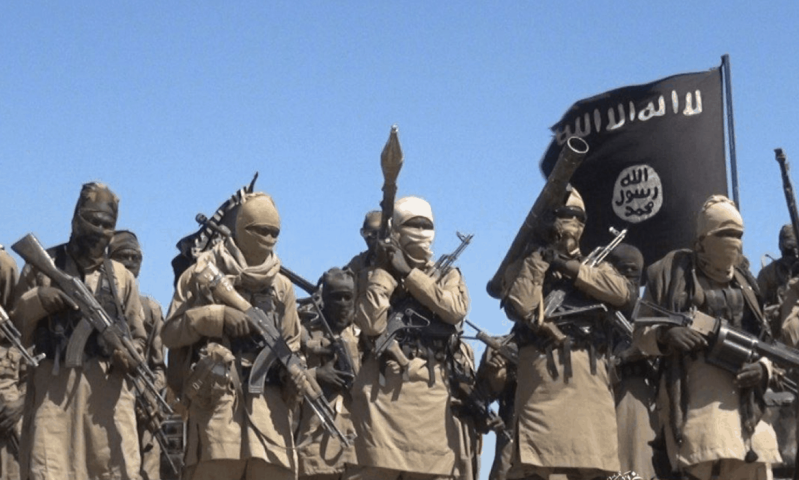
WASHINGTON / ABUJA — A senior Islamic State (ISIS) commander identified as Abu-Bilal al-Minuki has been killed in a joint operation conducted by United States and Nigerian forces, according to statements attributed to former U.S. President Donald Trump and corroborated by multiple international media outlets reporting on the announcement.
The operation, described by U.S. officials as a “highly complex and precisely coordinated mission,” was carried out on May 16, 2026, in an undisclosed location in Africa. Trump stated that al-Minuki, widely described in U.S. intelligence assessments as ISIS’s global second-in-command, was tracked through extended surveillance and intelligence-sharing between American and Nigerian security agencies before being neutralized in the strike.
While neither Washington nor Abuja has released the full operational details, including the exact location or tactical method used, multiple reports indicate that the mission formed part of expanded counterterrorism cooperation between the United States and Nigeria amid growing ISIS and al-Qaeda-linked activity across West Africa and the Lake Chad Basin.
Trump said the commander had been “one of the most active terrorists in the world,” adding that his removal would significantly disrupt ISIS’s global coordination network. U.S. officials also credited Nigerian security forces for providing operational support and ground intelligence, while Nigerian authorities have not issued a detailed independent briefing on the strike.
Al-Minuki was previously designated a “Specially Designated Global Terrorist” by the United States in 2023, reflecting his alleged involvement in ISIS operational planning, logistics, and regional coordination in Africa. Intelligence assessments cited in U.S. reporting describe him as part of the leadership layer responsible for external operations and financing flows between ISIS cells in Africa and other global affiliates.
A key focus of international attention following the announcement is the reported link between ISIS leadership structures and insurgent groups operating in northeastern Nigeria, particularly Islamic State West Africa Province (ISWAP). ISWAP emerged as a splinter faction of Boko Haram that pledged allegiance to ISIS leadership in Iraq and Syria, evolving into one of the most active militant organizations in the Lake Chad region.
Security analysts note that ISWAP has been implicated in numerous mass-casualty attacks and abductions in Nigeria’s northeast over the past decade, including assaults on schools and civilian communities. However, intelligence sources caution that while ISIS global leadership provides strategic direction and ideological alignment, operational control over specific attacks is often decentralized and executed by regional commanders.
One of the most widely referenced cases in this context is the 2018 Dapchi schoolgirls kidnapping in Yobe State, where 110 students were abducted by militants identified as Boko Haram/ISWAP-linked fighters. The incident drew international condemnation and remains a defining example of mass abduction tactics used by insurgent groups in the region. While ISIS-affiliated structures are broadly associated with such networks, no publicly verified intelligence has directly established al-Minuki’s personal operational involvement in that specific abduction.
The U.S. military presence in Nigeria has increased in recent years through intelligence-sharing, surveillance support, and limited advisory deployments aimed at countering ISIS and al-Qaeda-linked insurgencies. Reports indicate that since late 2025, American forces have provided drone surveillance and training assistance to Nigerian security agencies as part of broader regional counterterrorism efforts.
The joint operation comes amid heightened insecurity in northern Nigeria, where both Boko Haram and ISWAP continue to conduct attacks despite sustained military pressure. Recent clashes in Borno State and surrounding areas have resulted in military and civilian casualties, underscoring the ongoing volatility of the region.
International reactions to the reported killing have framed it as a significant operational setback for ISIS’s global command structure. Analysts, however, caution that the organization has historically demonstrated resilience, with leadership losses often followed by rapid internal restructuring and replacement appointments.
At present, ISIS has not issued any verified public confirmation or denial regarding al-Minuki’s death. Nigerian authorities are expected to release additional details once operational assessments and intelligence verification procedures are completed.
Security experts further emphasize that while targeted eliminations of high-ranking militants can disrupt planning cycles, they rarely eliminate the underlying insurgent networks responsible for sustained violence in West Africa. The broader effectiveness of the operation will depend on whether it is followed by sustained counterinsurgency pressure and local stabilization efforts.
As investigations continue, both U.S. and Nigerian officials are expected to clarify the scope of the mission and its implications for ongoing operations against ISIS-linked factions in the Sahel and Lake Chad regions.
Add comment
Comments