

Reported by: Ijeoma G | Edited by: Oravbiere Osayomore Promise.
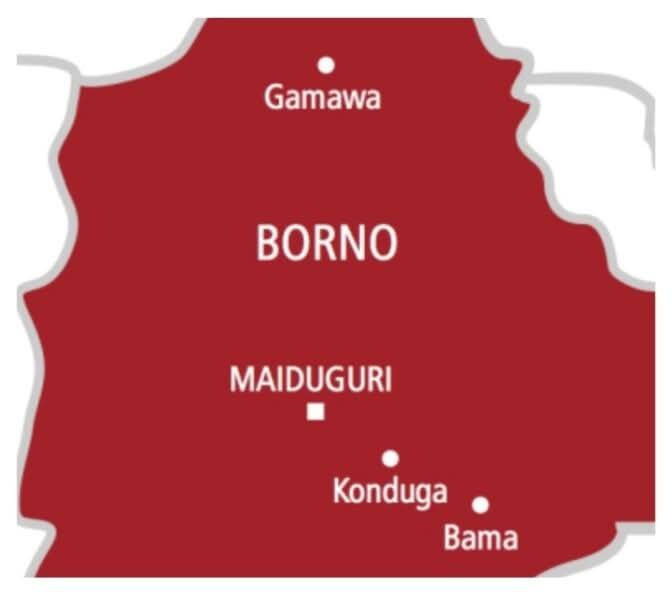
MAIDUGURI, Nigeria – In a stroke of poetic justice, six suspected members of the Islamic State West Africa Province (ISWAP) were killed on Saturday morning when an Improvised Explosive Device (IED) they were assembling detonated prematurely, blowing up their own workshop and sending a clear signal that the tide of terror may be turning. The incident occurred at approximately 7:00 a.m. on May 16, 2026, in Jubilaram, a remote settlement within the Marte Local Government Area of Borno State, a region that has become a notorious stronghold for insurgent groups operating around the Lake Chad basin.
The explosion was reported by security analyst Zagazola Makama in a post on X, citing security sources familiar with the incident. According to the sources, the group of militants was led by a suspected bomb expert identified as Abu Umar. The explosion killed Abu Umar and five other fighters instantly, while three additional members sustained serious injuries. The deceased were part of an ISWAP bomb‑making cell operating within the Marte–Kerenoa–Wulgo axis, a corridor that has witnessed repeated attacks on military convoys and civilian vehicles using hidden explosives. “The explosion happened while the device was being assembled, causing a sudden detonation that destroyed their location and killed those inside,” Makama wrote.
Intelligence reports indicate that the blast may have severely impacted a key IED manufacturing site located between Arinna Maimasallaci and Arinna Ciki. The facility was believed to be responsible for supplying roadside bombs used in ambushes against Nigerian troops and civilian travellers along the Lake Chad region’s treacherous routes. Security analysts believe that the loss of Abu Umar, described as a seasoned bomb maker, along with his cell, could significantly degrade ISWAP’s capacity to conduct IED attacks in the area. “This development could weaken the group's ability to conduct roadside bomb attacks in the area,” a security source told Zagazola Makama. Authorities are now reportedly considering further security operations to capitalise on this setback and eliminate any remaining insurgent elements in the region.
ISWAP, which broke away from the main Boko Haram faction in 2016, has increasingly relied on IEDs as a weapon of choice, using them to target military patrols, humanitarian convoys, and civilian vehicles. The group has perfected the art of concealing explosives in water containers, bags, and even under the sand on frequently used roads. The loss of a bomb‑making cell of this size is a rare and significant blow to the group’s logistical and tactical capabilities. It also highlights the inherent danger of handling volatile materials, even for those trained in the deadly craft.
The Marte LGA has been a flashpoint in the counter‑insurgency campaign for years. In 2021, ISWAP fighters overran a military base in the area, forcing soldiers to retreat and leaving dozens dead. Since then, the military has regained control of much of the territory, but the group has continued to operate in the vast, sparsely populated spaces around the lake, using their knowledge of the terrain to evade capture. Saturday’s accidental explosion is a reminder that the terrorists are not invincible; sometimes, their own tools of destruction turn against them.
The Nigerian military has not yet issued an official statement on the incident, but security analysts expect that troops in the area will be placed on high alert to take advantage of the disruption. The three injured terrorists are believed to have fled the scene, and a manhunt is likely underway. The military has also increased surveillance in the Arinna Maimasallaci and Arinna Ciki areas, where the IED facility was located, in hopes of intercepting any remaining explosives or fleeing fighters.
This incident follows a series of successful strikes against ISWAP’s IED networks. In March 2026, troops of Operation Hadin Kai intercepted a cache of explosives and arrested two suspected bomb makers in Bama LGA. In April, a similar accidental explosion killed four insurgents in a camp near Kukawa. While these successes are tactical, they do not signal the end of the insurgency. However, they demonstrate that the terrorists are not immune to the dangers of their own trade and that the military’s intelligence network is penetrating deeper into their operations.
For the residents of Marte and surrounding communities, the news of the accidental explosion brings a measure of relief, but not safety. The group remains capable of carrying out attacks, and the fear of hidden explosives on the road persists. But on Saturday morning, six men who had dedicated themselves to building bombs to kill and maim were themselves killed by the very device they were assembling. It was not a military victory, but it was justice nonetheless.
📩 Stone Reporters News | 🌍 stonereportersnews.com
✉️ info@stonereportersnews.com | 📘 Facebook: Stone Reporters News | 🐦 X (Twitter): @StoneReportNew | 📸 Instagram: @stonereportersnews
Add comment
Comments