

Reported by: Ijeoma G | Edited by: Oravbiere Osayomore Promise.
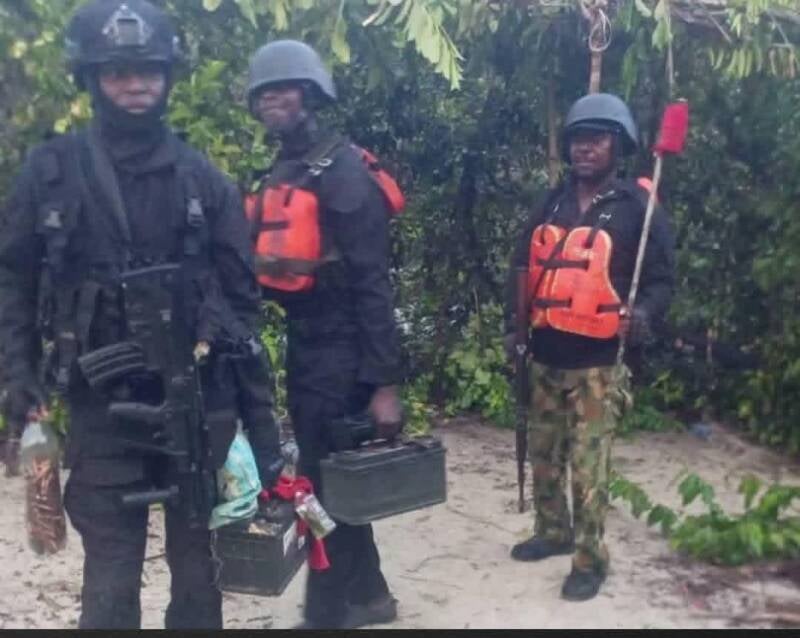
A routine patrol along the winding creeks of the Niger Delta led Nigerian Navy personnel to a concealed camp and the recovery of ammunition, electrical components and foul‑smelling chemicals suspected to be intended for the fabrication of improvised explosive devices (IEDs). The discovery, made by personnel of the Nigerian Navy Ship (NNS) SOROH deployed around the Soku general area, followed the sighting of a high‑powered speedboat moving suspiciously through the waterways on the border between Rivers and Bayelsa states.
The operation, which took place in mid‑May 2026, began when naval operatives noticed a speedboat fitted with a 200‑horsepower engine conveying six individuals dressed in attire resembling uniforms. The vessel had travelled from the Sangama axis toward creek communities near the Bayelsa border. According to a statement issued on Sunday, 17 May 2026, by the Director of Naval Information, Navy Captain Abiodun Folorunsho, the boat’s behaviour quickly raised alarm. It paused within the creek network and offloaded three passengers in an irregular manner before retreating deeper into the adjoining waterways. “The unusual movement pattern prompted the deployment of a patrol team to further interrogate the suspicious activity,” Folorunsho said.
Acting on that intelligence, naval personnel traced the movement and conducted a follow‑up sweep of the surrounding area. It was during this exploitation that officers stumbled upon a concealed structure hidden deep within the creek environment — a site described by security sources as a possible staging point for coordinated illegal operations. Inside the hideout, personnel recovered 50 rounds of 7.62mm special ammunition carefully hidden inside a water container. The discovery of military‑grade ammunition, a calibre commonly used by AK‑47 rifles, immediately elevated the operation beyond a routine anti‑oil‑theft patrol.
Alongside the ammunition, naval operatives found old vehicle batteries, assorted electrical wiring, and containers holding unidentified substances, some of which gave off a strong odour. Investigators believe the materials may have been assembled for use in illegal activities, including possible sabotage of oil and gas infrastructure or the fabrication of improvised explosive devices. The presence of electrical wiring and batteries, often used to trigger IEDs, pointed to a more sinister agenda than simple theft. “Preliminary assessment suggests that some of the recovered materials could be associated with attempts to fabricate improvised explosive devices or facilitate acts of pipeline vandalism and sabotage within the area,” the Navy statement noted.
The camp was immediately dismantled on site to prevent any further use, while the recovered ammunition and selected exhibits were taken into custody for further investigation and intelligence analysis. No arrests were made during the operation, as the occupants of the speedboat had fled before the patrol team arrived at the hideout. However, the Navy has continued to track the movements of the suspects through ongoing surveillance and intelligence sharing with other security agencies.
Captain Folorunsho, who addressed the press in Abuja on Sunday, 17 May 2026, reaffirmed that the Nigerian Navy remains committed to sustaining intelligence‑driven patrols and surveillance operations across strategic waterways and adjoining creek systems in the Niger Delta. “The operation reflects the Nigerian Navy’s continued vigilance and proactive security posture across strategic waterways and creek systems within the Niger Delta,” he said. He added that ongoing efforts are aimed at denying criminal and hostile elements the ability to establish operational footholds within the maritime environment.
The Rivers‑Bayelsa creek corridor has long been a haven for illegal refining, oil bunkering, piracy and, increasingly, the movement of weapons and explosives. Criminal groups exploit the complex network of waterways to hide from security forces and move personnel, ammunition and chemicals undetected. The discovery of a suspected staging camp with IED‑making materials marks a significant escalation in the types of threats the Navy is encountering in the region. It also underscores the growing nexus between organised criminal networks in the Niger Delta and more sophisticated forms of violence, including pipeline sabotage and bomb attacks on critical infrastructure.
This operation is part of a broader crackdown under Operation Delta Sentinel, a sustained naval campaign targeting crude oil theft, illegal refining and maritime crime. The Navy has previously recorded significant successes under this operation, including the dismantling of dozens of illegal refining sites, the recovery of millions of litres of stolen crude oil and refined products, and the destruction of militant hideouts. However, the recovery of military‑grade ammunition and bomb‑making components suggests that criminal groups in the region may be moving beyond economic sabotage and toward more lethal forms of violence.
Residents of coastal communities in Rivers and Bayelsa states have welcomed the Navy’s vigilance but have also expressed concern that the presence of such materials in their creeks could put innocent civilians at risk of being caught in crossfires or targeted by reprisal attacks. Community leaders have called for more community engagement from security forces to help distinguish between criminal hideouts and legitimate fishing or farming settlements. The Navy, for its part, has maintained that its operations are intelligence‑led and designed to minimise collateral damage.
The discovery in the Soku area also raises questions about the supply chain that delivered 50 rounds of 7.62mm ammunition into a remote creek hideout. Security analysts note that such weapons and ammunition are often smuggled across Nigeria’s porous borders or stolen from military depots. The Navy has promised to share its findings with other security agencies to help trace the origin of the ammunition and disrupt the networks that supply criminal groups in the Niger Delta.
For now, the hidden camp lies destroyed, and the ammunition has been secured. But the speedboat that carried six men in uniform‑like attire through the creeks remains at large, and the question of what they were planning to do with the materials they left behind remains unanswered. As Captain Folorunsho said, the Navy will continue to patrol, to watch and to strike. And in the muddy waters of the Niger Delta, the hunt for the next hidden camp has already begun.
📩 Stone Reporters News | 🌍 stonereportersnews.com
✉️ info@stonereportersnews.com | 📘 Facebook: Stone Reporters News | 🐦 X (Twitter): @StoneReportNew | 📸 Instagram: @stonereportersnews
Add comment
Comments