

Reported by: Oahimire Omone Precious | Edited by: Oravbiere Osayomore Promise.
GWARZO, Kano State – For months, the communities along the Kano‑Katsina border have lived in terror. Bandits on motorcycles, sometimes 30 or more, have raided villages, rustled cattle, shot residents and vanished into the bush before security forces could arrive. On Friday, May 15, 2026, the attackers struck Lakwaya village in Gwarzo Local Government Area, killing two people. The attack was the second within a week. The first had killed five in neighbouring Tsanyawa LGA. On Sunday, the youths of Gwarzo ran out of patience. They marched through the streets, chanting and demanding action. The protest began peacefully. It ended with a section of the local government secretariat on fire and a major highway blocked for hours.
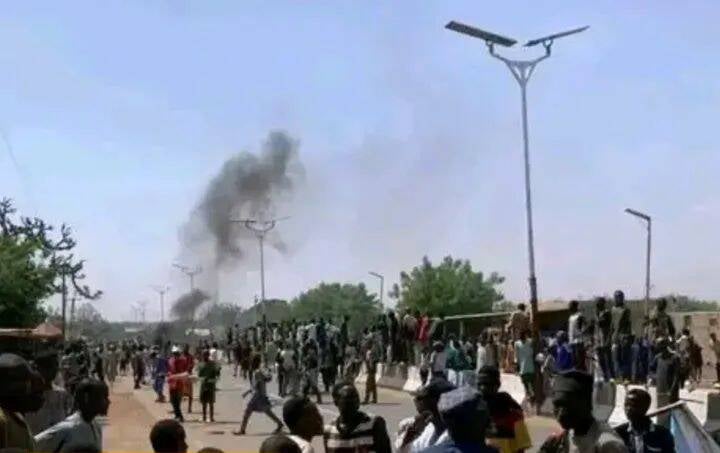
The day of rage unfolded in two dramatic acts. The first was a peaceful assembly. Hundreds of youths gathered in Gwarzo town, carrying placards and chanting slogans. They were not armed. They were not thugs. They were farmers, students and traders who had watched their neighbours die and their livestock disappear. According to multiple eyewitness accounts, the demonstrators marched towards the Local Government Secretariat, determined to deliver a petition and demand immediate government intervention. But frustration had been building for too long. According to a resident who spoke to Solacebase, some of the youths forced their way into parts of the premises. Shortly after, a section of the building was set on fire, sending thick smoke into the air as residents and passers‑by fled the scene in panic. “People are tired of sleeping in fear,” one resident told The Independent. “The attacks have become too frequent, and there is no strong response. That is why the youths reacted this way.”
The second act of the protest was even more disruptive. While the secretariat burned, another group of angry residents and youth groups took their grievance to the Dayi‑Gwarzo corridor, the strategic highway linking Kano and Katsina states. They erected makeshift barricades, chanted slogans and warned travellers to turn back. “Yesterday alone, they came and killed three of our people,” a youth leader told Premium Times. “For the past week, these criminals have been attacking us regularly, invading our towns in broad daylight. They ride into our neighbourhoods on motorcycles, act with complete impunity, and steal our livestock in large numbers.” The protesters alleged that despite repeated distress calls, security personnel often arrived hours after the assailants had fled. “A thief will come to your doorstep at four in the afternoon to steal cattle, and when you call the authorities, nobody shows up until 8 p.m.,” another resident said. “Where is the promise of 24‑hour security?”
The trigger for Sunday’s explosion of anger was a brutal attack that had occurred just two days earlier. On Friday, May 15, bandits stormed Lakwaya village in Gwarzo LGA. According to Daily Trust, the attackers arrived on motorcycles, opened fire indiscriminately and killed two people. Several others were injured. The attack was not an isolated event. It followed an even deadlier assault on Monday, May 11, when bandits attacked Yankamaye community in neighbouring Tsanyawa LGA, killing five people and injuring four others. That attack, residents said, involved over 30 gunmen on motorcycles who crossed from Rimaye community in Katsina State. They shot sporadically, divided themselves into different corners of the town, and killed their victims while they tried to run away. “Most of the victims were killed while trying to run away,” the former vice chairman of Tsanyawa LGA told Daily Trust. “They didn’t kidnap anyone.”
A common thread runs through these attacks: the bandits come from neighbouring Katsina State, exploit the porous border, strike quickly and retreat before security forces can respond. The communities in Gwarzo, Tsanyawa and other border LGAs have repeatedly asked for military checkpoints, better patrols and a permanent security presence. Their pleas have not been answered. The frustration, residents said, had been building for weeks. “People are no longer comfortable sleeping in their homes because the attacks have become too frequent,” one resident told BusinessDay. “The frustration has been building for a long time.”
The highway blockade exacerbated the crisis. Hundreds of commuters and motorists were stranded for hours as the protesters refused to allow vehicles to pass. The blockade was still ongoing when a Premium Times reporter arrived at the scene. Local leaders warned that the blockade would continue until concrete security guarantees and permanent military checkpoints were established to protect border communities from growing banditry and kidnapping. It was a dramatic escalation, but it was also a sign of desperation. “Protesting is our only way to make the government understand the severity of our situation,” one resident said.
Security operatives were eventually deployed across Gwarzo to restore order and prevent further escalation. The fire at the secretariat was extinguished, but the damage had been done. A section of the government building was gutted. The police in Kano had not issued an official statement at the time of this report, and the Kano State Government had not responded. The highway blockade was eventually cleared, but the underlying problem remains. The bandits are still out there, and the communities are still afraid.
What happened in Gwarzo on May 17, 2026, was not a spontaneous riot. It was the predictable eruption of a long‑simmering crisis that the government has failed to address. The youths who set fire to the secretariat were wrong. Violence is not the answer. But their anger is not irrational. It is the product of a system that has left border communities to fend for themselves against armed gangs that cross state lines with impunity. Unless security forces are deployed in sufficient numbers and sustained presence, the fires in Gwarzo will not be the last. And next time, the protesters may not stop at burning a building. They may decide that if the government will not protect them, they will protect themselves.
📩 Stone Reporters News | 🌍 stonereportersnews.com
✉️ info@stonereportersnews.com | 📘 Facebook: Stone Reporters News | 🐦 X (Twitter): @StoneReportNew | 📸 Instagram: @stonereportersnews
Add comment
Comments