

Reported by: Ijeoma G | Edited by: Oravbiere Osayomore Promise.
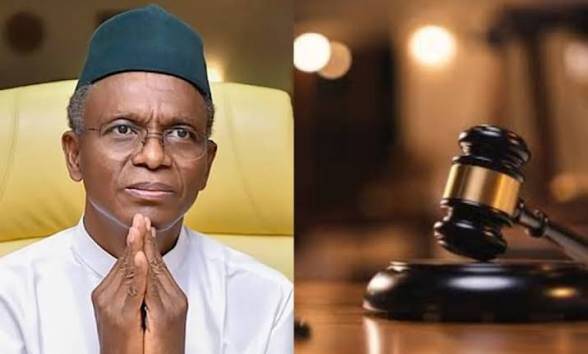
A Federal High Court in Abuja has granted bail to former Kaduna State Governor, Nasir Ahmad El‑Rufai, in the sum of N100 million, but with conditions so stringent that they are likely to keep him in detention for weeks while he scrambles to find a surety who meets all the requirements. Justice Joyce Abdulmalik delivered the ruling on Monday, May 18, 2026, in the case of alleged unlawful interception of the telephone communications of the National Security Adviser, Nuhu Ribadu. The former governor, who was brought to the court premises at about 8:55 a.m. by operatives of the Department of State Services (DSS) amid tight security, was arraigned on a five‑count amended charge marked FHC/ABJ/99/2026. The DSS alleged that El‑Rufai, during a February interview on Arise Television’s Prime Time programme, admitted that he had knowledge of the bugging of Ribadu’s phone and failed to report the crime to security agencies. The prosecution also claimed that he acted in cahoots with others who are still at large, using technical equipment that compromised public safety and national security.
The bail conditions imposed by the court are some of the most exacting ever ordered in a high‑profile political case. Justice Abdulmalik ruled that the surety must be a federal civil servant not below Grade Level 17 and must reside in either the Maitama or Asokoro districts of Abuja. The surety is required to deposit the original Certificate of Occupancy of a landed property at the court registry, provide proof of salary payments for at least three months authenticated by a letter from the manager of a bank within the court’s jurisdiction, and submit a tax clearance certificate covering the last six months. Additionally, the surety must depose to an affidavit of means, enter into a bail bond, and submit a recent passport photograph. El‑Rufai himself was ordered to surrender all valid international passports to the court registry and to report to the DSS headquarters every last Friday of the month by 10 a.m. to sign an attendance register pending the determination of the case. The judge further directed the former governor to submit a letter of attestation from the Chairman of the Kaduna Traditional Council. Justice Abdulmalik warned that any violation of these conditions would lead to an automatic revocation of the bail and ordered an accelerated trial.
The granting of bail in the phone‑tapping case comes after El‑Rufai has spent more than three months in the custody of the Independent Corrupt Practices and Other Related Offences Commission (ICPC) over separate allegations of financial impropriety during his tenure as governor from 2015 to 2023. He has been in ICPC custody since February 19, 2026, following his arrest by the Economic and Financial Crimes Commission (EFCC) and subsequent transfer to the ICPC. The anti‑graft agency has arraigned him on an amended nine‑count charge before a Kaduna High Court, bordering on alleged fraud, abuse of office, and money laundering. The ICPC alleges that El‑Rufai unlawfully received multiple sums of money in naira and foreign currencies while serving as a public officer, including inflated severance payments amounting to N579.7 million and fraudulent dollar‑denominated deposits totalling $817,900. He is also facing allegations linked to a N4.61 billion CCTV security project and a separate $22.47 million contract awarded to Singularity Network Security Limited in breach of procurement laws. El‑Rufai has consistently denied all allegations, maintaining that the cases against him are politically motivated.
The former governor’s legal troubles have drawn widespread attention, with opposition figures and civil society groups questioning the timing and intensity of the prosecutions. On Friday, May 15, El‑Rufai’s son, Mohammed Bello, accused ICPC officials of denying his father access to medical care and family visits despite a court order granting him unrestricted access to his doctors. Bello alleged that the former governor’s personal doctor was blocked from seeing him at the ICPC detention facility on May 15, with officials insisting on written approval from the ICPC chairman. He also claimed that El‑Rufai’s wife, Aichatou, was turned away when she arrived with his evening meal, told that food deliveries were not permitted after 6:30 p.m. The family described the actions as a direct violation of a subsisting court order and an assault on the former governor’s fundamental rights.
The bail ruling was not without courtroom drama. Security operatives temporarily restricted access to parts of the court complex when El‑Rufai arrived, preventing journalists and other court users from entering. The development sparked a brief protest led by activist and former presidential candidate Omoyele Sowore, who argued that court proceedings should remain open to the public. The protest highlighted the tense atmosphere that has surrounded the case, which is being closely watched by political observers who see it as a test of the government’s commitment to due process and the independence of the judiciary.
Political analysts note that the stringent bail conditions, while legally sound, may be difficult for El‑Rufai to meet in the short term, effectively prolonging his detention. The requirement for a Grade 17 federal civil servant willing to act as surety, with a Certificate of Occupancy for a property in Maitama or Asokoro, and with six months of tax clearance, sets a very high bar. Critics of the government argue that the conditions are designed to keep El‑Rufai behind bars, while supporters of the administration maintain that the court is simply doing its duty to ensure that the defendant does not flee or interfere with witnesses. The former governor’s legal team has indicated that it will work to meet the conditions, but as of Monday evening, no surety had been presented.
The ICPC, for its part, has maintained that it is following the court‑mandated timeline and that El‑Rufai’s continued detention is lawful. The commission has also rejected allegations of mistreatment, insisting that detainees are held under regulated conditions consistent with legal standards. The cases against El‑Rufai are proceeding in multiple courts: the phone‑tapping case before the Federal High Court in Abuja, and the corruption case before the Kaduna State High Court. The ICPC has also filed fresh charges against El‑Rufai and seven others over an alleged N10.8 billion CCTV security project.
The political implications of the case are far‑reaching. El‑Rufai, a founding member of the All Progressives Congress (APC) and a key supporter of President Bola Tinubu’s 2023 election, fell out with the APC leadership after he was denied a ministerial appointment and later resigned from the party, joining the Social Democratic Party (SDP) and later aligning with the opposition African Democratic Congress (ADC). His arrest and prolonged detention have been seen by some as a warning to other political figures who might consider crossing the ruling party. Others view the prosecutions as a necessary step in the fight against corruption, arguing that no former governor should be immune from investigation.
As the legal battles continue, El‑Rufai’s future remains uncertain. The bail ruling offers a path to freedom, but the conditions attached may prove to be a formidable obstacle. His family and supporters have vowed to fight for his rights, while the government and anti‑graft agencies insist that justice must take its course. The court has ordered an accelerated trial, but with multiple cases pending in different jurisdictions, the former governor’s legal nightmare is far from over. For now, El‑Rufai remains in custody, waiting for a surety who meets the court’s exacting standards, while his lawyers prepare for the next round of legal battles.
📩 Stone Reporters News | 🌍 stonereportersnews.com
✉️ info@stonereportersnews.com | 📘 Facebook: Stone Reporters News | 🐦 X (Twitter): @StoneReportNew | 📸 Instagram: @stonereportersnews
Add comment
Comments