

Reported by: Oahimire Omone Precious | Edited by: Oravbiere Osayomore Promise.
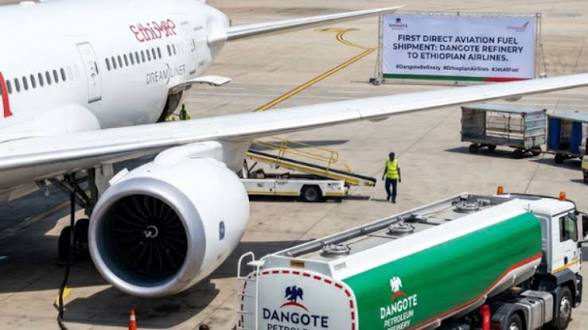
Dangote Petroleum Refinery & Petrochemicals has announced a N100 reduction in the price of aviation fuel, known as Jet A1, from N1,750 to N1,650 per litre, in a move aimed at easing the crushing cost pressures on domestic airlines that had pushed the industry to the brink of collapse. The price cut, disclosed in a statement by the refinery on May 19, 2026, comes alongside a 30‑day interest‑free credit facility for marketers and airline operators, and a fundamental shift from dollar‑denominated pricing to a naira‑based model for all Jet A1 transactions. Group Chief Branding and Communications Officer of the Dangote Group, Mr Anthony Chiejina, announced that the interventions are designed to lower fuel procurement costs, improve operational stability for carriers, and support efforts to moderate airfares for passengers. For an industry where aviation fuel accounts for a significant portion of operating expenses—sometimes as much as 40 to 50 percent—the announcement was immediately hailed as a much‑needed lifeline.
The reduction directly addresses a crisis that had reached alarming proportions just weeks earlier. In early April 2026, Nigerian airlines had threatened a nationwide shutdown from April 20, warning that Jet A1 prices had skyrocketed from around N900 per litre in late February to more than N3,300 per litre by mid‑April, a rise of more than 300 percent. The Airline Operators of Nigeria (AON) said the spiralling fuel costs were forcing fare increases and raising the risk of capacity cuts. In response, the federal government convened emergency talks in April and proposed capping Jet A1 prices, while considering the inclusion of aviation fuel in Nigeria’s “naira‑for‑crude” initiative to reduce the foreign‑exchange exposure of airlines. However, those measures had not yet fully eased the strain, and domestic carriers continued to operate with thin margins, frequently reducing frequencies on domestic routes.
Industry observers note that Dangote’s decision to reduce the price of its Jet A1 by N100 per litre is not an isolated gesture but part of a wider strategy to reshape Nigeria’s downstream petroleum landscape. The refinery simultaneously announced a 30‑day interest‑free credit facility for marketers and airline operators, backed by bank guarantees. This facility is intended to help airlines manage cash flow and ensure that they can continue procuring fuel without immediate liquidity pressure. The shift from dollar‑based pricing to a naira‑based model is also significant, as it shields airlines from the severe exchange‑rate volatility that has plagued Nigerian aviation. Earlier in May 2026, several domestic carriers, including Rano Air, were forced to suspend some flight routes, citing unsustainable jet fuel costs.
The price reduction is expected to have an almost immediate impact on operational costs for airlines. For a typical operator in Nigeria, the cost of Jet A1 represents one of the largest single line items in its budget. Every N100 reduction per litre, when multiplied over the thousands of litres consumed daily on domestic routes, can translate into millions of naira in monthly savings. In its statement, Dangote Refinery explained that the move is expected to “provide relief to airline operators by lowering fuel procurement costs, improving operational stability, and supporting efforts to moderate airfares.” This is particularly crucial ahead of the summer travel season, when demand for air travel in Nigeria is typically high.
The announcement also comes just days after the President of the Dangote Group, Aliko Dangote, revealed that the company had rejected an attempt by the Nigerian National Petroleum Company (NNPC) Limited to increase its stake in the refinery beyond the current 7.25 percent. In an interview with the chief executive officer of the Norwegian Sovereign Wealth Fund, Dangote said the decision was driven by a desire to allow broader public participation in the refinery through a future public listing, rather than concentrating ownership among a few investors. He noted that NNPC’s interest in increasing its stake was turned down in favour of a structure that would eventually allow ordinary Nigerians to invest in the facility. The NNPC, which once held a 20 percent stake in the refinery before negotiations scaled it down, has not publicly commented on the rejection.
Reactions to the price cut have been largely positive within the aviation sector. The Airline Operators of Nigeria (AON), which has been at the forefront of demanding relief on Jet A1 costs, welcomed the development as a sign that collaboration with domestic refineries can yield tangible benefits for the industry. AON sources indicated that the interest‑free credit facility, in particular, would help smaller operators that often struggle with the upfront costs of fuel procurement. Meanwhile, the Depot and Petroleum Products Marketers Association of Nigeria is expected to release a formal statement in the coming days, though initial feedback from marketers has been cautiously optimistic, noting that the N100 reduction, while welcome, is still modest compared to the over N3,300 per litre that airlines were facing in April.
For passengers, the price cut may eventually translate into lower ticket prices, though analysts warn that the full effect may take several weeks to materialise. Airfares had already begun to drop marginally in early May following the federal government’s intervention, but the Dangote price reduction is likely to further ease the pressure on carriers to keep fares high. As one aviation analyst noted, “For every N100 reduction in Jet A1 per litre, airlines can pass on perhaps N500 to N1,000 in savings per economy ticket on major routes.” If sustained, the lower fuel price could help restore passenger confidence in domestic air travel, which had been dented by the recent threats of shutdowns and erratic scheduling.
With the refinery now pricing its Jet A1 in naira and offering a 30‑day credit facility, the ball is in the court of the airlines to restructure their fuel‑procurement models. The question remains whether other fuel marketers will follow Dangote’s lead and lower their own Jet A1 ex‑depot prices. If they do, Nigeria’s aviation industry might finally see the sustained relief it has been seeking for months. For now, passengers and carriers alike are breathing a cautious sigh of relief as the price of aviation fuel comes down by N100 per litre, offering a glimpse of more stable skies ahead.
📩 Stone Reporters News | 🌍 stonereportersnews.com
✉️ info@stonereportersnews.com | 📘 Facebook: Stone Reporters News | 🐦 X (Twitter): @StoneReportNew | 📸 Instagram: @stonereportersnews
Add comment
Comments