

Reported by: Ijeoma G | Edited by: Oravbiere Osayomore Promise.
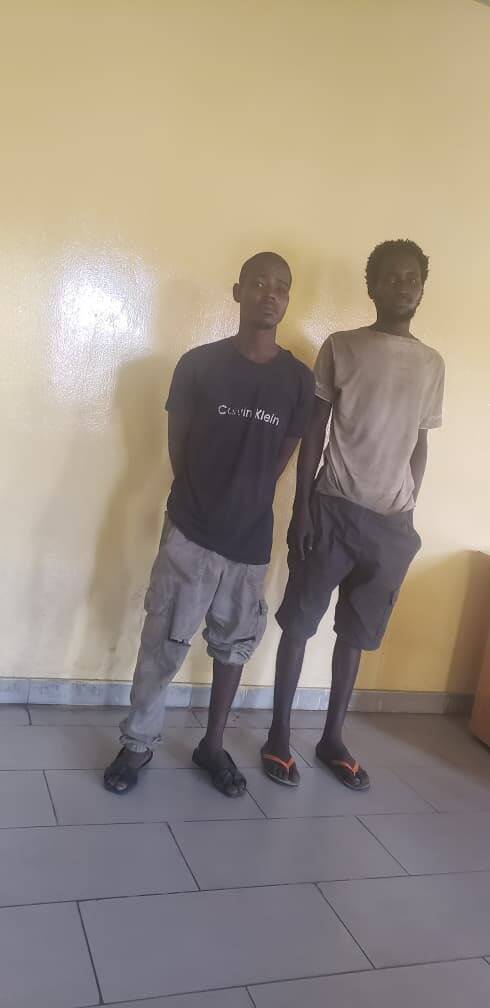
In a landmark ruling that signals a tougher stance against environmental violations in Lagos State, a magistrate court sitting at Bolade Oshodi has convicted and sentenced two men, Ibrahim Kashua and Kareem Sodiq, to three months imprisonment each for indiscriminate dumping of refuse. The duo was arraigned before the court on Monday, May 18, 2026, where they both pleaded guilty to the charges leveled against them. The magistrate, whose name was not disclosed in the initial announcement by the Lagos State Ministry of Environment, handed down the prison sentence immediately after the guilty plea, rejecting any option of a fine. The development was made public on Tuesday, May 19, 2026, by the state's Commissioner for Environment and Water Resources, Tokunbo Wahab, who took to social media to announce the conviction, describing it as a victory for the state's ongoing crusade against environmental degradation and a warning to others who may be considering flouting the state's environmental laws.
The conviction of Kashua and Sodiq is the latest in a series of prosecutions by the Lagos State Government aimed at curbing the menace of indiscriminate waste dumping, a persistent problem that has defied decades of public awareness campaigns, fines, and enforcement exercises. The state, which generates an estimated 13,000 metric tonnes of waste daily according to the Lagos Waste Management Authority (LAWMA), has struggled to contain illegal dumping practices that clog drainage channels, cause flooding, create breeding grounds for disease vectors, and blight neighborhoods. In recent years, the government has shifted from solely imposing fines to pursuing criminal prosecution, with several magistrates now empowered to hand down custodial sentences to repeat offenders and even first-time offenders in egregious cases.
The specific details of the incident that led to the arrest and arraignment of the two men were not immediately provided in the commissioner's statement. However, sources familiar with the operations of the Lagos State Environmental Sanitation Corps (known as KAI) indicated that Kashua and Sodiq were apprehended in the act of dumping truckloads of construction waste and domestic refuse on a roadside in the Bolade Oshodi area, an offense that falls under the Lagos State Environmental Management and Protection Law of 2017, as amended. Section 58 of the law explicitly prohibits the dumping of waste in unauthorized locations, including canals, drains, roadsides, and undeveloped lands, and provides for a penalty of imprisonment for a term not exceeding three years or a fine not exceeding one million naira, or both. The magistrate's decision to impose a three-month prison term, which is within the statutory maximum, suggests that the court considered the offense sufficiently serious to warrant immediate incarceration.
The conviction has drawn mixed reactions from Lagos residents. Environmental advocates have welcomed the sentence as a necessary deterrent, noting that many offenders see fines as merely a cost of doing business and continue to dump illegally because the likelihood of arrest is low and the penalties are often too lenient. "A three-month jail term sends a much stronger signal than a fine of fifty thousand naira which many of these offenders can easily pay and return to the same act the next day," said an environmental lawyer who requested anonymity to speak freely. On the other hand, some civil liberties groups have raised concerns about the proportionality of the sentence, arguing that imprisonment for a non-violent offense like waste dumping is excessive and that the state should focus on providing more accessible and affordable waste disposal options rather than criminalizing poverty. However, the Lagos State Government has consistently maintained that indiscriminate dumping is not a victimless crime, as it contributes directly to the annual flooding that claims lives and destroys property in the state.
The magistrate court at Bolade Oshodi has become a key venue for environmental prosecutions in the state, handling dozens of cases each month ranging from illegal waste dumping to operating unlicensed abattoirs and burning tires. The court's location in the densely populated Oshodi area, one of Lagos' busiest commercial and transport hubs, is strategic, as the neighborhood has historically suffered from poor waste management practices. The latest conviction is expected to be publicized by LAWMA as a cautionary tale, with the agency planning to paste posters bearing the names and photographs of the convicted individuals at major markets, motor parks, and waste disposal points across the state.
Following the arraignment and sentencing, both Ibrahim Kashua and Kareem Sodiq were remanded to the correctional facility to begin serving their three-month sentences. It is unclear whether they have legal representation or plan to appeal the conviction. The Lagos State Ministry of Environment, through Commissioner Tokunbo Wahab, reiterated the government's commitment to enforcing environmental laws without fear or favor. "This is the new reality for anyone who thinks they can treat Lagos as a dumping ground," Wahab wrote in his social media post. "We will continue to arrest and prosecute every person caught dumping refuse indiscriminately. No one is above the law."
The case highlights a broader challenge facing urban centers across Nigeria. While Lagos has the most robust environmental legal framework and enforcement machinery in the country, other states struggle with weak institutions and a lack of political will to prosecute offenders. The National Environmental Standards and Regulations Enforcement Agency (NESREA) has also pursued similar prosecutions at the federal level, but the number of convictions remains low compared to the scale of the problem. Environmental experts have called for a multi-pronged approach that combines enforcement with investment in waste recycling infrastructure, community education, and the creation of designated dumping sites that are accessible and affordable for low-income residents. For now, however, the message from the Bolade Oshodi magistrate court is clear: dump illegally, and you may find yourself behind bars.
As the news of the conviction spread on social media, reactions ranged from applause to skepticism. Some users commended the government for taking decisive action, while others questioned why the state continues to struggle with waste management despite the existence of such laws. A few pointed out that many wealthy individuals and corporations also engage in illegal waste disposal, often escaping prosecution due to their connections and resources. Whether the conviction of Kashua and Sodiq represents a turning point or merely a symbolic gesture will depend on whether the state can sustain the momentum and ensure that all offenders, regardless of status, face similar consequences. For the two men now serving time in prison, the cost of dumping waste on a Lagos roadside has proven far higher than they likely ever imagined.
📩 Stone Reporters News | 🌍 stonereportersnews.com
✉️ info@stonereportersnews.com | 📘 Facebook: Stone Reporters News | 🐦 X (Twitter): @StoneReportNew | 📸 Instagram: @stonereportersnews
Add comment
Comments