

Reported by: Oahimire Omone Precious | Edited by: Oravbiere Osayomore Promise.
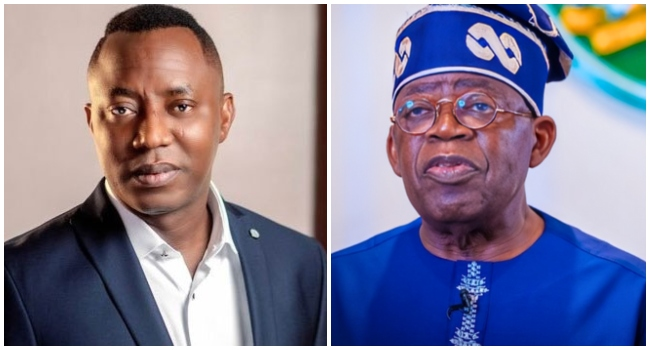
Activist and former presidential candidate Omoyele Sowore failed to enter his defence in a high‑profile cyberbullying trial on Tuesday, May 19, 2026, choosing instead to challenge the impartiality of the presiding judge and file a formal request with the Chief Judge of the Federal High Court to reassign the case to another bench. Sowore, the publisher of Sahara Reporters, is being prosecuted by the Department of State Services (DSS) over a post on his X (formerly Twitter) and Facebook accounts in which he allegedly referred to President Bola Ahmed Tinubu as a “criminal.” The trial, which has been ongoing for months, has become a flashpoint for debate over the limits of free speech in Nigeria and the government’s willingness to deploy criminal defamation laws against its critics.
The backdrop to Tuesday’s non‑defence was a decisive ruling by Justice Mohammed Garba Umar on May 8, 2026. On that day, the judge dismissed a no‑case submission filed by Sowore, who had argued that the prosecution had failed to establish any link between him and the alleged offences. Justice Umar found otherwise, holding that the DSS had made out a prima facie case that required the defendant to enter a defence. The judge specifically rejected the argument that the absence of President Tinubu as a witness weakened the prosecution’s case, and fixed May 19 for Sowore to open his defence.
What followed was a swift and unexpected turn. Immediately after the May 8 ruling, Sowore and his counsel, Marshall Abubakar, orally requested that Justice Umar withdraw from further handling of the case, citing alleged bias. The prosecution, led by Akinlolu Kehinde (SAN), objected, pointing out that such applications must be filed formally to allow the other party to respond. Justice Umar agreed and ordered the defence to file a formal recusal application.
When the court reconvened on May 19, however, the defence had not complied with that directive. Instead, Abubakar told the court that he and his client had filed letters and applications directly with the Chief Judge of the Federal High Court, Justice John Tsoho, requesting a reassignment of the case to another judge. According to Abubakar, the applications, one filed personally by Sowore and the other by him, were supported by affidavits and exhibits detailing their reasons for seeking the judge’s recusal.
Prosecutor Akinlolu Kehinde was unimpressed. He told the court that he was served with the two letters on the morning of May 19, the same day the defence had filed them. Kehinde argued that the defence had acted contrary to the court’s express order. “All the processes that they have filed are of no moment. This was not the directive of the court. We are opposed to all they have done,” he submitted. He further urged the court not to allow the defence to dictate the pace of proceedings, noting that the case had already reached the stage where the defendant should, in his words, “enter his defence if he has one and, if he does not, he should tell the court so that the prosecution can make the appropriate application”.
Abubakar, for his part, insisted that his team had taken the appropriate legal steps and that the court should await the Chief Judge’s decision on the reassignment request. He urged the court not to be “railroaded into taking steps that are alien to the administration of justice”. Justice Umar, in a measured ruling, declined to dismiss the defence’s applications outright. Instead, he ordered the prosecution to file a formal response to the defence’s letters and adjourned the matter until June 4, 2026, pending the outcome of the petition before the Chief Judge.
The courtroom drama is the latest chapter in a prolonged legal confrontation between Sowore and the Nigerian state. The activist, known for his fiery criticism of successive governments, has been a frequent target of security agencies. In a related development, the courts had earlier dismissed a fundamental rights suit filed by Sowore and awarded a ₦1.5 million fine against him in favour of the DSS. The cyberbullying charge itself is a two‑count accusation of making false claims against the person of President Tinubu, specifically the use of the word “criminal” on public social media platforms.
Reactions to the trial have extended far beyond the courtroom. The Socio‑Economic Rights and Accountability Project (SERAP) issued a strongly worded statement after the dismissal of Sowore’s no‑case submission, expressing concern that the government was using criminal defamation laws to stifle dissent. SERAP urged the Nigerian authorities to immediately withdraw all criminal defamation charges against Sowore, noting that such charges are “entirely inconsistent and incompatible with Nigeria’s constitutional and international human rights obligations.” The rights group warned that the prosecution would have a “chilling effect on journalists, activists, and citizens who seek to express dissenting views or hold those in power accountable”.
The case has also drawn attention to the Cybercrimes Act of 2015, particularly Section 24 which criminalises certain forms of online speech. Critics argue that the provision is vaguely worded and prone to abuse by government officials seeking to silence their opponents. SERAP specifically cited a judgment of the ECOWAS Court of Justice calling for the repeal of repressive provisions of the Act, including Section 24. The trial, which is now in a holding pattern until June 4, is being watched closely by media and civil society groups who see it as a bellwether for the health of democratic freedoms in Nigeria.
Despite the adjournment, the essential fact remains: as of May 20, 2026, Omoyele Sowore has still not entered a defence to the criminal charge that he called President Bola Tinubu a “criminal.” The court has given the prosecution until the next hearing to respond to his recusal request, and the Chief Judge may or may not reassign the case. What happens next could determine not only Sowore’s fate but also the future of online political commentary in Africa’s most populous nation.
📩 Stone Reporters News | 🌍 stonereportersnews.com
✉️ info@stonereportersnews.com | 📘 Facebook: Stone Reporters News | 🐦 X (Twitter): @StoneReportNew | 📸 Instagram: @stonereportersnews
Add comment
Comments