

Reported by: Oahimire Omone Precious | Edited by: Oravbiere Osayomore Promise.
A shocking discrepancy has emerged in a Nigerian government rural electrification project, after accountability organisation Tracka revealed that the Federal Ministry of Agriculture and Rural Development (FMARD) paid a staggering N755 million to a little‑known Abuja firm, Rayoz Digit Services Ltd, for the “Emergency Construction and Installation of Solar Street Light Amenities” in four rural communities of Akwa Ibom State. A physical inspection of the project site has found that only a handful of the promised lights have been delivered, leaving villagers grappling with pitch darkness and a growing sense of abandonment.
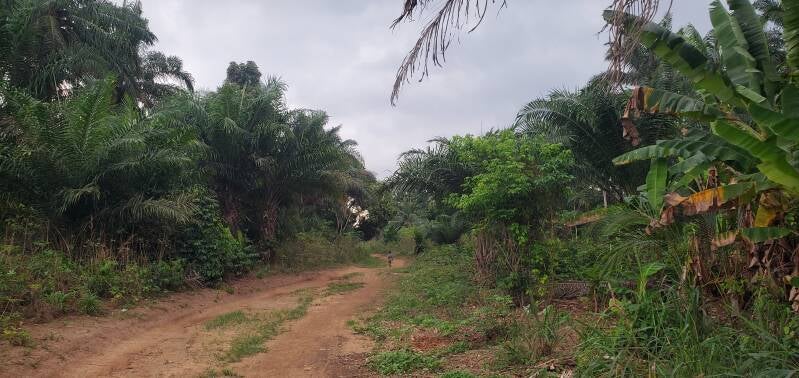
The contract, awarded in August 2025, was meant to illuminate Ikot Akai, Nto Okpo, Inen, and Nkari communities. However, when Tracka’s team visited Ikot Akai, they discovered that only about 20 solar street lights had been installed – most of them along a single major road connecting the village to neighbouring areas, plus a single unit placed in front of the village head’s house. The interior streets of the community, where most families live and children play, remain completely unlit.
The village head, speaking on condition of anonymity, told Tracka: “It gets dangerous here at night. We need many more lights inside the community – along our pathways, near the market, and around the health centre. The few we got are not enough.” His words underscore a grim reality: after nearly a year, a project budgeted at nearly three‑quarters of a billion naira has failed to provide the most basic safety.
The company at the centre of the controversy, Rayoz Digit Services Ltd of Abuja, has a troubled history with public procurement. In November 2025 – just three months after the Akwa Ibom contract was awarded – the Economic and Financial Crimes Commission (EFCC) named the firm among 28 companies being investigated for suspected contract fraud linked to the Ogun‑Osun River Basin Development Authority. The probe, which also involves the Authority’s Managing Director, Dr. Adedeji Ashiru, covers allegations of bid rigging, inflation of contract sums, and the approval of what the anti‑graft agency called “grossly inflated estimates.”
A letter from the EFCC to the Authority’s procurement director, dated November 2025, requested “certified true copies of all documents detailing contractual relationships with the above companies,” including contract sums, payments made, and current status. Three executive directors of the Ogun‑Osun River Basin Authority had earlier petitioned the Bureau of Public Procurement (BPP), accusing the MD of violating procurement laws and allocating more than N40 billion of a N45 billion envelope to a single state. That the same company now stands accused of under‑delivering on a major rural electrification contract is not an isolated incident; rather, it appears to be part of a wider pattern of wasteful spending, where billions of naira are thrown at “emergency” projects that fail to materialise on the ground.
The Tracka disclosure has ignited a firestorm on social media, with many Nigerians asking how N755 million could vanish into less than 20 solar poles. A breakdown suggests that even if each unit cost as much as ₦1 million (a reasonable price for a heavy‑duty, pole‑mounted solar light with battery backup), the community should have received 755 lights – enough to line every major street and many minor ones. Instead, villagers have received fewer than 3% of that number, raising serious questions about procurement, oversight, and value for money.
The Federal Ministry of Agriculture and Rural Development (FMARD) is the implementing agency named in Tracka’s post. Critics have long argued that FMARD often strays from its core mandate of agricultural development, venturing into infrastructure projects like solar street lighting – a job more suited to the Rural Electrification Agency (REA). In previous budget analyses, Tracka itself had noted that the federal government’s allocation for streetlight projects often exceeds the combined budgets of education and health. In the 2023 budget alone, N81.7 billion was allocated to solar street lights, a sum larger than what was spent on schools and primary health centres nationwide.
For the people of Ikot Akai, however, the politics of the budget are far less important than the darkness that envelops their community each night. The village head’s words resonate in a country where bandits, kidnappers, and armed robbers often target poorly lit rural areas. With the rainy season now fully underway, the lack of lighting makes roads treacherous and homes more vulnerable to intrusion.
Tracka, a project‑tracking platform under the BudgIT Foundation, has called on FMARD to “facilitate the completion of this project for the community.” The organisation said it will continue to monitor the other three beneficiary villages – Nto Okpo, Inen, and Nkari – to verify whether those communities have fared any better. As of the time of this report, FMARD has not issued any official statement regarding the Ikot Akai inspection or the wider N755 million contract. Similarly, Rayoz Digit Services Ltd could not be reached for comment; its telephone numbers appear to be disconnected.
What is certain is that a contract awarded in August 2025, touted as an “emergency” intervention to bring light to four rural communities, has failed to deliver even a fraction of its promise. The people of Ikot Akai are left in the dark – not because the sun does not shine, but because the money meant to store its energy has been lost somewhere between Abuja and their village.
📩 Stone Reporters News | 🌍 stonereportersnews.com
✉️ info@stonereportersnews.com | 📘 Facebook: Stone Reporters News | 🐦 X (Twitter): @StoneReportNew | 📸 Instagram: @stonereportersnews
Add comment
Comments