

Reported by: Ijeoma G | Edited by: Oravbiere Osayomore Promise.
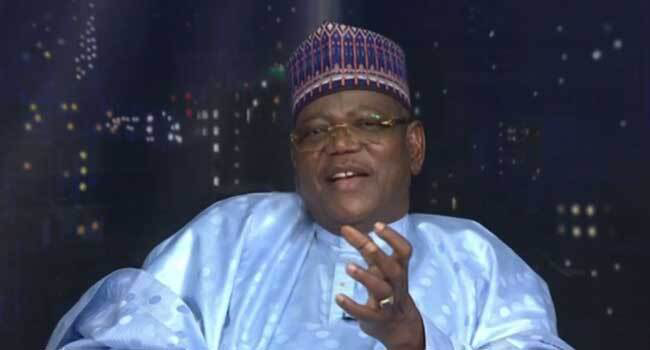
Former Jigawa State Governor and Peoples Democratic Party (PDP) chieftain, Alhaji Sule Lamido, has issued a scathing indictment of northern Nigeria’s political and social order, declaring that the region’s worsening insecurity is a direct consequence of leadership failure and a profound breakdown in moral upbringing. Speaking in an interview with Premier Radio Kano on Wednesday, May 20, 2026, Lamido insisted that northerners themselves must shoulder the blame for a crisis that has seen thousands killed and displaced by Boko Haram insurgents, bandits, and other armed groups.
The former governor, who also served as Nigeria’s Minister of Foreign Affairs under President Olusegun Obasanjo, did not mince words. He accused political leaders across the region of abandoning their fundamental duty to protect lives and property, stating that many are now more preoccupied with political maneuvering than with effective governance. “Northerners should blame themselves for the insecurity confronting the region,” Lamido charged, adding that politicians are actively contributing to the destruction of young people’s lives through manipulation and neglect, which is worsening the security situation.
Central to Lamido’s argument is the assertion that the foot soldiers of insurgency and banditry are not foreign invaders but homegrown youths. “Where are Boko Haram members and bandits coming from?” he asked. “They are our children from the North, they were not thrown from the sky, they are among us, and today they seem stronger than us because of moral decay, the fault is ours, and we must fix it, starting from the foundation and proper upbringing at home”. He lamented that the region’s elite has lost its moral compass, pointing to the disturbing phenomenon of northerners arresting and extorting ransoms from their own kinsmen. “What kind of immortality is that?” he asked, visibly troubled. “Meanwhile, leaders are only focused on politics”.
Lamido’s comments struck a raw nerve in a region that has become the epicentre of Nigeria’s security crisis. According to a 2025 report by SBM Intelligence, bandits alone kidnapped over 1,700 people in northern Nigeria between July 2024 and June 2025, with states like Katsina, Kaduna, Zamfara, and Niger recording the highest numbers. The situation has also intensified the strain on inter-communal relations, as herder-farmer clashes and terrorist attacks have killed thousands and created a humanitarian emergency that has left millions dependent on aid.
While Lamido supports the establishment of state police as a potential solution, he attached a critical caveat. “There is nothing wrong with state police, but they must be properly trained and guided on how to carry out their duties,” he said, emphasizing that discipline must come first, implying that without a foundational reform of societal values, new security institutions will simply inherit the same old problems. His remarks align with the position of several state governors, particularly in the South-West, who have long argued that state-level control over policing is essential for tackling localised security threats. However, the proposal remains a political lightning rod, with the Federal Government and many northern elites fearing its potential to exacerbate ethnic and regional divisions.
The former governor’s direct address on the need for moral rearmament comes at a time when decades-old traditional family and community structures in northern Nigeria are under severe pressure from poverty, illiteracy, and the allure of illicit economies. Critics, however, have pointed to a paradox: Lamido himself was part of the political establishment that governed the country for decades before the current crisis fully erupted. While he and his party, the PDP, were voted out of power in 2015 over widespread public dissatisfaction with their handling of security and corruption, many analysts argue that the seeds of today’s insecurity—including the radicalisation of northern youth—were sown during that era of weak governance and systemic rot.
Nevertheless, his intervention has already stirred intense debate on social media and across the region, with some commentators endorsing his call for northerners to “look inward,” while others accuse him of being a hypocrite who is conveniently shifting blame. The online platform X (formerly Twitter) has been flooded with reactions, with hashtags such as #NorthernSelfReflection and #LamidoTruth trending in Nigeria since Wednesday evening. Influential voices, including civil society leaders and some northern traditional rulers, have cautiously welcomed his emphasis on family values and social accountability, though they have stopped short of fully endorsing his political critique.
As insecurity continues to paralyse vast swathes of the North, Lamido’s diagnosis of “poor leadership and the collapse of moral upbringing” offers little by way of immediate remedy. Yet his call for “justice and fairness among Northerners” as essential ingredients for restoring peace raises fundamental questions about the region’s future direction. Whether his words will spark a genuine reckoning or fade into the long list of unheeded warnings remains to be seen, but for millions living in the shadow of violence, the time for talk is running out.
📩 Stone Reporters News | 🌍 stonereportersnews.com
✉️ info@stonereportersnews.com | 📘 Facebook: Stone Reporters News | 🐦 X (Twitter): @StoneReportNew | 📸 Instagram: @stonereportersnews
Add comment
Comments