

Reported by: Oahimire Omone Precious | Edited by: Oravbiere Osayomore Promise.
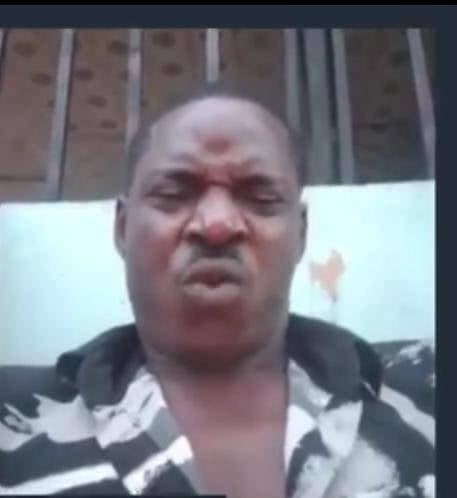
A serving police officer has thrown the Nigeria Police Force into a fresh legitimacy crisis after a viral video surfaced in which he threatened to "clear everybody down" — a chilling promise to shoot dead any citizen who attempts to record him while on duty. The officer, identified as Newton Isokpehi, who claimed to be an Assistant Superintendent of Police (ASP) with 26 years of service, issued the graphic threats in a now-deleted TikTok video posted on his account "Newton isokpehi for life" with the username #actor459. The clip, which spread rapidly across X (formerly Twitter), Instagram, and other social media platforms on Wednesday, May 20, 2026, showed a visibly agitated Isokpehi daring civilians to bring cameras near his duty post, swearing an oath to open fire on onlookers and bystanders alike. "Any day I'm on duty as a Nigerian police officer, carrying my rifle and doing my job, let somebody come and video me. That oga who gave you people the order to video us, he will go and do your burial. He will bury you. The number of you that I kill, he will be the one to bury all of you," he declared in Pidgin English. He went further: "If anyone is bold enough, just bring your camera. Watch me properly, bring your camera and come anywhere I am. Come and video me. If you don't do it right, I will clear everybody down, the whole bus, everybody around. I swear to God, if I don't do it, let me die."
The video has ignited a firestorm of public outrage, not only because of the explicit nature of the threats but because it directly contradicts a landmark Federal High Court ruling issued just two months earlier. On March 12, 2026, Justice Hyeladzira A. Nganjiwa of the Federal High Court sitting in Warri, Delta State, delivered a judgment in the case of Maxwell Nosakhare Uwaifo v. Inspector General of Police & Ors, affirming that Nigerians have the constitutional right to record police officers performing their duties in public spaces. The court held that Section 39 of the 1999 Constitution, which guarantees freedom of expression and the right to receive and impart information, includes the right to document matters of public interest, particularly the conduct of law enforcement agents performing public duties. The judgment also declared it unlawful for police officers to harass, intimidate, arrest, or seize recording devices from citizens exercising this right, and further ruled that officers must wear visible name tags and display force numbers or proper identification during public operations. Yet in the viral video, Isokpehi not only dismissed this judicial authority but also threatened any superior officer who had allegedly sanctioned the public recording of police work.
Human rights activist Harrison Gwamnishu, who amplified the original video, reacted with alarm, describing the officer's remarks as a serious danger to public safety and democratic freedoms. "It's important Nigerians see this video. This is a clear threat because we don't know where this police officer is operating, and someone could be harmed while recording during a stop-and-search operation," he stated. Gwamnishu also renewed calls for stricter psychological evaluation and drug testing for officers accused of misconduct. "I've said it before, some of these officers need to be subjected to drug tests. However, I also want to advise Nigerians: we should always respect officers on duty and avoid verbal abuse," he added.
On social media, the reaction was swift and condemnatory. Users described the officer's conduct as dangerous, unprofessional, and emblematic of the impunity that has long plagued the Nigeria Police Force. Many called for Isokpehi's immediate suspension, investigation, and mandatory psychiatric and drug evaluation. The hashtag #ClearEverybodyDown trended on X for several hours, with citizens sharing the clip and tagging senior police officials, including the Inspector-General of Police's office, demanding action. Civil society organizations also weighed in. The Media Rights Agenda, which had earlier praised the March court ruling as a "major victory for accountability and civil liberties," expressed concern that the viral threats could have a chilling effect on citizens who might now fear for their lives when attempting to exercise their constitutional rights.
In a desperate attempt to contain the fallout, Isokpehi posted a follow-up video on his TikTok page on Thursday, May 21, 2026, apologising for the threats and claiming that his original remarks were made out of frustration and not intended as actual threats. Addressing rights activist Harrison Gwamnishu directly, he pleaded for public forgiveness. "Please forgive me. If I offended you as a brother, forgive me. That statement was just out of annoyance because of the things that are happening. These things are painful," he said. He insisted that he was not against citizens recording police officers, but argued that some people had abused the practice. "Actually, you can video us. You are allowed to video a policeman. But it's not right for just anybody to come from anywhere and start videoing officers on duty. They have taken it too far," he stated. He also displayed his gunshot wounds in greater detail, seeking to convey the toll of his years in active service. "How can I be saying I will kill my own people? We don't do that. I spoke out of annoyance. That one was just verbal talk," he added.
The apology, however, did little to quell the outrage. Critics pointed out that even if the threat was not intended to be carried out, the mere fact that a serving officer could issue such statements without immediate fear of consequences revealed a deep rot within the police force. Legal experts noted that the officer's remarks could constitute a criminal offence under Nigerian law, including charges of threat to life and conduct likely to cause a breach of the peace. The Nigeria Police Force, as of the time of filing this report on Thursday evening, had not issued any official statement regarding the viral video or the allegations surrounding the officer's comments. The IGP's office has remained silent, despite the growing calls for disciplinary action.
The incident comes at a particularly sensitive time for the Nigeria Police Force. Just months earlier, in February 2026, the newly appointed Inspector-General of Police, Tunji Disu, had declared that under his watch, "impunity will end, corruption will face zero tolerance and the Nigerian citizen will be treated as the ultimate authority in policing." The IGP had also vowed to reorient officers on citizen-centred policing. The viral threats by Isokpehi now threaten to undermine that message entirely, exposing a gap between the IGP's policy pronouncements and the conduct of officers on the ground.
Legal experts and civil society groups are now calling for the immediate prosecution of Isokpehi to serve as a deterrent. They argue that allowing the officer to escape with only an apology would set a dangerous precedent and embolden other officers to issue similar threats with impunity. The controversy has also reignited broader questions about police reform in Nigeria, particularly around the enforcement of citizens' rights, officer conduct, and public trust in law enforcement institutions. The viral clip, with its chilling promise of violence against civilians simply exercising their constitutional rights, has become a stark symbol of the accountability crisis that has long plagued the Nigeria Police Force. As Nigerians await a response from the IGP's office, one question remains: will the police force take decisive action against one of its own, or will the man who threatened to "clear everybody down" walk free?
📩 Stone Reporters News | 🌍 stonereportersnews.com
✉️ info@stonereportersnews.com | 📘 Facebook: Stone Reporters News | 🐦 X (Twitter): @StoneReportNew | 📸 Instagram: @stonereportersnews
Add comment
Comments