

Reported by: Oahimire Omone Precious | Edited by: Oravbiere Osayomore Promise.
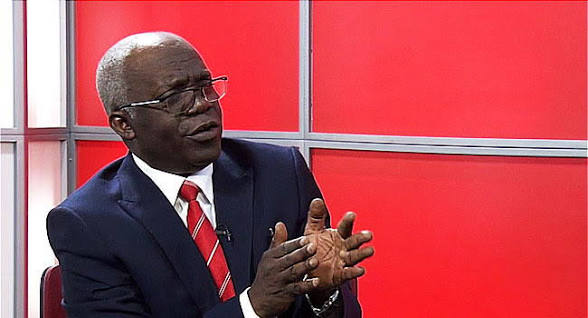
Senior Advocate of Nigeria (SAN) and prominent human rights lawyer Femi Falana has formally petitioned the African Commission on Human and Peoples' Rights (ACHPR), demanding urgent intervention over what he describes as "persistent, widespread and well-documented" xenophobic violence against Nigerian and other African nationals in South Africa. The petition, submitted on Tuesday, May 19, 2026, pursuant to the African Charter on Human and Peoples' Rights, calls on the commission to refer the matter to the African Court on Human and Peoples' Rights in Arusha, Tanzania, for binding adjudication, seeking not only a declaration of violations but also adequate compensation for victims, guarantees of non-repetition, and structural reforms to South Africa's migrant protection framework.
In the communication, Falana highlights "a pattern of widespread and recurring xenophobic violence, including killings, physical assaults, arbitrary arrests, torture, looting of businesses, and forced displacement," arguing that these attacks are "neither isolated nor sporadic but reflect a systemic failure to protect foreign nationals." The petition cites recent incidents involving two Nigerian nationals, Amaramiro Emmanuel and Ekpenyong Andrew, who reportedly died in April 2026 in separate incidents involving personnel of the South African National Defence Force (SANDF). According to the petition, Andrew died following his arrest in Pretoria after an altercation with law enforcement officials, with his body later discovered in a mortuary, while Emmanuel died from injuries allegedly inflicted by security personnel. "These incidents have caused widespread shock within the Nigerian community and raise serious concerns about the conduct and accountability of state actors," the petition reads.
The petition further draws attention to a resurgence of violent mob attacks against African migrants in May 2026, with widely circulated videos showing groups of South Africans assaulting Black foreign nationals, issuing threats, and demanding that they leave the country. In several instances, individuals were beaten with sticks, harassed, and subjected to degrading treatment, accompanied by inflammatory rhetoric targeting foreigners. These incidents, according to the petition, have been reported across multiple locations, including Gauteng Province, Durban, Cape Town, East London, and parts of KwaZulu-Natal and the Eastern Cape. Diplomatic missions, including the Nigerian High Commission, have issued security advisories warning of planned protests and violent demonstrations targeting foreign nationals, while over 130 Nigerian nationals have reportedly requested evacuation due to safety concerns, figures confirmed by the Nigerian Consulate-General in Johannesburg.
The timing of the petition is critical. The renewed wave of xenophobic violence, which erupted between April 27 and 29, 2026, has already triggered a cascade of diplomatic responses across the continent. The Nigerian House of Representatives has called for sanctions against South Africa, including possible suspension of diplomatic ties, trade and aviation agreements, and the summoning of the South African High Commissioner. Ghana has followed suit, while Tanzania issued a 48-hour ultimatum for South African citizens to leave the country. The South African Human Rights Commission (SAHRC) has raised the alarm over recent violent attacks in KwaZulu-Natal, urging Acting Minister of Police Firoz Cachalia to intervene swiftly, warning that vigilantism undermines the nation's constitutional democracy and threatens social cohesion. Human Rights Watch has also called on South African authorities to stop scapegoating migrants, ensure protection measures, and provide accountability for perpetrators.
At the heart of Falana's legal argument is the assertion that South Africa has consistently failed to prosecute perpetrators of xenophobic violence despite repeated attacks over the years. The petition accuses President Cyril Ramaphosa of downplaying the attacks and argues that instead of taking decisive action, the South African government has continued to place responsibility on migrants to respect the country's laws and customs. The petition states that the continued attacks and alleged inaction by authorities undermine the values of dignity, equality, and African solidarity, urging the commission to invoke its protective mandate. Specifically, the petition contends that South Africa has violated several provisions of the African Charter, including rights relating to life, dignity, liberty, equality before the law, property, and freedom of movement.
The petition also places the current crisis within a broader historical context, noting that by 2019, 127 Nigerians had been killed in xenophobic attacks in South Africa, leading to protests in Nigeria and a formal apology from the South African government. The petition recalls that on several occasions, xenophobic attacks have been recorded in public hospitals where doctors were forced by members of violent groups to discharge Nigerians and other foreigners receiving treatment. It also references a 2022 incident where President Ramaphosa condemned similar attacks. The petition argues that the recurrence of these incidents, despite repeated apologies and diplomatic interventions, demonstrates a pattern of impunity that requires binding judicial intervention.
The African Court on Human and Peoples' Rights, established by a protocol to the African Charter, has jurisdiction over human rights instruments ratified by member states. Crucially, both Nigeria and South Africa have ratified the protocol establishing the court, making them subject to its binding jurisdiction. The court is empowered to hear cases brought against African states for failure to respect human rights and can issue binding judgments, awarding compensation and other remedies where violations are found. If the African Commission accedes to Falana's request and refers the matter to the court, a binding ruling could compel South Africa to adopt specific structural reforms, pay compensation to victims, and provide guarantees against future attacks, a legal outcome that diplomatic protests have thus far failed to achieve.
As the African Commission considers the petition, the human cost continues to mount. Over 130 Nigerians have registered for evacuation flights, and the number is likely to increase ahead of planned demonstrations. The Nigerian government has summoned South Africa's High Commissioner to formally convey Abuja's displeasure, insisting on concrete steps to protect Nigerian lives and property. But for Falana, diplomatic démarches and condemnatory statements have proven inadequate. The petition represents a strategic escalation, seeking to transform what has long been treated as a recurrent diplomatic irritant into a legally actionable human rights violation. Whether the African Commission will accede to his request and whether the African Court will ultimately issue binding orders against South Africa will determine whether this latest initiative marks a genuine turning point or merely another chapter in a long, bloody, and unresolved saga.
📩 Stone Reporters News | 🌍 stonereportersnews.com
✉️ info@stonereportersnews.com | 📘 Facebook: Stone Reporters News | 🐦 X (Twitter): @StoneReportNew | 📸 Instagram: @stonereportersnews
Add comment
Comments