

Reported by: Oahimire Omone Precious | Edited by: Oravbiere Osayomore Promise.
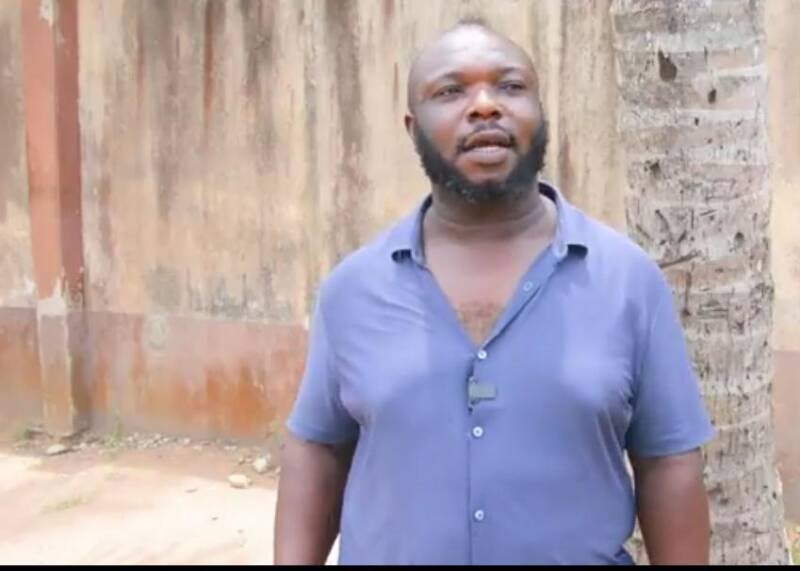
Chidioke, a 37-year-old commercial tricycle operator now struggling to survive on the streets of Lagos, has opened up about a double nightmare that has defined the past seven years of his life: his own kidnapping shortly after returning from Malaysia for the 2019 Christmas festivities, followed by the abduction and eventual murder of his younger brother by what he believes was the same gang. In an emotional interview with Punch Videos published on Thursday, May 21, 2026, Chidioke, who uses only his first name for safety reasons, described how he sold properties, borrowed from relatives, and exhausted his life savings to pay ransoms, only to watch his brother being killed after the family could no longer raise the demanded amount.
Chidioke's ordeal began in December 2019, shortly after he arrived from Malaysia, where he had been living and working, to spend the holidays with his family in Lagos. On a routine trip to buy fuel, he was intercepted by armed men who forced him into a vehicle and drove him to an unknown location. "I was just going to get fuel. Next thing, I saw guns. They didn't care that I had just come back to see my family," he told the interviewer. The kidnappers contacted his relatives and demanded a substantial ransom. Chidioke said the amount was so huge that he had to sell properties he had acquired over years of hard work abroad. After weeks of tense negotiations and the liquidation of his assets, he was released.
The trauma, however, was only the beginning. Chidioke said he advised his family not to involve the police because he feared the kidnappers would retaliate. "I told them, let us just pay and get me out. We sold everything – land, savings, even what I had kept for my children's school fees," he recalled. After his release, he begged the family to relocate, hoping to put the incident behind them. But the kidnappers, he alleged, had kept tabs on the family. A few months later, his younger brother was snatched in a similar fashion.
The modus operandi was identical. The same voices, the same demands, the same threats. But this time, the family had nothing left. "We had sold everything to get me out. When they took my brother, we tried to borrow. We went to relatives, friends, anyone who could help. But it wasn't enough," Chidioke said, his voice breaking. The kidnappers insisted on a specific sum, and when the family could not meet the deadline, they killed his brother and sent back his body. "They said if we cannot pay, we should come and carry his corpse. That is what they did," he added.
Since then, Chidioke has never fully recovered. The man who once lived and worked abroad now drives a commercial tricycle, locally known as "Keke Napep," on the bustling roads of Lagos, earning barely enough to feed his family and keep a roof over their heads. He is haunted by the memory of his brother, and by the knowledge that his own release had effectively bankrupted the family, leaving no resources to save his sibling. "If I had not been kidnapped first, maybe we could have saved him. But after me, there was nothing left. I blame myself every day," he said.
Chidioke's story is a devastating illustration of a grim reality across Nigeria: kidnapping for ransom has become a thriving criminal enterprise that not only extracts immediate payments but also pushes entire families into long-term destitution. According to a 2025 report by SBM Intelligence, kidnappers demanded an estimated ₦15 billion in ransoms across Nigeria between July 2024 and June 2025, with an average payment of ₦3.9 million per victim. Many families sell land, livestock, or businesses; others take loans at exorbitant interest rates that they spend years repaying. When a family has more than one member kidnapped, the second victim often has little chance of survival.
Chidioke's insistence on not involving the police also reflects a deep distrust of law enforcement that is common among kidnap victims' families. Many believe that police intervention leads to the death of the captive, either through botched rescue attempts or retaliatory killings by the abductors. The Nigeria Police Force has repeatedly urged families to report kidnappings immediately and to avoid paying ransoms, but the reality on the ground is that most families pay, often in secret, because they believe it is the only way to bring their loved ones back alive. In Chidioke's case, paying the ransom saved his life but condemned his brother.
The long-term impact of kidnapping on survivors and their families is rarely discussed. Survivors often suffer from post-traumatic stress disorder, anxiety, and depression. Some are unable to return to their former occupations or homes. Many are shunned by their communities, who view them as having brought danger to the neighbourhood. Chidioke said he has been treated with suspicion by some of his neighbours, who accuse him of being the reason the kidnappers targeted the area. "They don't say it to my face, but I see the way they look at me. As if I invited the kidnappers myself," he said.
Chidioke's story, as shared in the Punch video, has drawn widespread sympathy on social media, with many calling on the government to do more to tackle kidnapping and support survivors. Some have suggested the establishment of a victim support fund to assist families who have been financially devastated by ransom payments. Others have urged the police to investigate the specific gang that Chidioke says is responsible for both abductions, though he admits he does not know their identities or current whereabouts.
For now, Chidioke continues to drive his tricycle, picking up passengers in the morning and returning home late at night, hoping to earn enough to send his children to school and pay off the debts accumulated during the ransom negotiations. He has not returned to Malaysia and says he no longer has any desire to travel. "I just want to stay here and watch my children grow. That is all I have left," he said.
His brother is buried in a small cemetery on the outskirts of Lagos. There is no headstone, only a small mound of earth that Chidioke visits whenever he can afford the transport fare. The kidnappers, he believes, are still out there, still preying on families, still demanding ransoms that no one should have to pay. "I don't know if they will ever be caught," Chidioke said. "But I want people to know what happened to us. Maybe if enough people hear, someone will do something."
📩 Stone Reporters News | 🌍 stonereportersnews.com
✉️ info@stonereportersnews.com | 📘 Facebook: Stone Reporters News | 🐦 X (Twitter): @StoneReportNew | 📸 Instagram: @stonereportersnews
Add comment
Comments